
Description
Symptoms
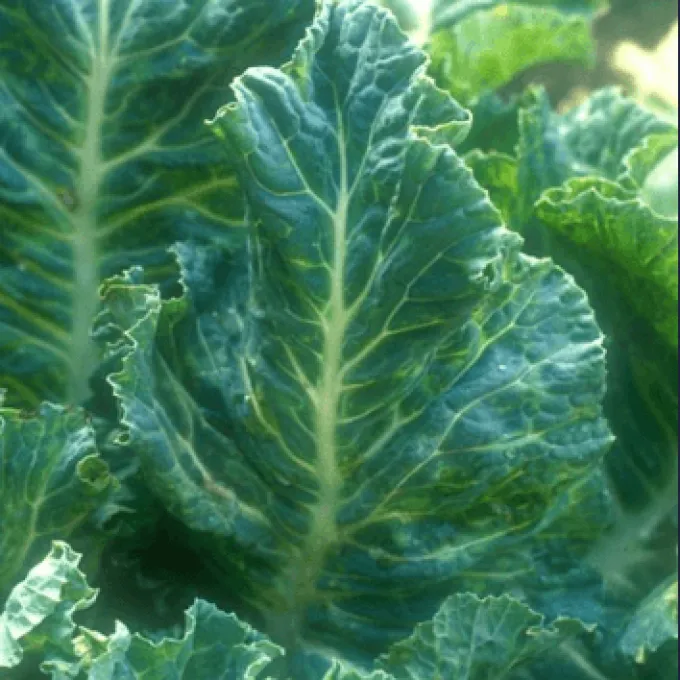
Initial symptoms include slight clearing of veins on the leaves. Over time, a characteristic mosaic pattern of light and dark green patches develops on the leaf surface.
Infected leaves often become distorted, curled, and exhibit a leathery texture. Vein banding or chlorosis along the veins is a common diagnostic sign.
The growth of infected plants is significantly stunted. Overall biomass is reduced, and affected plants lag behind healthy ones in development throughout the season.
When heading crops are affected, the heads become small, loose, and unmarketable. Radish plants show leaf deformation and reduced quality of taproots.
In winter rapeseed, infection can lead to leaf damage that weakens the plant before the winter, potentially reducing overwinter survival rates.
Pathogen
The causative agent of this disease is the Cauliflower mosaic virus (CaMV). It is a double-stranded DNA virus belonging to the genus Caulimovirus.
The virus affects a wide range of plants in the Brassicaceae family. Major hosts include cauliflower, cabbage, bok choy, winter rapeseed, and radish.
The virus is not seed-transmitted, which is a key characteristic. Overwintering perennial cruciferous weeds serve as the primary reservoir for the infection in the field.
Various species of aphids, such as the cabbage aphid and the green peach aphid, act as vectors. Transmission is non-persistent, meaning aphids can transmit the virus within seconds of feeding.
Mechanical transmission is also possible through agricultural equipment or tools, although it plays a secondary role compared to aphid-mediated transmission.
Conditions for development
The disease development is heavily dependent on aphid population density. Warm and dry weather promotes rapid aphid multiplication, leading to higher disease incidence.
The presence of wild cruciferous weeds in or near the field ensures a constant supply of the virus for migrating aphids.
Close proximity between old, infested plantings and new susceptible crops facilitates the spread of the virus throughout the farming area.
Temperatures optimal for brassica crop growth are also conducive to viral replication and aphid activity, making the disease a risk throughout the growing season.
Poor management of field borders and high planting density can exacerbate the spread of the disease by providing shelter and food for vectors.
Why it matters
The primary economic impact is a reduction in yield and quality. The virus disrupts plant metabolism, leading to weakened immune responses and poor vigor.
Marketability is severely compromised due to deformed foliage and poor head formation, often rendering the crop unsuitable for commercial sales.
In winter rapeseed, early-season viral infections reduce the plant's ability to store carbohydrates, which compromises its cold tolerance and winter hardiness.
Affected radish crops produce undersized and distorted roots, significantly lowering their value and causing direct financial loss to the grower.
The need for additional insecticide applications to control aphid vectors increases the cost of production and necessitates a rigorous integrated pest management approach.
Protection
The most effective strategy is the systematic removal of cruciferous weeds that serve as the primary viral reservoirs in and around the fields.
Maintaining proper spatial isolation between new plantings and older crop residues helps interrupt the virus transmission cycle.
Effective aphid control using systemic insecticides is crucial during the early stages of crop development to prevent primary infections.
Selecting resistant cultivars or hybrids is recommended whenever available to provide an inherent layer of protection against the virus.
Employing good agronomic practices, such as optimal sowing times and balanced fertilization, promotes vigorous plant growth that helps mitigate the impact of the disease.
Pathogens and affected parts
Affects crops · 2
Discussion
No discussions yet — be the first.