
Description
Symptoms
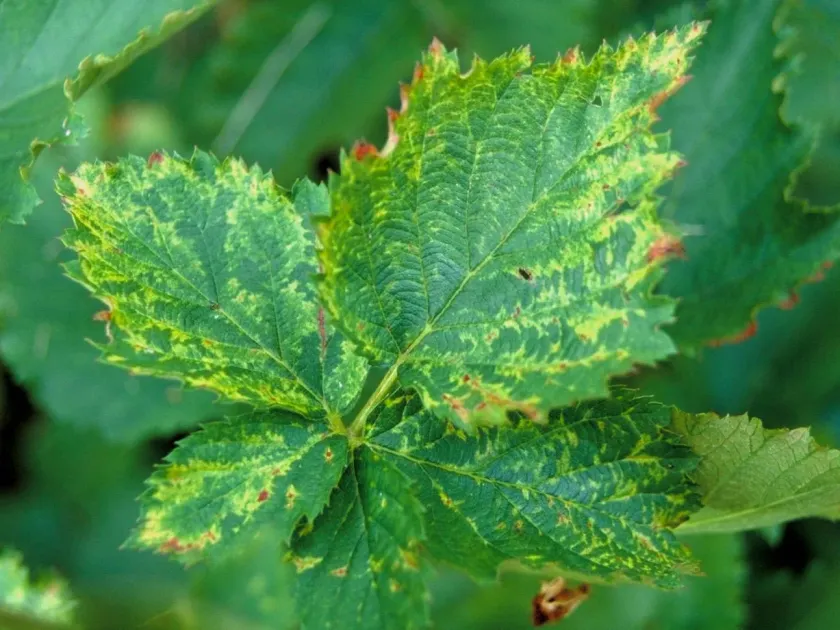
The primary symptom of Raspberry yellow mosaic is the appearance of distinct yellow or golden patterns on the leaves, manifesting as mosaic patches or yellowing tissue.
In early spring, these symptoms are most prominent on young leaves, which may become chlorotic, show reduced growth, and eventually shed prematurely.
Infected canes display stunted growth, becoming thinner and brittle, with shortened internodes that give the entire plant a bushy or dwarf appearance.
Fruit quality is significantly impacted, resulting in small, malformed, and tasteless berries that are not marketable or suitable for high-quality production.
Symptoms may fluctuate based on temperature; during hot summer days, the yellowing can fade, but the virus remains persistent within the plant's systemic tissues.
Pathogen
Raspberry yellow mosaic is caused by the Raspberry yellow mosaic virus (RYMV), which is a systemic pathogen transmitted mainly through aphids and vegetative propagation.
The virus colonizes the plant's vascular system, directly interfering with chlorophyll production and the essential transport of nutrients between the leaves and roots.
The primary vector for the virus is the large raspberry aphid (Amphorophora rubi), which acquires the pathogen while feeding on infected canes and transmits it to healthy ones.
Propagation through infected root suckers or nursery stock is the main reason for the long-distance spread and establishment of the disease in new fields.
Once an individual plant is infected, there is no curative treatment, as the virus spreads throughout the plant including the rhizome system.
Conditions for development
Outbreaks of the disease are highly correlated with the population dynamics of aphid vectors, which thrive in moderate temperatures and stable weather conditions.
Poorly maintained fields with heavy weed cover provide alternative hosts for the virus and shelter for the aphids, facilitating faster spread between raspberry rows.
Dense planting configurations that restrict air circulation prevent proper drying of the foliage and create a microclimate preferred by the virus-transmitting insects.
Low plant vigor caused by insufficient soil fertility or water stress exacerbates the visual expression of the disease and reduces the plant's natural resistance.
In regions where wild brambles are present, these plants can act as a natural reservoir for the virus, serving as a continuous source of inoculum for commercial patches.
Why it matters
The disease causes a cumulative decline in plantation health, leading to progressively smaller harvests and the eventual total loss of commercial viability.
Affected plants suffer from reduced cold tolerance, making them significantly more prone to winter kill even during moderately cold seasons.
The economic impact is severe because the virus renders the vegetative propagules useless, forcing the grower to replace the entire planting.
Reduction in photosynthetic efficiency limits the plant's ability to produce sufficient fruit, leading to a direct decrease in annual yields and market revenue.
Continuous presence of the virus in the soil or root system makes it extremely difficult to replant the same area with susceptible varieties later.
Protection
The most effective strategy is the use of virus-indexed, certified nursery stock to ensure that the initial planting is completely free of the pathogen.
Strict field sanitation involves the immediate removal and destruction of any plant showing mosaic symptoms, including the roots to prevent further transmission.
A rigorous insecticide spray program is essential to control aphid populations, particularly during their spring and autumn migration periods.
- Regular weeding to remove alternative virus hosts.
- Sanitizing pruning tools with a bleach solution between plants.
- Establishing buffer zones between new patches and old, infected plantations.
Maintaining optimal plant health through balanced nutrition and proper watering schedules can help mitigate the severity of symptoms and improve overall robustness.
Pathogens and affected parts
Affects crops · 1
Discussion
No discussions yet — be the first.