
Burkholderia andropogonis
Burkholderia andropogonis
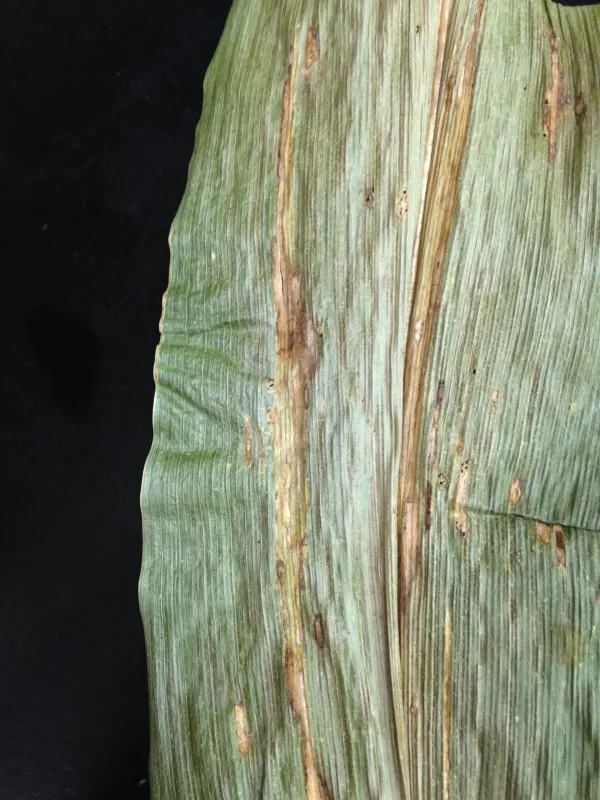
Description
How to identify
Burkholderia andropogonis is a Gram-negative, motile, rod-shaped bacterium classified within the Burkholderiaceae family. It is a known phytopathogen responsible for various bacterial spot and stripe diseases on a wide range of economically significant crops.
The bacterium is non-spore-forming and thrives in various environmental conditions. It is known for its ability to persist in plant debris and soil, serving as a primary inoculum source for subsequent growing seasons if proper field hygiene is not maintained.
In laboratory settings, the organism can be isolated using standard bacterial culture media. It typically forms mucoid colonies, and its metabolic activity can result in the production of pigments that aid in identification and differentiation from other closely related species.
This pathogen possesses a suite of virulence factors, including extracellular enzymes and potential toxins, which facilitate the colonization of host tissues. These factors allow the bacteria to degrade plant cell walls, leading to the characteristic necrotic lesions observed in infected plants.
Diagnostic confirmation usually relies on a combination of visual symptoms observation and molecular or microbiological testing. Due to the similarity of symptoms with other bacterial infections, precise laboratory identification is often required to implement effective management.
What it damages
The primary hosts of Burkholderia andropogonis are sorghum and corn, where it causes significant leaf diseases. It also has a broader host range, including legumes and various ornamental plants, making it a persistent concern in both agricultural and horticultural settings.
The infection process starts when bacteria enter the host through stomata or mechanical wounds. Once inside, they multiply within the intercellular spaces, secreting toxins that cause localized cell death and the formation of characteristic spots and streaks.
The resulting damage reduces the photosynthetic surface area of the leaves. This leads to a decrease in the plant's ability to produce energy, which negatively impacts biomass accumulation, grain development, and ultimately, overall crop yield.
In ornamental plants, the infection compromises the visual appeal and overall health of the plant. Infected foliage may drop prematurely, and systemic movement of the bacteria can lead to wilting or stunted growth, rendering the plants unsuitable for market.
Economic damage is compounded by the accumulation of inoculum in the field over consecutive years. Without intervention, repeated planting of susceptible crops allows the disease to build up, leading to more severe outbreaks each season.
Signs of infestation
The initial signs of infection include small, water-soaked spots on the leaves. As the infection progresses, these spots often turn dark brown, reddish-purple, or even black, and are frequently surrounded by a noticeable chlorotic (yellow) halo.
On hosts like corn and sorghum, the symptoms often manifest as elongated, linear lesions that follow the veins of the leaf, creating a striped appearance. These stripes represent the movement and colonization of the bacteria through the leaf's vascular environment.
Under conditions of high humidity or rainfall, the bacteria may exude from the infected lesions in the form of a sticky, bacterial ooze. This exudate contains high concentrations of bacterial cells and is easily spread by splashing rain or wind-blown droplets.
In severe cases, the lesions may coalesce to form large necrotic patches that cover significant portions of the leaf surface. This causes the leaf tissue to dry out, curl, and die prematurely, which can lead to early senescence of the plant canopy.
- Water-soaked spots that darken over time.
- Characteristic yellow halo surrounding necrotic lesions.
- Parallel leaf striping along the veins.
- Bacterial ooze present under humid conditions.
- Premature yellowing and desiccation of leaves.
Control measures
Integrated pest management is essential for controlling Burkholderia andropogonis. The use of certified, disease-free seed is the first line of defense, as it prevents the introduction of the pathogen into clean fields at the start of the season.
Crop rotation remains a highly effective cultural practice. By alternating susceptible crops with non-host species, growers can reduce the bacterial population in the soil, effectively breaking the disease cycle and preventing cumulative inoculum build-up.
Sanitation practices such as removing or deep-plowing crop residues help to destroy the overwintering sites of the bacteria. Promoting the rapid decomposition of organic matter in the soil significantly limits the survival time of the pathogen.
While chemical control is limited, copper-based bactericides can be applied when conditions are highly conducive to disease spread. These applications are most effective when used preventatively or at the earliest onset of symptoms to reduce the rate of epidemic development.
Managing insect pests is also important, as insects can create entry points for the bacteria through mechanical feeding damage. Maintaining plant vigor through proper fertilization and irrigation helps the host withstand the stress of infection more effectively.
Discussion
No discussions yet — be the first.