
Bacterial leaf streak of cereals
Xanthomonas translucens
Description
How to identify
The causative agent of the disease is the bacterium Xanthomonas translucens. It belongs to the kingdom Bacteria, the family Xanthomonadaceae, and the genus Xanthomonas. These are Gram-negative, rod-shaped bacteria with a single polar flagellum.
The microorganism exhibits high ecological plasticity, allowing it to adapt to various climatic conditions in cereal-growing regions. The bacteria multiply actively within the plant's vascular system and intercellular spaces.
Infection typically occurs through stomata, hydathodes, or mechanical injuries to plant tissue. Spread within fields is facilitated by rain splashes, wind, insect activity, and contaminated agricultural tools.
The pathogen survives in the natural environment on crop residues in the soil, in infected seeds, and on certain wild grass species, which act as reservoirs for the infection during the off-season.
The incubation period for the disease is highly dependent on temperature and humidity, typically ranging from 5 to 12 days before the first visible symptoms appear on the leaves and stems.
What it damages
The disease affects a wide range of agricultural cereals. The most susceptible crops include wheat (soft and hard), barley, rye, triticale, and sometimes oats in specific regions.
Bacterial leaf streak can damage plants at all growth stages, from seedling emergence to the milk-dough stage of grain development, often causing systemic infection throughout the plant organism.
The infection impacts both vegetative organs (leaves, leaf sheaths) and reproductive organs (stems, ears), leading to impaired photosynthesis and disrupted grain-filling processes.
In cases of epidemic development, the pathogen can infect glumes, which inhibits proper pollination and results in poor grain formation, eventually leading to reduced yields and empty ears.
Stem damage can cause lodging or stunted development of productive tillers, significantly reducing the overall plant density and crop uniformity at the time of harvest.
When it appears
The most favorable conditions for the development of Xanthomonas translucens are moderate temperatures between 20–25°C and high relative humidity (above 80%).
The peak of disease development usually coincides with periods of frequent rain and fog, as liquid moisture is necessary for the bacteria to exit plant tissues and spread to neighboring plants.
Primary infection centers often appear in the spring when the pathogen becomes active on the leaves of winter crops or on newly emerged seedlings of spring crops after overwintering.
Secondary infection actively spreads during the summer months when the crop canopy closes, creating a microclimate with high humidity in the lower layers of the field.
Drought periods with low humidity can temporarily inhibit the spread of the pathogen; however, the bacteria remain viable within the tissues until favorable environmental conditions return.
Signs of infestation
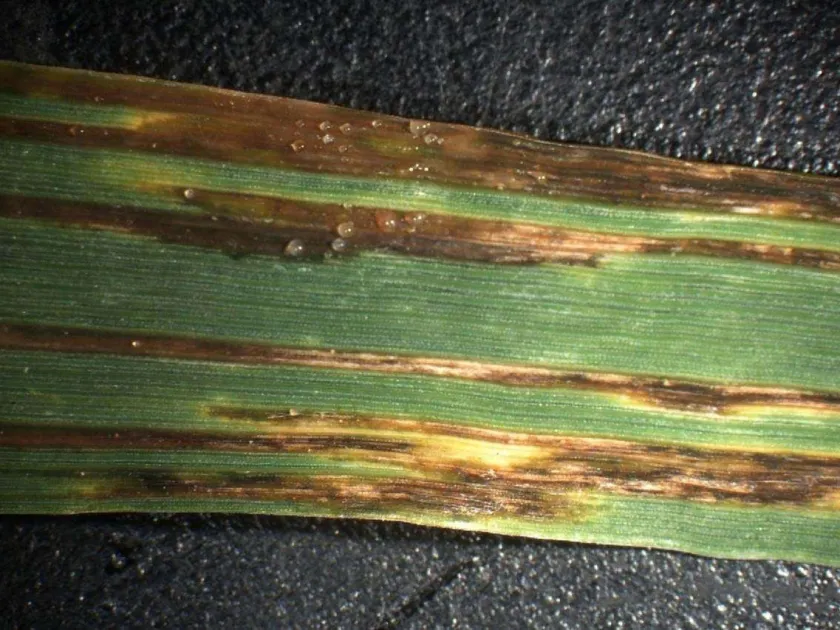
The key characteristic signs are light, translucent longitudinal stripes running along the leaf veins, which eventually turn yellow and may take on a brownish hue as the tissue dies.
Under conditions of high humidity, a bacterial exudate — small droplets of cloudy liquid — is often observed on infected leaf areas, which leaves a thin, shiny film upon drying.
A hallmark symptom is the darkening and necrosis of the glumes, which become water-soaked and eventually dry out, turning a characteristic gray or brown color.
In cases of early infection, leaf deformation and stunted growth of the entire plant canopy are observed, making the fields look visibly depressed and uneven in height.
- Yellowing of leaf tips and margins.
- Development of necrotic longitudinal stripes.
- Presence of bacterial exudate (ooze).
- Deformation and empty heads.
- Browning of leaf sheaths.
Control measures
The primary control measure is the use of high-quality, pathogen-free seed material that has undergone strict phytosanitary testing and laboratory analysis.
Agronomic practices include the implementation of crop rotation, ensuring that cereal crops are not planted on the same field more frequently than every 2–3 years to reduce soil inoculum.
Thorough incorporation of crop residues and the removal of wild grasses that serve as alternative hosts are critical for limiting primary sources of infection within the field.
For seed treatment before planting, it is recommended to use effective bactericidal and fungicidal seed dressings that suppress the development of surface and internal bacterial infections.
During the growing season, if there is a threat of a widespread outbreak, the application of registered copper-based products can help reduce the intensity of bacterial blight development.
Causes diseases · 1
Discussion
No discussions yet — be the first.