
Xanthomonas perforans
Xanthomonas perforans
Description
How to identify
Xanthomonas perforans is a gram-negative, motile bacterium belonging to the Xanthomonadaceae family. This phytopathogen is a major cause of bacterial spot on tomatoes and peppers, known for its high adaptability and ability to overcome resistant plant varieties.
Systematically, this species belongs to the Kingdom Bacteria, Phylum Proteobacteria. These bacteria are characterized by a flagellum that allows for active movement in water droplets, which is essential for reaching infection sites on plant surfaces.
The pathogen can survive for extended periods in seeds, plant debris, soil, and the root zones of reservoir weeds. Under high humidity conditions, the bacterium colonizes plant tissues efficiently, entering through natural openings like stomata.
The genetic diversity of Xanthomonas perforans leads to the emergence of new, more aggressive races, which complicates breeding efforts for disease-resistant tomato hybrids. Diagnostic identification typically requires PCR-based molecular methods.
Distinguishing this species from other xanthomonads is crucial due to variations in host range and virulence. Understanding the fundamental biology of this microorganism is the foundation for developing robust crop protection strategies.
What it damages
Tomatoes and peppers are the primary hosts of this pathogen. Infections occur in both open-field production and greenhouse settings, causing significant economic losses for commercial growers.
The bacterium affects all aerial plant organs, including leaves, stems, petioles, pedicels, and fruit. Severe infections in seedlings can lead to rapid plant mortality, resulting in total crop loss if not managed early.
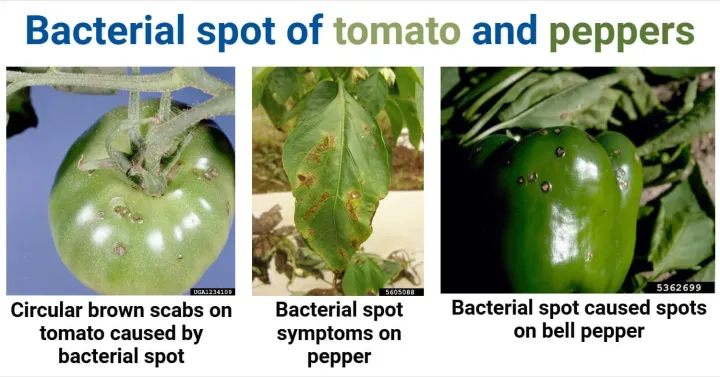
Leaf lesions present as small brown or black spots, often surrounded by a yellow halo, eventually causing premature leaf drop and reducing the plant's photosynthetic capacity significantly.
Fruit damage manifests as deep, scab-like lesions that degrade the quality of the produce, rendering it unmarketable. These lesions also serve as entry points for secondary pathogens that cause fruit rot.
During severe outbreaks, yield reductions can range from 20% to 50%, especially when agricultural practices are poor and preventive measures against bacterial infection are neglected.
When it appears
Disease development is most rapid during warm and humid weather. The optimal temperature range for the growth and spread of Xanthomonas perforans is between +25°C and +30°C.
High relative humidity (over 80%) and the presence of surface moisture are critical factors for infection, as the bacteria require a film of water to move and penetrate plant tissues effectively.
In greenhouses, the spread of the disease is often exacerbated by overhead irrigation, which provides the necessary moisture for the pathogen to move from infected to healthy plants.
Infected seeds or nursery transplants are the primary sources of seasonal outbreaks. Secondary spread occurs through rain splashes, contaminated irrigation water, and the movement of equipment or tools.
The peak incidence of the disease typically occurs mid-season when hot temperatures coincide with frequent rain, creating the perfect environmental conditions for bacterial proliferation.
Signs of infestation
Initial symptoms appear on the lower leaves as small, water-soaked spots that quickly turn dark brown or black, representing tissue necrosis.
A yellow chlorotic halo around the necrotic spots is a diagnostic signature of this disease, indicating the production of bacterial toxins that disrupt local plant physiology.
Stem and petiole infections cause elongated brown lesions, which can lead to organ distortion or breakage, hindering the structural integrity and growth of the plant.
Fruit symptoms involve the formation of raised, scab-like spots that may crack over time, exposing the fruit interior and facilitating opportunistic fungal or secondary bacterial decay.
Under humid conditions, a sticky bacterial ooze may be visible on the surface of the lesions; this exudate contains massive amounts of bacteria that are easily dispersed by wind and rain.
Control measures
Effective management requires a multi-layered approach, starting from the use of disease-free planting material to the application of timely chemical treatments.
Cultural practices include long-term crop rotation (at least 3 years without solanaceous crops) and thorough incorporation of crop residue to reduce the inoculum load in the field.
- Utilizing tomato hybrids with known genetic resistance to local races of Xanthomonas perforans.
- Seed treatment and the use of sterile growing media for seedling production.
- Preventive applications of copper-based bactericides before symptoms appear.
- Implementation of drip irrigation to avoid leaf surface wetting.
- Strict sanitation protocols for tools, equipment, and clothing to prevent mechanical transmission.
If an outbreak is detected, affected plants should be promptly rogued and destroyed, and the area should be disinfected to contain the spread of the pathogen.
Discussion
No discussions yet — be the first.