
Xanthomonas gardneri
Xanthomonas gardneri
Description
How to identify
Xanthomonas gardneri is a Gram-negative, rod-shaped, and aerobic bacterium belonging to the Proteobacteria phylum. It is recognized as a significant plant pathogen responsible for bacterial spot disease in various solanaceous crops.
Taxonomically, it is classified within the genus Xanthomonas, a group known for causing various vascular and foliar diseases in plants worldwide. It primarily infects the host through natural openings like stomata or via wounds.
The bacterium is motile, utilizing a polar flagellum for movement in water films. This mobility is a critical factor in how the pathogen spreads across leaf surfaces and interacts with the host tissue.
Genomic studies confirm that X. gardneri is highly virulent and capable of rapid evolution, often allowing it to circumvent plant resistance mechanisms that were previously effective against other pathogens.
Laboratory diagnosis is essential, as the symptoms caused by this bacterium are often indistinguishable from those produced by other related species like Xanthomonas vesicatoria without molecular assays.
What it damages
The primary hosts of Xanthomonas gardneri are members of the Solanaceae family, with tomatoes and peppers being the most economically impacted crops in both greenhouse and open-field systems.
Infection results in substantial yield loss due to reduced photosynthetic area and premature senescence of the foliage. Severe infections can lead to the complete defoliation of the crop.
The pathogen targets the fruit directly, causing unsightly lesions that make them unmarketable. Furthermore, these necrotic spots compromise the fruit integrity, providing entry points for other decay organisms.
Seedlings are particularly vulnerable; infection at the early stage can cause plant stunting or systemic collapse, leading to significant stand losses in commercial vegetable production.
The economic impact extends beyond direct crop loss, as growers must invest heavily in disease management, monitoring, and sanitation to keep the pathogen under control.
When it appears
The development of the disease is strictly dependent on favorable environmental conditions, specifically high humidity and temperatures ranging from 24°C to 30°C.
Rainfall, heavy dew, and overhead irrigation are major contributors to disease spread, as free moisture facilitates the movement of bacterial cells and their colonization of new plant tissues.
The disease cycle often starts with contaminated seeds or infected transplant material. Once introduced, the bacteria can spread rapidly through the field during the growing season.
The pathogen can persist in the environment between growing seasons by surviving in crop debris, infested soil, or on alternative weed hosts that belong to the Solanaceae family.
Wind-driven rain and the movement of equipment and workers through wet foliage are the primary mechanisms for the secondary spread of the disease during the peak growing period.
Signs of infestation
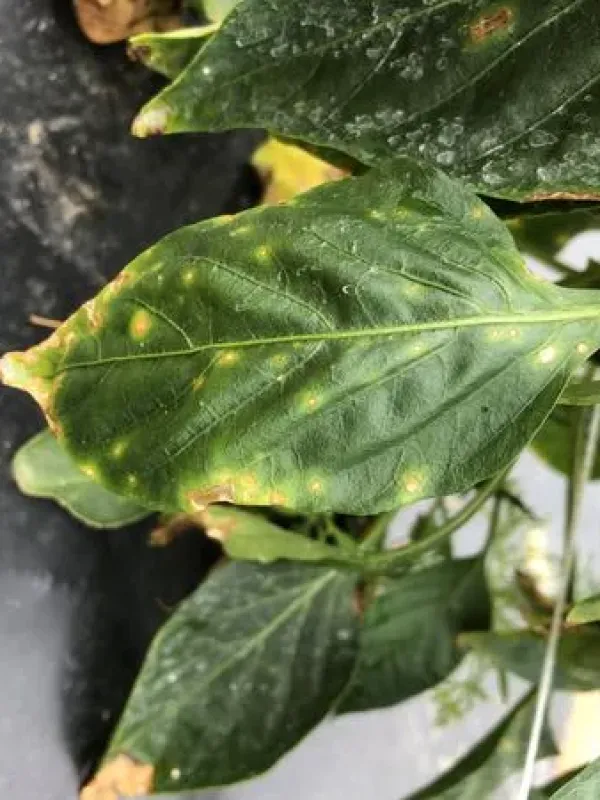
The symptoms of infection typically manifest as small, water-soaked, greasy-looking spots on the leaves. As the disease progresses, these spots expand, darken, and become necrotic.
Yellowing (chlorosis) often develops around the lesions, and in severe cases, the spots may coalesce, leading to large patches of dead tissue and leaf curling.
Fruit symptoms are distinct and critical for diagnosis, often presenting as small, raised, brown or black scabby lesions that can crack over time.
Key observational signs include:
- Water-soaked, angular spots on the foliage.
- Dark necrotic centers within the leaf lesions.
- Raised, scab-like spots on the surface of developing fruit.
- Stem lesions that may eventually lead to breakage.
- Premature drop of flowers and young fruitlets.
Timely monitoring is crucial, as the bacterial population builds up rapidly under the right environmental conditions, making late-stage intervention ineffective.
Control measures
Management of Xanthomonas gardneri relies on an integrated approach because curative options for bacterial diseases are extremely limited in agriculture.
The most effective strategy is the use of pathogen-free seeds and certified disease-free transplants. Rigorous exclusion is the first line of defense against the introduction of the bacteria.
Crop rotation practices should exclude solanaceous crops for at least three seasons to allow the bacterial population in the soil to decline to undetectable levels.
Good sanitation is vital; this includes the removal and destruction of crop residues immediately after harvest and the disinfection of all tools, containers, and greenhouse surfaces.
Preventative applications of copper-based bactericides can help limit the spread of the pathogen, but they must be applied before the onset of infection to provide maximum protection.
Discussion
No discussions yet — be the first.