
Bacterial spot of pepper and tomato
Xanthomonas euvesicatoria
Description
How to identify
The causative agent of bacterial spot is the Gram-negative, rod-shaped bacterium Xanthomonas euvesicatoria (formerly known as Xanthomonas campestris pv. vesicatoria). It is a major pathogen belonging to the Xanthomonadaceae family.
The bacterium is highly specialized to infect solanaceous crops. It persists as a pathogen in contaminated seeds, plant debris in the soil, and on volunteer plants from the previous season.
Environmental moisture is the key factor for the pathogen's survival and dissemination. It enters plant tissues through natural openings like stomata or through wounds caused by wind, hail, or agricultural operations.
The pathogen thrives in warm and humid climates. The optimum temperature for the growth and infection process is generally between 25°C and 30°C.
Dispersal occurs mainly through rain splashes, wind-driven moisture, and contaminated tools. The bacteria multiply within the parenchyma, causing tissue breakdown and necrotic lesions.
What it damages
Tomatoes (Solanum lycopersicum) and peppers (Capsicum annuum) are the primary hosts. The disease causes significant economic loss by reducing both the yield and the aesthetic quality of the fruits.
Infection in the seedling stage can lead to damping-off and the complete loss of nursery stock. In mature plants, all above-ground parts are susceptible, including foliage, stems, and fruits.
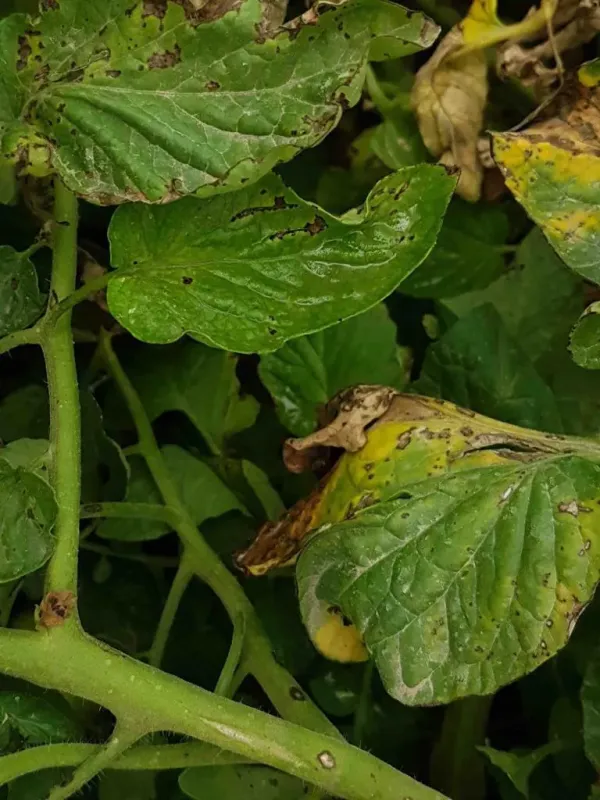
Leaf lesions initially appear as small, water-soaked spots that eventually turn dark brown or black, often surrounded by a chlorotic halo. Severe infection leads to leaf yellowing and premature defoliation.
On fruits, the disease manifests as small, raised, circular spots that eventually expand into large, scabby lesions. These fruits are unmarketable and prone to secondary soft rot pathogens.
The overall impact of bacterial spot is a weakened plant with reduced photosynthetic area, leading to stunted growth and a considerable decrease in total fruit weight.
When it appears
Outbreaks are most severe during periods of warm, wet weather. Frequent rainfall and high humidity provide the necessary conditions for the bacteria to multiply and spread across the field.
In greenhouse production, the disease can be a persistent threat year-round if humidity control is inadequate. Condensation on leaves is a primary trigger for rapid disease progression.
The incubation period of Xanthomonas euvesicatoria is relatively short, usually ranging from 5 to 7 days depending on the cultivar and environmental temperature.
Late summer months, characterized by heavy rains combined with wind, create ideal scenarios for the wide dispersal of the pathogen from initial infection points to healthy neighboring plants.
As temperatures drop during autumn, the bacterial activity decreases. The pathogen enters a survival phase, overwintering in soil organic matter or on perennial weed hosts in the nightshade family.
Control measures
The most effective management strategy is the use of certified, disease-free seed and high-quality transplants. Seed treatment is the first line of defense against seed-borne infection.
Crop rotation is essential for disease management. A minimum interval of 3 to 4 years between solanaceous crops is recommended to reduce the buildup of inoculum in the soil.
Greenhouse sanitation, including disinfecting trays, tools, and surfaces, is critical. Implementing drip irrigation instead of overhead watering helps keep foliage dry and suppresses the pathogen.
Preventative applications of copper-based bactericides are commonly used to provide a protective layer on the plant surface, although copper resistance in some strains is a concern in certain regions.
- Selection of resistant or tolerant cultivars and hybrids.
- Immediate removal and destruction of infected plant material.
- Avoidance of working in fields when foliage is wet.
- Effective insect and weed control to minimize mechanical wounding and pathogen reservoirs.
Discussion
No discussions yet — be the first.