
Bacterial leaf spot of cucurbits
Xanthomonas cucurbitae
Description
How to identify
The disease is caused by the bacterium Xanthomonas cucurbitae (formerly known as Xanthomonas campestris pv. cucurbitae). It belongs to the genus Xanthomonas and is a major threat to cucurbit production worldwide.
The pathogen is a gram-negative, rod-shaped, motile bacterium. It is known for its ability to persist in soil for several years and seed-borne transmission, making it difficult to eradicate once established.
What it damages
Common hosts include pumpkin, cucumber, squash, watermelon, and cantaloupe. The infection causes significant damage to foliage, stems, and fruits, rendering them unfit for the fresh market.
The severity of fruit damage often leads to severe losses, as the lesions provide an entry point for soft rot bacteria, which quickly destroy the fruit flesh.
When it appears
The bacteria thrive under warm, humid conditions with temperatures ranging from 25°C to 30°C. Heavy rainfall and overhead irrigation are the primary drivers of pathogen spread.
Infection cycles occur throughout the growing season whenever moisture is present on leaf or fruit surfaces. The bacteria enter the plant through natural openings like stomata or via mechanical wounds.
Signs of infestation
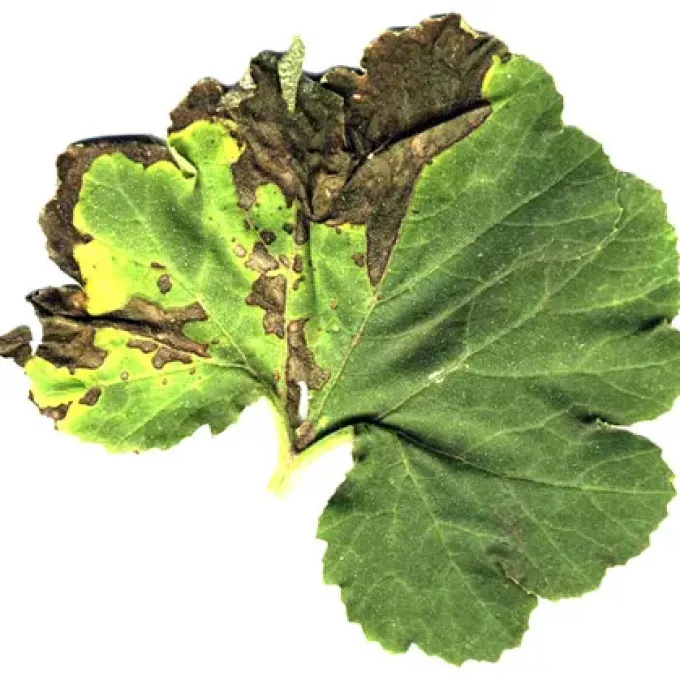
Leaves exhibit small, water-soaked, angular spots bordered by small veins. Over time, these spots become necrotic and turn light brown, often appearing paper-like.
Fruits develop small, circular, water-soaked spots that eventually sink and become tan-colored, scab-like lesions. These lesions may crack, leading to secondary bacterial decay.
Control measures
Integrated pest management is crucial for controlling this disease. Start with pathogen-free, certified seeds and follow a rigorous sanitation program in the field.
- Crop rotation with non-host plants for at least 3 years to reduce inoculum.
- Removal and destruction of crop residues to prevent overwintering.
- Application of copper-based bactericides at the initial sign of infection.
- Avoidance of overhead irrigation to keep the plant canopy dry.
Discussion
No discussions yet — be the first.