
Xanthomonas albilineans
Xanthomonas albilineans
Description
How to identify
Xanthomonas albilineans is a Gram-negative, motile bacterium of the genus Xanthomonas, belonging to the Xanthomonadaceae family. This phytopathogen is the causal agent of a systemic vascular disease known as leaf scald of sugarcane.
The bacterium resides in the vascular tissues (xylem) of the host plant, where it multiplies and blocks the transport of water and nutrients. It remains viable in infected plant debris and vegetative propagation materials like setts.
The pathogen's life cycle is closely linked to mechanical damage and insect vectors. The bacteria produce specific toxins, such as albicidin, which inhibits the formation of chloroplasts, leading to the characteristic whitening of plant leaves.
Systematically, this species is highly specialized for specific crops within the grass family. Under laboratory conditions, the bacterium produces yellow-pigmented colonies, which serves as a critical diagnostic marker for identification.
Dissemination occurs primarily via infected planting material, although rain splashes and wind also facilitate the transfer of bacteria onto healthy plants through fresh wounds.
What it damages
The primary host is sugarcane (Saccharum officinarum), which faces massive economic losses during leaf scald outbreaks. The disease affects all parts of the plant, including stems, leaves, and root systems.
Besides sugarcane, certain wild grasses may act as natural reservoirs for the infection. These wild hosts help maintain the pathogen population during the off-season, making disease eradication challenging.
Damage to the xylem causes a sharp decline in photosynthetic activity and water stress, rendering the plant vulnerable to secondary infections. Consequently, infected plantations deteriorate rapidly over time.
The systemic nature of the infection means that the pathogen spreads throughout the entire plant, from the roots to the apical bud. This makes it impossible to treat individual infected sections on an industrial scale.
The severity of the damage depends on the resistance of the specific sugarcane hybrid and environmental conditions. Heavy infections can lead to complete failure of the plantation yield.
Signs of infestation
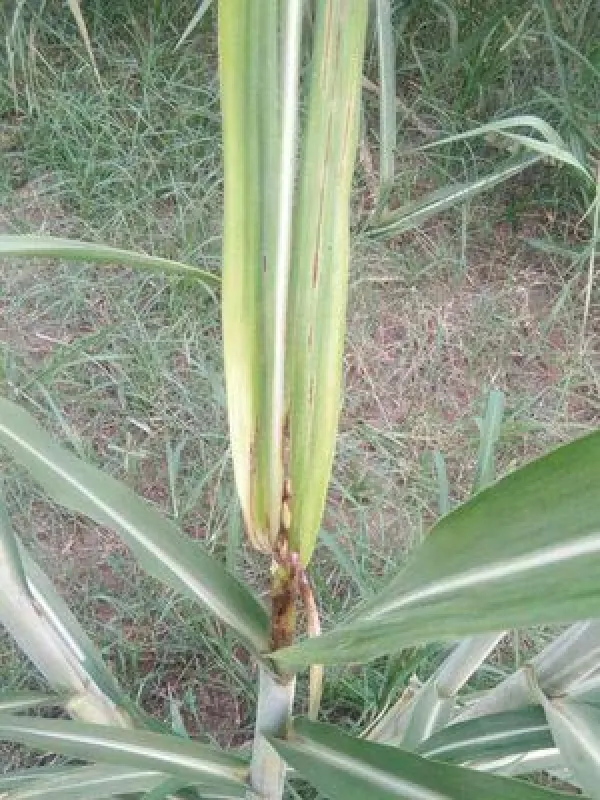
The initial symptom is the appearance of narrow, longitudinal white stripes on the leaves, which can extend across the entire length of the leaf blade. As the disease progresses, these stripes widen and become fully chlorotic.
In advanced stages of the pathogen's development, necrosis of the tissues occurs within these stripes, leading to leaf drying and premature death. Often, a sudden wilting and "scalded" appearance of the foliage is observed.
Internal stem tissues reveal reddish discoloration of the vascular bundles when sliced, indicating systemic bacterial colonization. The stems become brittle, and overall growth is significantly stunted.
When the apical bud is infected, "apical wilting" occurs, where the central leaves curl and die. This is a critical sign of systemic failure, usually leading to the total loss of the stalk's productivity.
Infected plants often produce excessive side shoots from dormant buds, giving the plant an abnormal, ruffled appearance. This is a stress reaction to the suppression of the primary growth point.
Control measures
The primary strategy for control is the use of certified, disease-free planting material. Strict quarantine measures during the movement of sugarcane setts between regions are essential to prevent the expansion of the disease.
Cultivation of resistant or tolerant sugarcane hybrids is a vital agronomic practice. Breeding for immunity remains the most effective and environmentally friendly method of pathogen management.
Regular disinfection of agricultural equipment used for harvesting and planting significantly reduces the risk of mechanical transmission of bacteria from infected to healthy plants.
If infection foci are discovered, immediate removal and destruction of affected plants via burning are recommended. This helps to localize the inoculum source and protect neighboring fields.
Crop rotation and effective weed control of host grasses help reduce the infection pressure. A comprehensive approach, combining quarantine, genetic resistance, and strict sanitation, ensures crop stability.
Causes diseases · 1
Discussion
No discussions yet — be the first.