
Rice root-knot nematode
Rice gall
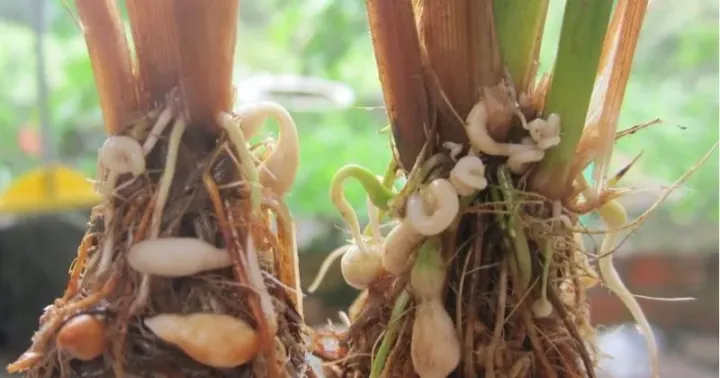
Description
How to identify
The rice root-knot nematode Meloidogyne graminicola is a devastating plant-parasitic nematode belonging to the phylum Nematoda. It is a highly specialized obligate endoparasite that colonizes the root systems of graminaceous crops.
This pathogen is identified by the presence of characteristic galls on the roots. Adult females become sedentary inside the roots, where they establish specialized feeding sites known as giant cells, which facilitate their growth and reproduction.
The infective second-stage juveniles (J2) are the primary mobile phase. They migrate through the soil and water film to locate and penetrate the root tips of the host plant, initiating the disease cycle.
Diagnostic identification typically involves microscopic examination of perineal patterns of adult females and DNA-based techniques to distinguish M. graminicola from other root-knot nematode species.
Given its ability to thrive under both flooded and dryland rice cultivation systems, this nematode is considered one of the most challenging biological constraints for global rice production.
What it damages
The primary host for this nematode is rice Oryza sativa. The parasite interferes with the plant's water and nutrient uptake, leading to stunted growth, yellowing, and significantly reduced yield potential.
It also parasitizes various grass weeds, which serve as essential alternative hosts, allowing the nematode population to persist in fields even when the primary rice crop is absent.
Damage is characterized by the formation of root galls, which disrupt the vascular system of the roots. This physical damage prevents the efficient transport of water and soil minerals to the plant shoots.
The infected roots are predisposed to secondary infections by soil-borne fungal pathogens, such as Fusarium species, which can lead to complete root system rot and plant death.
In severe infestations, the cumulative effect of nutrient deprivation and increased susceptibility to secondary pathogens can cause devastating yield losses, sometimes exceeding 50% in vulnerable regions.
When it appears
The life cycle and activity of M. graminicola are highly temperature-dependent. Warm conditions, typically between 25°C and 30°C, accelerate the development of the nematode from egg to adult.
Under favorable environmental conditions, the nematode can complete its full life cycle in as little as three weeks, allowing multiple generations to occur within a single cropping season.
The nematode survives adverse environmental conditions in the soil as eggs or J2 larvae within root fragments or in an inactive state protected by their egg mass matrix.
In irrigation-based rice systems, the water acts as a primary vehicle for the dispersal of infective J2 larvae across the field, facilitating the rapid colonization of new areas.
The early vegetative stage of the rice plant is the most critical time for infection, as the young root tips are highly susceptible to penetration by the invasive juvenile stages.
Signs of infestation
Infected rice fields often show distinct patches of stunted, chlorotic plants. These affected areas are clear visual indicators of high nematode pressure within the root zone.
The most specific sign is the presence of root galls, which appear as swellings or knots on the root tissue. These are particularly noticeable when the root system is washed and examined carefully.
Plants affected by the nematode often exhibit signs of physiological stress, including wilting during midday, even if soil moisture levels appear to be adequate for normal growth.
There is a significant reduction in plant tillering and root volume, which negatively impacts the plant's overall architecture and its ability to support productive panicle development.
At maturity, plants infested with M. graminicola often exhibit delayed development, smaller panicles, and lower grain quality compared to healthy, non-infested crops.
Control measures
Integrated management is essential for controlling this nematode. Crop rotation with non-host species is highly recommended to starve the nematode population and reduce soil inoculum levels.
Sanitation practices, including the aggressive management of grass weeds and the removal of infested root debris from the field, are critical to limiting the buildup of the nematode population.
Water management techniques, such as adjusting the timing and duration of flooding, can be used to create unfavorable conditions for the nematode's development in the soil environment.
Breeding and deploying rice varieties with genetic resistance to M. graminicola is the most sustainable and economically viable long-term solution for managing this serious pest.
Biocontrol agents, such as nematode-trapping fungi or antagonistic bacteria, show promise in reducing nematode density in the soil and protecting the root zone during the early stages of plant growth.
Causes diseases · 1
Discussion
No discussions yet — be the first.