
Pythium aphanidermatum
Pythium aphanidermatum
Description
How to identify
Pythium aphanidermatum is a highly destructive soil-borne oomycete pathogen belonging to the kingdom Chromista. Often colloquially termed a "water mold," it is biologically distinct from true fungi due to its unique cell wall composition and reproductive life cycle.
The organism produces coenocytic (non-septate) mycelium that thrives in moist environments. It reproduces via biflagellate zoospores, which are motile structures capable of swimming through water films in the soil to locate host roots.
Under stressful environmental conditions, such as desiccation or nutrient depletion, the pathogen develops thick-walled oospores. These resting structures are highly resilient and can persist in soil for several years, ensuring the long-term survival of the inoculum.
Taxonomically, it is recognized as one of the most aggressive species within the genus Pythium. Its ability to tolerate higher temperature ranges sets it apart from many other species in the same group, making it a major threat in warm climate agriculture.
Diagnosis requires isolation from infected tissues onto specific growth media. Microscopy reveals characteristic lobed sporangia and the presence of oospores, which allow for a precise identification of the species.
What it damages
This pathogen has an exceptionally wide host range, severely affecting vegetables such as cucumbers, tomatoes, peppers, and various leafy greens. It is also a major concern for ornamental crops and turfgrass management.
The primary damage occurs on the root system, where the pathogen destroys root hairs and cortex tissues. This prevents the plant from absorbing water and essential nutrients, leading to rapid decline and wilting.
In hydroponic greenhouse systems, the pathogen is particularly devastating. Because zoospores move freely through the nutrient solution, a single infected plant can quickly lead to an outbreak involving the entire production cycle.
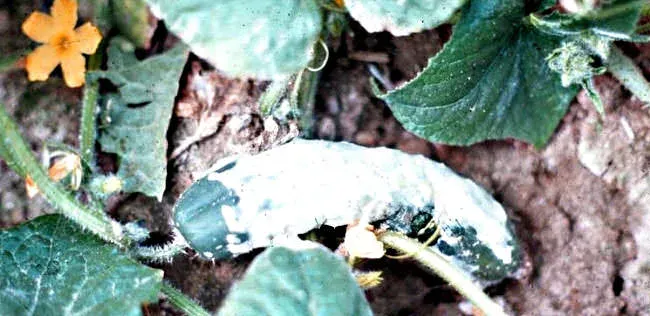
Beyond root damage, P. aphanidermatum can infect fruit tissues that come into contact with soil, causing "cottony leak" or watery fruit rot. This renders fruits unmarketable and causes significant post-harvest losses.
Overall, the impact includes reduced plant vigor, stunted growth, high mortality rates in seedlings, and significant financial losses due to reduced yields and increased costs associated with disease management.
When it appears
Unlike many other Pythium species, P. aphanidermatum is thermophilic, meaning it prefers warmer conditions. The optimal temperature for its growth and disease development ranges from 25°C to 35°C (77°F to 95°F).
High soil moisture or saturated conditions are essential for the release and motility of zoospores. The disease cycle is frequently triggered when irrigation practices result in waterlogged soil, facilitating the movement of the pathogen toward roots.
Root exudates from the host plant play a crucial role in the lifecycle. These chemical signals attract zoospores, which encyst on the root surface before penetrating the tissue using a combination of pressure and enzymatic degradation.
The infection process is rapid. Within a few hours of colonization, the pathogen begins to consume plant tissues, and new sporangia can form within a matter of days, leading to exponential pathogen population growth under favorable conditions.
Management of irrigation frequency and water temperature is vital, as sudden cold water shocks on warm roots can create stress, making the plants more susceptible to the initial invasion.
Signs of infestation
The most distinctive symptom is root rot, where roots turn brown, soft, and watery. In advanced stages, the outer cortex of the root sloughs off easily, leaving only the inner vascular core exposed.
- Stunted growth and poor foliage development.
- Wilting during the warmest parts of the day.
- Yellowing (chlorosis) of the lower leaves.
- Seedling damping-off (collapse of the stem at the soil line).
- A distinct, foul odor emanating from the root zone due to tissue decomposition.
When seedlings are affected, they often topple over shortly after emergence. The base of the stem becomes thin, translucent, and water-soaked, indicating that the pathogen has successfully breached the protective layer of the plant.
On affected fruit, white, cotton-like mycelial growth may appear on the surface. The internal tissue quickly breaks down into a watery mass, which is a classic diagnostic sign of this particular pathogen in field and greenhouse environments.
Control measures
Cultural practices are the first line of defense. This includes improving soil drainage, avoiding over-irrigation, and ensuring that greenhouse benches and trays are properly sanitized between production cycles.
Biological control agents, particularly beneficial fungi like Trichoderma species and certain Bacillus bacterial strains, have shown effectiveness in suppressing Pythium by competing for space and nutrients.
Chemical control involving fungicides specifically labeled for oomycetes (such as metalaxyl or propamocarb) can be used preventatively or at the earliest onset of symptoms. Always ensure rotation to prevent resistance.
Maintaining strict hygiene in hydroponic systems is mandatory. This includes using UV-sterilization, ozone treatment, or filtration to remove zoospores from the recirculating nutrient solution.
Finally, temperature management is key. By keeping the root zone temperature within a range less optimal for the pathogen and ensuring adequate oxygenation of the root environment, growers can significantly increase natural plant resistance.
Causes diseases · 3
Discussion
No discussions yet — be the first.