
Pythium adhaerens
Pythium adhaerens
Description
How to identify
Pythium adhaerens is a species of oomycete that belongs to the family Pythiaceae. Often referred to as a "water mold," it is a significant soil-borne pathogen affecting various plant species worldwide.
Taxonomically, it is classified as a pseudofungus. It thrives in moist environments, where it exists as both a saprophyte on decaying organic matter and an active parasite on living host roots.
The organism reproduces asexually through motile zoospores, which utilize flagella to swim through water films in the soil towards chemical signals emitted by host roots.
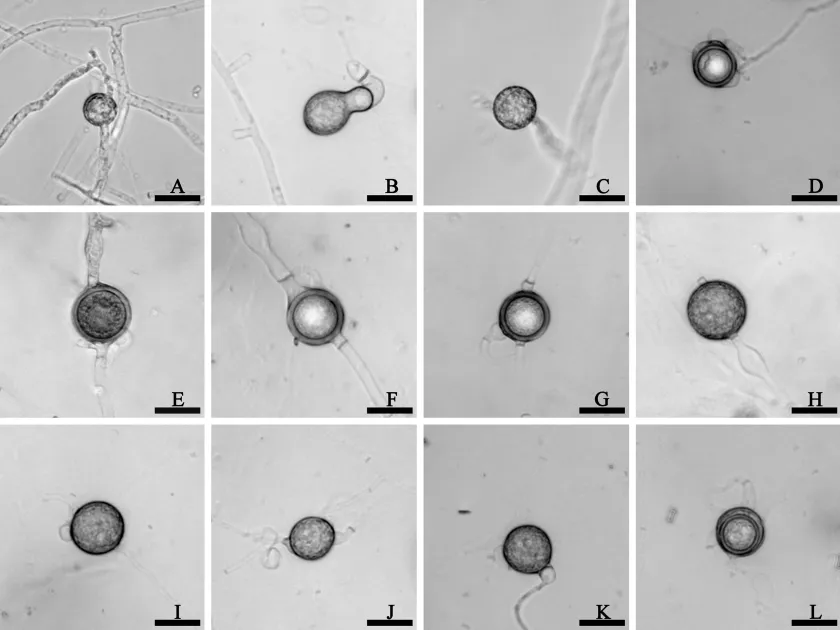
In adverse conditions, Pythium adhaerens produces oospores, which are thick-walled resting structures capable of surviving in the soil for extended periods, making eradication difficult.
The development of this pathogen is highly dependent on high moisture levels. In saturated soil or hydroponic systems, it can complete its life cycle rapidly, leading to significant outbreaks.
What it damages
This pathogen has a wide host range, primarily attacking vegetable crops, ornamental plants, and seedlings. It is particularly destructive during the early stages of plant development.
Common hosts include tomatoes, cucumbers, lettuce, and various floral species. The root system is the primary site of infection, causing irreversible damage to the plant's nutrient uptake mechanism.
By degrading the integrity of root tissues, Pythium adhaerens limits the plant's ability to absorb water, which manifests as stunted growth, leaf chlorosis, and general plant decline.
In greenhouse settings, especially in hydroponic or ebb-and-flow irrigation systems, the pathogen can spread through the water supply, potentially infecting entire batches of crops.
Field damage is typically more severe in compacted, poorly drained soils where restricted oxygen levels weaken the roots and provide an advantage to the swimming zoospores.
When it appears
The most active period for Pythium adhaerens infection is early spring, when soil temperatures are relatively cool and moisture levels are high, supporting zoospore motility.
In protected cultivation environments, the pathogen can remain active throughout the entire growing season if sanitation protocols and moisture management are neglected.
Seedlings and young plants are at the highest risk, as their root systems are less established and more susceptible to penetration by the pathogen's hyphae.
While high temperatures can sometimes slow down the pathogen, inadequate drainage in any season can lead to a flare-up of the disease, making continuous monitoring essential.
In regions with heavy rainfall, the probability of root rot increases, as the excess water facilitates the rapid movement of zoospores from the soil reservoir to the root zones.
Signs of infestation
Symptoms often begin as a general lack of vigor in seedlings, characterized by yellowing of the lower leaves (chlorosis) and reduced growth rates compared to healthy plants.
- Browning and softening of the root tips.
- Necrosis extending from the root apex towards the stem base.
- Slimy appearance of the root system when handled.
- Wilting of the plant foliage, particularly during the middle of the day.
- Easy detachment of the root cortex from the central vascular cylinder.
A distinctive indicator is the loss of white, healthy roots, which are replaced by discolored, brown tissue. Eventually, the root system fails entirely, leading to plant death.
Because the visual symptoms overlap with other root-rotting oomycetes and fungi, laboratory testing is often required to confirm the presence of Pythium adhaerens.
Control measures
Effective management begins with sanitation. Using sterilized growing media and disease-free seeds or transplants is the first line of defense against soil-borne pathogens.
Proper irrigation management is critical. Ensure that soil or growing media are well-drained and never left in a state of waterlogging to prevent pathogen spread.
The application of biological control agents, such as beneficial Trichoderma or Bacillus species, can help suppress the pathogen's population in the rhizosphere.
Chemical control involves the use of systemic fungicides specifically targeted at oomycetes, which can protect roots from infection and limit the development of the pathogen.
Maintaining optimal greenhouse environmental conditions, including appropriate temperature control and good airflow, helps plants remain robust and resistant to initial colonization.
Discussion
No discussions yet — be the first.