
Pythium
Pythium
Description
How to identify
Pythium is a genus of oomycetes (water molds) classified within the kingdom Chromista. Although often mistaken for fungi, they are phylogenetically distinct and represent a major threat to agricultural productivity worldwide.
These organisms are characterized by coenocytic, non-septate hyphae that ramify through the soil. Under favorable conditions, they produce zoospores equipped with flagella, allowing them to swim through water films to locate root tissues.
Life cycle complexity is a hallmark of this genus, as it involves both asexual reproduction via sporangia and sexual reproduction via thick-walled oospores. These oospores are highly resilient and can remain dormant in soil for years.
The taxonomic diversity of Pythium is vast, with over 100 described species. Some are generalists, attacking a wide range of host plants, while others exhibit specific preferences for certain crop species.
Detection often involves culturing on specialized selective media, where Pythium colonies typically appear as rapidly spreading, white, cottony mycelium, allowing for accurate morphological identification.
What it damages
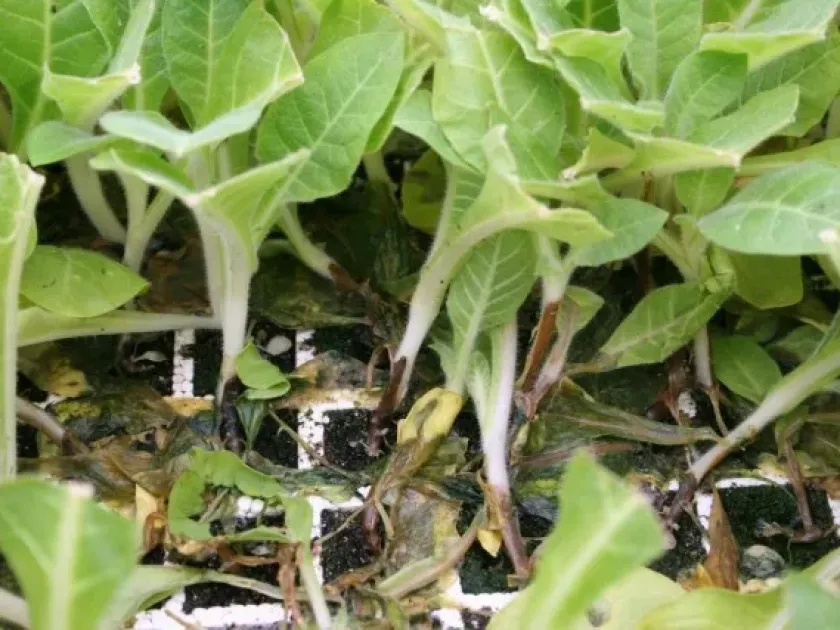
Pythium is primarily responsible for "damping-off," a condition that kills germinating seeds and young seedlings. This results in significant stand reductions and often necessitates expensive replanting.
Beyond the seedling stage, the pathogen induces severe root rot in mature plants. By destroying the root cortex, it compromises the plant's ability to uptake water and nutrients, leading to stunting and chlorosis.
In hydroponic and greenhouse environments, Pythium can wreak havoc by colonizing the entire root system, causing the plants to collapse within days due to the total loss of root function.
Plants affected by the disease are significantly more susceptible to secondary infections by other soil-borne pathogens, as the damage to the root barrier provides an easy entry point for other organisms.
The economic impact is multifaceted, involving both direct losses from plant mortality and indirect losses due to reduced growth rates, uneven crop maturation, and the cost of repeated fungicide applications.
When it appears
Pythium thrives in environments with high soil moisture and cool to moderate temperatures. It is particularly destructive during early spring when soils are frequently waterlogged from precipitation.
Oxygen deficiency in water-saturated soil weakens the plant's natural defenses, while the water films allow zoospores to migrate and find hosts more efficiently. This creates an ideal window for infection.
In indoor agricultural facilities, Pythium can persist throughout the entire year, especially if irrigation systems are not properly managed or if the water source contains recycled drainage.
While some species prefer cooler weather, others have adapted to warmer temperatures, meaning that the risk of infection remains persistent throughout the growing season in many diverse climates.
Drought conditions typically halt the active proliferation of the pathogen, though it effectively transitions into a dormant survival phase to wait for the next period of environmental favorability.
Signs of infestation
The most telltale sign of Pythium infection is the sudden wilting and collapse of seedlings. The stem at the soil line often appears soft, water-soaked, and translucent before turning brown.
Root systems of infected plants look sparse and stunted. The root tips are typically discolored, turning brown or black, and the outer layer of the root often sloughs off, leaving behind a thin, stringy inner core.
Above-ground symptoms manifest as chlorosis (yellowing) of the foliage and a gradual decline in plant vigor. In severe cases, the plant may wilt during the hottest parts of the day even if soil moisture is high.
In crops like corn or wheat, infection can lead to patchiness within a field, where small areas of plants die off while surrounding vegetation appears healthy, reflecting localized moisture accumulation.
If looking at a root ball, one might detect an off-putting, sour, or rotting smell, which is indicative of decomposing tissue and the presence of bacterial secondary colonizers accompanying the Pythium infection.
Control measures
Effective management begins with cultural practices. Proper soil drainage and avoiding over-irrigation are the most effective ways to break the cycle of water-borne zoospore spread.
Seed treatments with specific fungicides are essential in areas with a history of Pythium pressure to protect the vulnerable germinating tissues during the first few days of growth.
Sanitation is paramount in greenhouses: disinfecting pots, tools, and recirculating water systems is critical to prevent the introduction of pathogens into sterile growing environments.
Biological control agents, such as specific strains of Trichoderma species, are increasingly used to colonize the root zone and protect plants through competition and antibiosis against Pythium.
- Use high-quality, fungicide-treated seeds.
- Implement long-term crop rotation cycles.
- Ensure soil health through organic amendments that promote beneficial microbes.
- Regularly monitor irrigation water for signs of contamination.
Causes diseases · 2
Discussion
No discussions yet — be the first.