
Hop downy mildew
Pseudoperonospora humuli
Description
How to identify
Hop downy mildew is a destructive disease caused by the oomycete Pseudoperonospora humuli. It is a highly specialized pathogen that exclusively infects the hop plant (Humulus lupulus).
Taxonomically, it belongs to the Kingdom Chromista, Phylum Oomycota, and Family Peronosporaceae. It is often mistaken for a fungus, but it behaves as a water mold.
The pathogen overwinters primarily as dormant oospores within crop debris in the soil or as systemic mycelium within the hop crowns and rhizomes.
In spring, sporangia are produced under high humidity and spread via wind, rain splash, or insects to the emerging hop shoots.
The development of the disease is strictly dependent on moisture. Free water on leaf surfaces and temperatures between 15°C and 20°C are optimal for infection cycles.
What it damages
This disease is a major threat to the hop industry worldwide. Severe infections can lead to a total loss of commercial yield if not properly managed.
Direct damage occurs when the pathogen infects the cones, causing them to turn brown, wither, and become completely useless for the brewing industry.
Systemic infection of the crown weakens the entire plant, leading to stunted growth, reduced vigor, and significantly lower production in subsequent seasons.
Early-season attacks on shoots result in the development of "spikes" or deformed branches, which disrupt the natural climbing structure of the hop vine.
Chronic infestation of a hop yard often necessitates premature replanting due to the decline and death of the plant root systems.
Signs of infestation
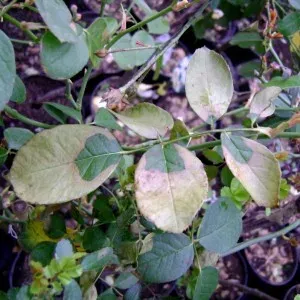
Early leaf symptoms consist of small, angular chlorotic spots restricted by the leaf veins, which later turn necrotic and dark brown.
A diagnostic feature is the presence of a fuzzy, gray-to-purple sporulation layer on the undersides of leaves during periods of high humidity.
Infected shoots exhibit stunted, curled tips known as "basal spikes" or "shepherd’s crooks," which are covered in a characteristic gray mildew layer.
Hop cones affected by the disease develop discolored brown patches, lose their luster, and eventually shrivel, making the damage visible from a distance.
Infected vines may show premature leaf drop, which leaves the plant vulnerable and severely reduces its capacity to store nutrients for winter dormancy.
Control measures
Management starts with the selection of resistant hop cultivars, which is the most sustainable way to reduce the impact of downy mildew.
Cultural practices are vital: growers must prune and destroy basal spikes as soon as they appear in the spring to minimize the primary inoculum.
Improving canopy ventilation through proper vine training and leaf stripping helps reduce the local humidity that the pathogen requires for sporulation.
Chemical control involves the application of protective contact fungicides and curative systemic products during high-risk periods, especially when rain is forecasted.
- Sanitation of equipment and tools.
- Avoidance of overhead irrigation.
- Routine monitoring of the hop yard.
- Optimizing nitrogen levels to avoid overly lush growth.
Causes diseases · 1
Discussion
No discussions yet — be the first.