
Downy mildew of cucurbits
Pseudoperonospora cubensis
Description
How to identify
The pathogen responsible for downy mildew is Pseudoperonospora cubensis, an obligate parasite classified as an oomycete. Although it shares symptoms with fungal diseases, it is taxonomically distinct and requires specialized chemical control strategies.
The pathogen spreads through sporangia, which are easily carried by wind and rain splashes over long distances. It survives in soil through oospores or persists on infected plant debris, making hygiene a critical component of disease management.
Its life cycle is heavily dependent on moisture. Once sporangia land on a leaf, they release zoospores in the presence of free water. These zoospores enter the plant tissue through stomata, initiating the infection cycle within the host tissue.
Inside the plant, the pathogen develops a branching mycelium. In favorable conditions, it ruptures the stomata to produce new sporangia on the leaf underside, causing rapid secondary infections across the entire plantation.
The disease cycle can be as short as three to five days under warm and humid conditions, which explains why downy mildew often leads to devastating, sudden outbreaks in cucurbit crops.
What it damages
Downy mildew affects virtually all cucurbits, including cucumbers, zucchini, squash, pumpkins, melons, and watermelons. It can attack plants at any developmental stage, but it is most lethal during the flowering and fruit-setting phases.
The primary damage results from the destruction of leaf tissue, which halts photosynthesis. This causes stunted growth, premature fruit ripening, and significant yield losses, often rendering the crop commercially worthless.
In greenhouses, the disease can wipe out an entire crop in less than a month if left untreated. The economic impact is further magnified by the reduced fruit quality, including loss of sweetness and poor shelf life post-harvest.
Weakened plants are prone to secondary infections by other pathogens, further reducing the overall health of the crop. Severe outbreaks often lead to the total collapse of the canopy, exposing fruits to sunburn.
Persistent infections lead to deformed, undersized fruits that do not meet market standards. The loss of foliage also removes the primary defense against environmental stress, exacerbating the overall damage to the farm.
When it appears
The disease is most prevalent in the mid-to-late summer when fluctuating temperatures and high humidity create ideal conditions. Dehumidification is difficult in large fields, making these periods high-risk for growers.
In greenhouses, the season is governed by irrigation and ventilation management. Poor airflow combined with high moisture levels creates a permanent risk for the development of downy mildew, regardless of the outdoor weather.
Outbreaks often correlate with the peak fruiting season, as plants become nutritionally stressed. Vigilant monitoring during this period is essential, as the rate of infection accelerates significantly under these conditions.
The pathogen thrives at temperatures between 15°C and 22°C. While higher heat can slow down its progression, the pathogen persists and restarts its cycle immediately once the temperature drops or moisture levels increase.
Post-harvest management is crucial as the pathogen remains in the debris. Removing and destroying all infected plants at the end of the season is the most effective way to prevent the recurrence of the disease the following year.
Signs of infestation
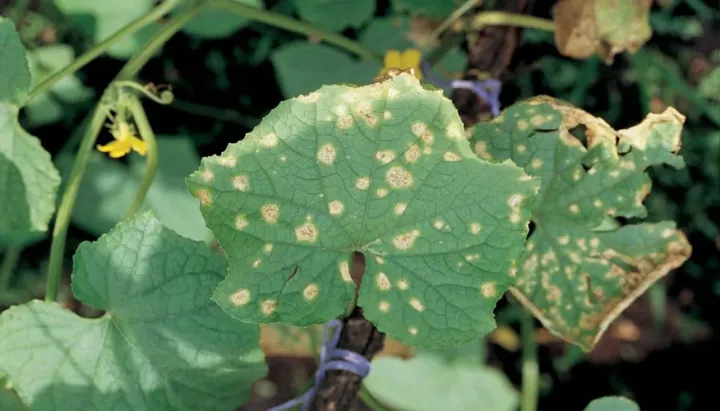
Symptoms begin as small, chlorotic (yellow) spots on the upper leaf surface. These spots are restricted by the leaf veins, giving them a distinct angular, mosaic-like appearance that differentiates them from other diseases.
The hallmark of the disease is the development of a dense, gray or olive-colored sporulation on the underside of the leaf, directly beneath the yellow spots. This is visible under high humidity or early morning dew.
As the infection progresses, the yellow spots turn brown and necrose. The entire leaf eventually dries up, curls, and crumbles, leaving the plant defoliated. The stems and fruits may remain, but they stop developing.
Unlike powdery mildew, the sporulation of Pseudoperonospora cubensis is never found on the upper surface of the leaf. This clear distinction is essential for proper diagnosis and correct choice of control products.
- Angular yellow spots on the upper leaf surface.
- Gray-purple mold on the leaf undersides.
- Rapid browning and necrosis of leaf tissue.
- Stunted fruit development and deformation.
- Rapid canopy decline and death of leaves.
Control measures
Cultural control is the first line of defense. Growers should use drip irrigation instead of overhead watering to keep leaf surfaces dry. Improving ventilation in greenhouses is equally important to minimize condensation.
Crop rotation is mandatory to break the disease cycle. Do not plant cucurbits in the same soil for at least three to four years to allow oospores in the soil to die off naturally.
Chemical control involves the use of protective (contact) and curative (systemic) fungicides. Copper-based products are often used for prevention, while targeted fungicides effectively inhibit the metabolism of the oomycete.
Timing is critical; fungicide applications must begin before the first signs of disease appear, particularly when forecasts predict rainy or humid conditions. Regular scouting of the lower leaf surfaces is vital.
Biological controls, including products based on beneficial bacteria like Bacillus subtilis, can help suppress the growth of the pathogen and increase the plant's natural resistance to colonization.
Causes diseases · 1
Discussion
No discussions yet — be the first.