
Pseudomonas gladioli
Pseudomonas gladioli
Description
How to identify
Pseudomonas gladioli, now scientifically classified as Burkholderia gladioli, is a motile, gram-negative bacterium that acts as a serious plant pathogen.
Belonging to the family Burkholderiaceae, this organism is widely known for its ability to produce various metabolites and toxins that damage plant cell walls.
The pathogen is ubiquitous in soil environments and can survive for long periods on plant debris, making it a persistent threat to agricultural productivity.
In a laboratory setting, the bacterium is identified by its morphology and its specific reaction on agar media, which is essential for accurate diagnostics in clinical plant pathology.
Spread is primarily facilitated by contaminated water sources, infected planting material, and agricultural tools that carry the bacterium between plants.
What it damages
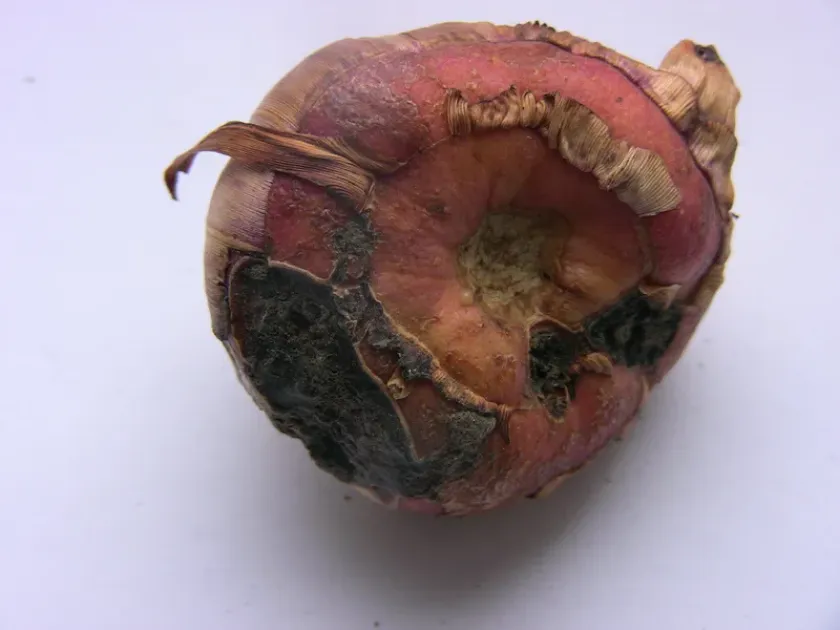
The bacterium is best known for causing bacterial scab in members of the Iridaceae family, particularly gladiolus, causing significant losses to ornamental plant growers.
Beyond flowers, Burkholderia gladioli is a major pathogen for onion and garlic crops, where it causes severe rotting of bulbs both in the field and in storage.
Greenhouse crops, including various orchid species, are also highly susceptible to infections by this pathogen under conditions of high humidity.
The economic impact involves not only the loss of yield but also the rejection of infected bulbs due to their poor quality and susceptibility to secondary infections.
Severe infestations often result in the total destruction of plant tissues, rendering them unsuitable for retail and further cultivation.
When it appears
The disease cycle is most active during the growing season, particularly when temperatures are moderate to warm and rainfall is frequent.
Splashing water from rain or overhead irrigation is a primary mechanism for the dispersal of the bacteria from the soil to the leaves and bulbs of host plants.
During the storage period, the pathogen shifts into an active phase if the storage conditions are suboptimal, leading to rapid development of storage rot.
Spring planting serves as a critical window for infection, especially if the bulbs carry latent bacterial populations from the previous harvest.
The longevity of the pathogen in the soil is supported by its ability to survive in decaying plant matter throughout the dormant season.
Signs of infestation
The initial signs of infection include small, water-soaked spots on leaves that gradually darken and become necrotic, forming irregular brown lesions.
On bulbs, the infection manifests as sunken, circular brown spots that can progress into deep rot, often affecting the basal plate of the onion or gladiolus corm.
Stunted growth, yellowing foliage, and premature wilting are common indicators that the root system or the bulb has been colonized by the pathogen.
A foul odor, often associated with the breakdown of bulb tissue, is a clear sign that the infection has progressed to an advanced stage of bacterial decay.
Visible sticky exudates may appear on the surface of the lesions under high humidity, which serves as a massive source of secondary bacterial inoculum.
Control measures
The cornerstone of management is the use of disease-free planting stock and the rigorous exclusion of symptomatic bulbs from the nursery.
Crop rotation protocols should be strictly enforced, avoiding the cultivation of susceptible host species on the same field for multiple consecutive years.
Maintaining a dry, well-ventilated storage environment is essential to inhibit the bacterial growth that occurs between the harvest and the next planting cycle.
If soil is known to be infested, soil solarization or chemical treatments may be necessary to reduce the bacterial population before sowing.
- Disinfecting planting tools regularly with bleach or specialized biocides.
- Treating bulbs with bactericidal dips before planting to eradicate superficial infections.
- Ensuring adequate soil drainage to prevent stagnant water which promotes bacterial movement.
Discussion
No discussions yet — be the first.