
Pseudomonas coronafaciens
Pseudomonas coronafaciens
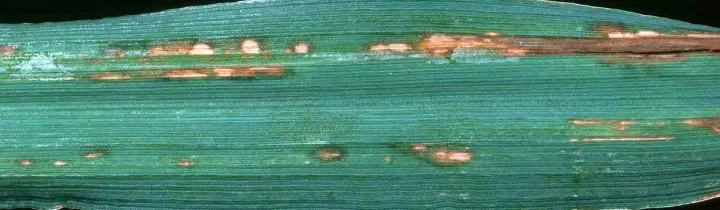
Description
How to identify
Pseudomonas coronafaciens is a gram-negative, motile, rod-shaped bacterium belonging to the genus Pseudomonas. It is a well-known plant pathogen that specifically attacks various cereal crops.
This pathogen is primarily known for causing halo blight in oats. It thrives in the intercellular spaces of host plant tissues, where it secretes toxins that cause tissue death.
The survival of this bacterium depends on its ability to persist in soil, crop debris, and contaminated seeds during unfavorable environmental conditions.
Identification often involves culturing the bacterium on specific media where it produces characteristic pigments or reactions that distinguish it from other soil-borne bacteria.
As a specialized pathogen, it has developed sophisticated mechanisms to suppress the plant's immune system, allowing it to colonize effectively during periods of high humidity.
What it damages
The main host for Pseudomonas coronafaciens is oats (Avena sativa), though it can also infect wheat, barley, and rye. It causes significant damage to foliage and panicles.
The damage is primarily characterized by the destruction of photosynthetic tissue, which reduces the plant's capacity to accumulate biomass and store energy.
Panicle infections lead to malformed seeds and reduced grain weight, which negatively impacts both the yield quantity and the quality of the harvest.
Infection can result in stunted growth and premature leaf senescence, leaving the crop vulnerable to other environmental stresses such as drought or fungal diseases.
Economic losses can be substantial in years with high rainfall, as the disease can rapidly spread across the field, leading to severe yield reductions in susceptible varieties.
When it appears
The infection usually starts during the early vegetative growth stages of the cereal crop, specifically when environmental conditions are cool and wet.
The spread of the pathogen is highly dependent on splashing rain and wind, which transfer the bacterial cells from infected debris or lower leaves to the healthy upper parts of the plant.
Optimal conditions for disease development include temperatures ranging from 18 to 24 degrees Celsius combined with high relative humidity and surface moisture.
During dry and warm summer weather, the disease progression typically slows down, although the bacterium remains viable inside the plant tissues until harvest.
Overwintering occurs primarily through infected seeds and residues left on the field, which serve as the primary inoculum source for the following crop season.
Signs of infestation
The most distinctive symptom is the halo blight, which manifests as brown lesions surrounded by a prominent yellowish-green halo on the leaf blades.
- Dark, necrotic lesions with yellowish borders on the leaves.
- Bacterial exudate, which appears as cloudy droplets on the leaf surface under humid conditions.
- Leaf tips turning brown and wilting, which may progress to the entire leaf blade.
- Deformed and discolored panicles that appear blighted or poorly filled.
- Stem lesions that can weaken the stalks, potentially leading to lodging in severe cases.
Control measures
The use of disease-free, certified seed is the most effective preventative measure to stop the initial introduction of the pathogen into the field.
Implementing a proper crop rotation strategy is crucial to reduce the population of Pseudomonas coronafaciens in the soil by removing susceptible hosts for several years.
Sanitation practices, such as the destruction or deep incorporation of crop residues, help to minimize the carry-over of the inoculum between growing seasons.
Balanced crop nutrition, ensuring adequate levels of potassium and micronutrients, can improve the plant's ability to resist bacterial colonization.
Chemical control options include seed treatments and the strategic application of copper-based bactericides during the early stages of disease development to limit spread.
Discussion
No discussions yet — be the first.