
Plasmopara obducens
Plasmopara obducens
Description
How to identify
Plasmopara obducens is an oomycete pathogen notorious for causing devastating downy mildew disease in members of the genus Impatiens, most notably Impatiens walleriana.
Often referred to as a "water mold," this organism is biologically closer to algae than to true fungi. Its life cycle relies heavily on water, utilizing zoospores that swim through thin films of moisture to infect host plants.
The pathogen produces survival structures called oospores, which allow it to persist in the soil for several years, making it an extremely difficult pathogen to eradicate once established.
It is classified as a highly destructive plant pathogen in the greenhouse industry, capable of causing complete crop loss within just a few weeks under favorable conditions.
The pathogen spreads through contaminated seeds, infected cuttings, and via water splashes during irrigation or rain, which carry sporulated oomycetes to healthy leaf surfaces.
What it damages
Impatiens walleriana is the primary host for Plasmopara obducens. The disease affects all aerial parts of the plant, including leaves, stems, and petioles.
As the infection becomes systemic, the pathogen invades the plant’s vascular system, hindering the transport of water and nutrients, which ultimately results in the total collapse of the plant.
In greenhouses, this pathogen can lead to massive outbreaks that force growers to discard entire crops, causing significant economic damage.
Stunted growth and reduced flowering are early indicators of systemic infection, even before the most severe necrotic symptoms become visible on the foliage.
The damage is often characterized by the rapid loss of leaf mass, which leaves the stems bare and eventually leads to the death of the entire plant structure.
When it appears
The development of Plasmopara obducens is strictly regulated by environmental factors, with high humidity levels and cool to moderate temperatures being the primary drivers of disease outbreaks.
Ideal conditions for infection involve temperatures between 16°C and 22°C combined with free water on the leaf surface for at least several hours to facilitate zoospore germination.
Greenhouse environments provide near-perfect conditions for this pathogen year-round, as the stable climate often fails to reach the thermal thresholds that would naturally inhibit its growth.
Periods of frequent rainfall or heavy morning dew are particularly dangerous for outdoor impatiens beds, leading to rapid disease transmission between plants.
While the pathogen's growth slows significantly above 28°C, the latent oospores remain viable in the soil, ready to initiate a new infection cycle as soon as temperatures drop.
Signs of infestation
Early symptoms of infection often include a mild yellowing or chlorosis of the leaves, which can be easily mistaken for nutrient deficiencies or environmental stress.
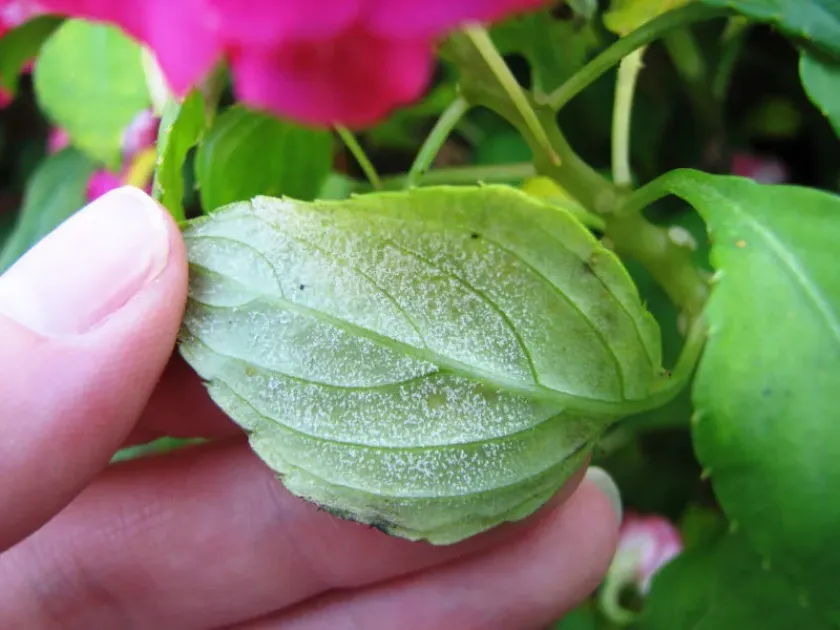
- A characteristic white, fuzzy growth of spores on the underside of the leaves.
- Curling or downward cupping of leaves followed by widespread leaf drop.
- Deformation of terminal buds and stunted shoots.
- Brown, soft, necrotic lesions on stems which may lead to plant collapse.
When the humidity is high, the underside of the leaf may appear frosted, which is a definitive sign of active sporulation.
The total shedding of leaves is a hallmark symptom, often leaving only the tips of the plants with a few remaining, curled leaves before the plant dies entirely.
Control measures
The most effective strategy against Plasmopara obducens is rigorous sanitation and the use of healthy, disease-free starting material from reputable suppliers.
Implementing irrigation practices that keep foliage dry, such as drip irrigation, significantly reduces the probability of zoospore transmission and leaf infection.
Promptly rogueing and destroying infected plants, including the surrounding soil, is essential to minimize the inoculum load within a greenhouse or garden bed.
Fungicides specifically targeting oomycetes, such as those containing mefenoxam, metalaxyl, or fosetyl-aluminum, can be used as a preventative or curative measure.
Practicing crop rotation and avoiding the planting of susceptible impatiens in the same soil for at least three years helps to break the pathogen’s life cycle.
Causes diseases · 1
Discussion
No discussions yet — be the first.