
Phytophthora sansomeana
Phytophthora sansomeana
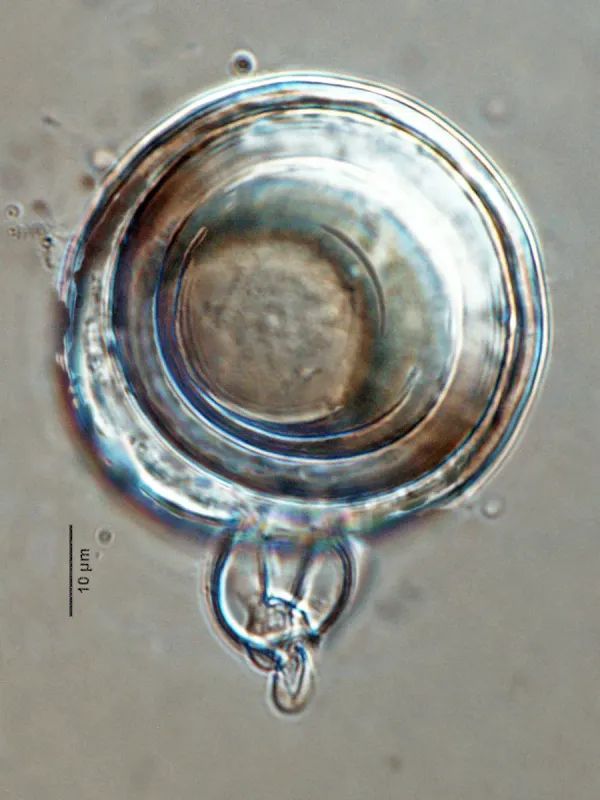
Description
How to identify
Phytophthora sansomeana is an obligate pathogen belonging to the kingdom Protista, group Oomycetes (water molds). This microorganism acts as a soilborne plant pathogen capable of surviving for long periods in agroecosystems as dormant spores.
Unlike other Phytophthora species, this pathogen has a wide host range, making it difficult to manage through standard crop rotation. It is characterized by high virulence under conditions of soil saturation.
Identification is typically achieved by isolation on selective nutrient media or through molecular diagnostic methods such as PCR. Morphologically, it forms branching hyphae and specific sporangia in laboratory cultures.
Systematically, it belongs to the genus Phytophthora, family Peronosperaceae. Its ability to infect various crops makes it a subject of significant phytosanitary concern in intensive agriculture.
The pathogen may infect plants at very early stages, often leading to seedling blight before emergence, which complicates initial field diagnosis.
What it damages
The primary hosts are soybean and corn, where this pathogen causes severe economic losses. Infections in certain legume forages have also been reported.
The pathogen induces systemic root rot, blocking the uptake of water and nutrients by the root system. Under high moisture conditions, the infection spreads rapidly throughout the field.
Damage manifests as significant thinning of stands, often requiring field replanting. In later development stages, infected plants show stunted growth and poor yield potential.
In soybean crops, the pathogen triggers lower grain quality and a reduction in pod count per plant. Yield losses can reach critical levels in the absence of fungicide protection.
Beyond direct yield impact, the presence of P. sansomeana in the soil limits crop rotation options, forcing agronomists to avoid planting more profitable varieties.
When it appears
Active development occurs in the spring when soil temperatures reach 15–20 degrees Celsius and moisture levels remain high. Heavy rainfall during the planting season is the main catalyst for infection.
The life cycle includes the production of zoospores capable of active movement in soil moisture toward the roots of susceptible plants. Infection occurs through root hairs and tissue wounds.
During the summer, with alternating dry and rainy conditions, development may slow down, but the pathogen persists in the soil as oospores. These structures exhibit extreme resilience against environmental stressors.
In the autumn, with the return of moist conditions, the oomycete can infect plant residues, preparing the soil for the next season. The life cycle is inextricably linked to soil hydrothermal conditions.
Infection intensity depends directly on the duration of water saturation during the seed germination phase. Ideal conditions for an epidemic include cold and wet soil during the first weeks of the growing season.
Signs of infestation
The primary sign of infection is the blackening and rotting of roots, often accompanied by the total necrosis of fine root hairs. The above-ground part of the plant looks stunted, and leaves may turn yellow.
In soybeans, characteristic interveinal chlorosis is observed, which later progresses to tissue necrosis. Plants often wilt during the day but may regain turgor at night.
Dark, slightly depressed lesions sometimes appear on stems near the crown area, eventually girdling the stem. This leads to lodging and subsequent plant death.
When infected plants are unearthed, the absence of a healthy root system is clearly visible. Under high humidity, a faint white mycelial growth may appear around the crown.
- Yellowing of leaves
- Stunted growth
- Root system decay
- Seedling blight
- Necrotic stem lesions
Control measures
The primary management strategy involves the use of fungicide seed treatments containing active ingredients from the phenylamide group, which protect the seedling during the critical early development phase.
Crop rotation is necessary, though its effectiveness is limited due to the wide host range of the pathogen (soybean, corn). Alternating with non-host crops is recommended.
Agrotechnical measures include improving soil drainage to prevent water accumulation. Excessive soil moisture is the primary factor facilitating the mass spread of the infection.
Utilizing resistant varieties is the most promising method, yet breeding for resistance to Phytophthora sansomeana remains a complex task due to the genetic plasticity of the pathogen.
Sanitary cleaning of agricultural equipment after working in infested areas prevents the transfer of spores with soil particles to clean fields, thereby slowing the spread of the disease.
Causes diseases · 1
Discussion
No discussions yet — be the first.