
Phytophthora ramorum
Phytophthora ramorum
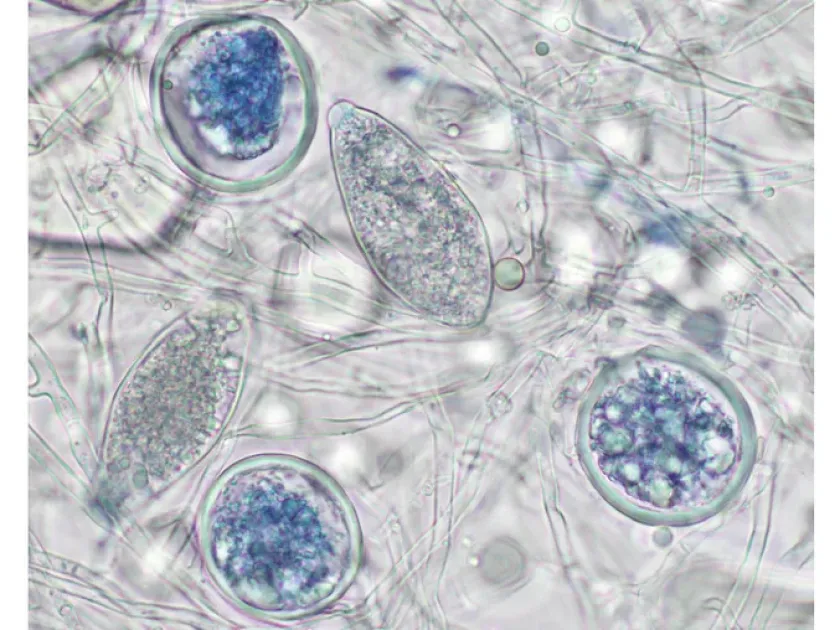
Description
How to identify
Phytophthora ramorum is an oomycete, a water-mold pathogen that acts as a serious threat to woody plants worldwide. Though often grouped with fungi, it is biologically distinct and belongs to the kingdom Stramenopila.
The organism is a primary quarantine pest due to its ability to kill high-value trees and shrubs. It is known to infect over 100 different plant species, making it highly versatile and dangerous.
The pathogen produces sporangia that release motile zoospores in the presence of water. These spores can be spread through rain splash, wind-blown mist, or contaminated irrigation water.
In the soil, the pathogen forms resting structures called chlamydospores, which allow it to survive harsh conditions for months or even years, waiting for favorable moisture levels.
Genetic studies have identified several lineages of P. ramorum, with some showing significantly higher virulence levels and wider host ranges than others, which complicates management efforts.
What it damages
Phytophthora ramorum is responsible for 'Sudden Oak Death,' a devastating condition that has killed millions of oak and tanoak trees in North America and parts of Europe.
Beyond forest trees, it causes severe 'ramorum blight' on many nursery crops, including rhododendrons, camellias, viburnums, and laurels, leading to significant economic losses.
The pathogen causes leaf spots and tip dieback, which reduces the plant's photosynthesis capability. Once it enters the bark, it creates bleeding cankers that girdle the stem.
These cankers disrupt the vascular flow of the plant, leading to the rapid yellowing of leaves and eventual death of the entire plant or specific branches.
In commercial nurseries, the proximity of plants creates an environment where the pathogen can spread like wildfire, devastating entire stocks if not caught early.
When it appears
Development is heavily linked to seasonal weather patterns, with spring and autumn providing the ideal environment for the pathogen to thrive due to consistent moisture.
The pathogen prefers cool to moderate temperatures, typically between 15 and 22 degrees Celsius, which allows the zoospores to stay active and seek out host tissues.
During dry summer months, the infection rate typically slows down, but the pathogen remains latent in the bark or persists in the soil as dormant spores.
Wet winters facilitate the survival of the pathogen, and in regions with mild winters, the disease cycle can continue almost uninterrupted throughout the year.
The duration of leaf wetness is critical; if leaf surfaces stay moist for more than 6-12 hours, the risk of successful infection by zoospores increases dramatically.
Signs of infestation
- Large, irregular necrotic spots on leaves, often starting from the margin or the tip.
- Darkening and wilting of new shoots, leading to a 'dieback' effect.
- Bleeding cankers on the main trunk that leak a dark, sap-like substance.
- Sudden foliage collapse and death that occurs even when the plant appears otherwise hydrated.
- White, fuzzy sporulation visible on the underside of infected leaves during periods of high humidity.
Control measures
The most important control strategy is strict quarantine and sanitation; only purchase nursery stock that has been certified as disease-free.
If infection is detected, prompt removal and destruction of the plant (preferably through burning) is essential to remove the source of inoculum from the environment.
Sanitation of tools is mandatory; pruning shears and equipment should be disinfected with alcohol or other fungicidal solutions between every single plant to prevent transmission.
Chemical control can be implemented using phosphonate-based fungicides, which are used as a preventative treatment for high-value trees in infested areas.
Promote good cultural practices, such as adequate plant spacing for airflow, avoiding overhead irrigation, and ensuring proper site drainage to minimize the presence of standing water.
Causes diseases · 1
Discussion
No discussions yet — be the first.