
Phytophthora pseudosyringae
Phytophthora pseudosyringae
Description
How to identify
Phytophthora pseudosyringae is a soil-borne oomycete pathogen belonging to the kingdom Chromista. It is a distinct species recognized for its role in causing forest tree declines and necrosis.
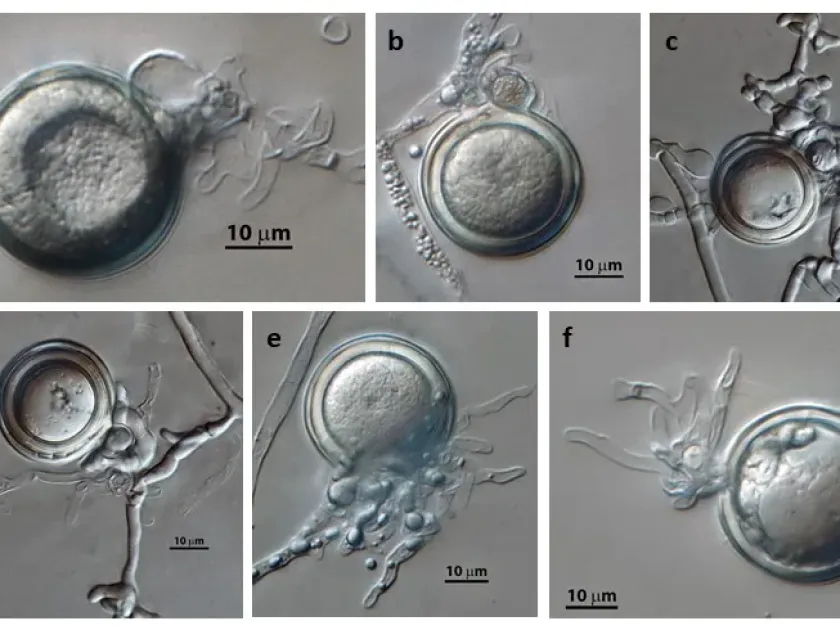
The organism is characterized by non-papillate, semi-spherical sporangia that are caducous. It requires specific nutrient media for laboratory isolation, showing distinct mycelial patterns during cultivation.
As a heterothallic species, P. pseudosyringae requires two compatible mating types to produce oospores, which are the sexual structures that ensure long-term survival in the soil.
This pathogen is genetically related to other forest-dwelling Phytophthora species, making accurate identification challenging without modern molecular diagnostics like PCR or sequencing.
The life cycle is primarily tied to the rhizosphere, where the pathogen acts as an opportunist, exploiting stressed plants or favorable environmental moisture levels to colonize roots.
What it damages
This pathogen primarily targets forest trees, with European beech (Fagus sylvatica) and several oak species (Quercus spp.) being the most commonly affected hosts.
The damage starts in the root system, where the pathogen destroys fine feeder roots, causing a significant reduction in the tree's ability to uptake water and essential minerals.
When the infection spreads to the root collar, it causes large necrotic lesions in the cambium, which can eventually girdle the tree, leading to rapid decline or death.
In forest nurseries, P. pseudosyringae can cause severe damping-off and crown wilt, leading to significant financial losses for tree growers and forestry programs.
Weakened trees become susceptible to secondary infections by wood-boring insects and other fungi, accelerating the degradation of the affected stand's overall health.
Signs of infestation
Early symptoms include thinning of the foliage and premature yellowing of leaves in mid-summer, which is often mistaken for drought stress rather than pathogen activity.
Dark, water-soaked patches on the bark at the base of the stem are a key diagnostic feature, often indicating a deep-seated infection in the underlying woody tissues.
Removing the bark in affected areas reveals a sharp, reddish-brown necrosis that contrasts clearly with the healthy cream-colored wood, often forming a distinct margin.
Chronic infection results in reduced leader growth, crown dieback, and the general appearance of an unthrifty tree that fails to recover even with adequate water supply.
In highly humid environments, sparse white mycelial growth may appear on the soil surface or the base of the infected trunk, indicating the presence of active spores.
Control measures
The most effective strategy for managing P. pseudosyringae is the prevention of its introduction to new areas by using certified, pathogen-free planting stock.
Water management is critical; improving soil drainage prevents the formation of standing water, which is necessary for the motility and spread of zoospores.
Phosphite-based fungicides have shown efficacy in slowing the progression of the disease by inducing systemic resistance in the host tree against oomycete pathogens.
- Sanitize all tools used in the forest or nursery to prevent the spread of soil-borne spores.
- Rogue and destroy heavily infected trees to reduce the overall inoculum pressure in the site.
- Monitor the water regime to ensure roots do not sit in saturated soil for extended periods.
- Use resistant species for replanting in areas where this pathogen has been confirmed to be present.
Regular surveillance and early detection allow for targeted management interventions, which can significantly improve the survival rate of young forest plantations.
Causes diseases · 1
Discussion
No discussions yet — be the first.