
Strawberry red stele root rot
Phytophthora fragariae
Description
How to identify
The causative agent of this disease is Phytophthora fragariae, an oomycete pathogen belonging to the kingdom Chromista. It is a highly specialized pathogen that specifically targets the root system of strawberries.
This pathogen persists in the soil for many years in the form of thick-walled oospores, which are extremely resistant to harsh environmental conditions and can survive prolonged periods without a host.
The biological cycle is heavily dependent on the presence of free water. When the soil becomes saturated, oospores germinate and release motile zoospores.
These zoospores are attracted to the root tips of strawberry plants through chemotaxis, where they encyst and penetrate the root tissue to initiate infection.
Phytophthora fragariae is categorized as a quarantine pathogen in many regions, emphasizing the critical importance of preventing its spread via infected nursery stock.
What it damages
Strawberry plants (Fragaria × ananassa) are the primary hosts. The disease can devastate entire fields, especially in heavy soils with poor drainage.
The economic damage is severe, resulting in total crop failure, stunted plant growth, and the loss of commercial viability for affected fields.
Spread across fields occurs through the movement of contaminated soil by machinery, water runoff from heavy rainfall, and the use of infected planting material.
The pathogen destroys the vascular system of the root, preventing the plant from transporting water and essential nutrients to the leaves and fruit.
In addition to cultivated strawberries, certain wild species can serve as reservoirs for the pathogen, maintaining the infection cycle in the local environment.
When it appears
Disease development is most intense during the cool and wet periods of the year, typically occurring in spring and late autumn.
Saturated soil conditions following heavy rains provide the necessary environment for zoospore swimming and colonization of new root systems.
While high summer temperatures may slow down the visible symptoms, the oomycete remains viable in the soil, ready to resume activity as soon as conditions become favorable.
Symptoms often peak during the critical stages of flowering and fruit development, when the plant's demand for water and nutrients is at its highest.
Autumn weather patterns often trigger secondary infection cycles as plants prepare for dormancy, potentially affecting the plant's ability to survive the winter.
Signs of infestation
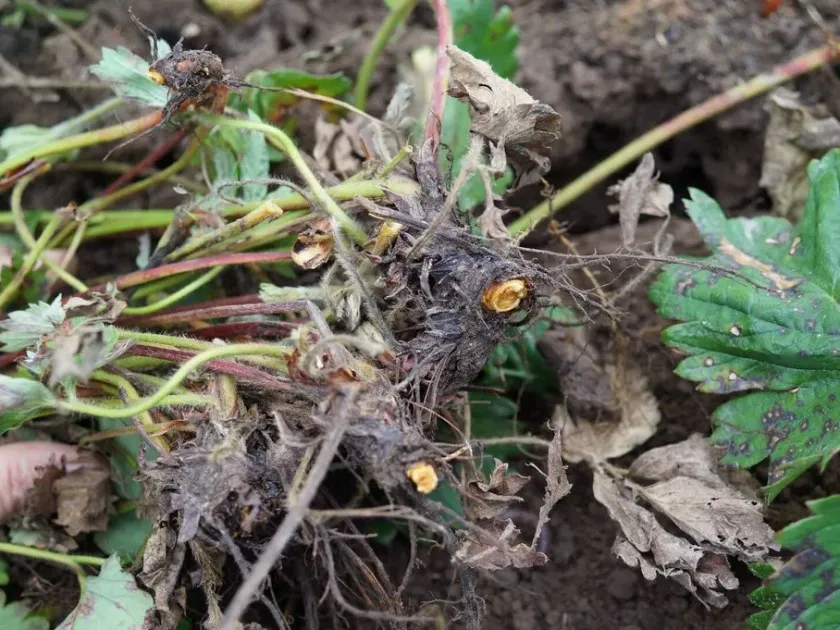
The hallmark symptom is the characteristic "red stele," where a cross-section of the root reveals a reddish-brown discoloration of the central core (stele).
Above-ground symptoms include stunting, wilting, and a bluish-green or purplish cast to the foliage, which often precedes the collapse of the plant.
The root system becomes greatly reduced, with a lack of fine lateral roots, giving the roots the appearance of "rat tails."
Severely infected plants often collapse abruptly, especially when the temperature rises and the plant can no longer maintain its water balance.
- Red or rust-colored core inside the roots.
- Stunted growth and poor runner production.
- Wilting and eventual collapse of the entire plant.
- Loss of fine feeder roots leaving only the main woody structure.
Control measures
The primary control measure is the use of certified pathogen-free planting material to prevent the introduction of the oomycete to the field.
Crop rotation is essential; fields should not be replanted with strawberries for at least 5 to 7 years after a detected infection.
Improving soil drainage through raised beds or tile drainage is critical to reduce soil saturation and limit the swimming range of zoospores.
Integrated management includes the removal and destruction of infected plants and surrounding soil, along with the sanitation of all tools to prevent cross-contamination.
When necessary, systemic fungicides applied in accordance with regional regulations can help manage the disease, although they are most effective as a preventive measure.
Causes diseases · 1
Discussion
No discussions yet — be the first.