
Pink rot of potato
Phytophthora erythroseptica
Description
How to identify
The causative agent of Pink rot is the oomycete Phytophthora erythroseptica. It is classified within the kingdom Chromista. This soil-borne pathogen survives in the field for many years as persistent oospores, waiting for favorable conditions to infect host plants.
The fungus colonizes the plant through stolons and roots. It thrives under anaerobic soil conditions where drainage is poor and moisture levels are excessively high, allowing the pathogen to move efficiently through the soil profile.
What it damages
The disease primarily targets potatoes. It affects tubers both in the field and after harvesting during storage. While potatoes are the main host, the pathogen can potentially infect other Solanaceae species, facilitating its survival in the environment.
The economic impact of the disease is severe due to rapid tuber breakdown. Once a tuber is infected, the rot can spread rapidly through entire bins or crates of stored potatoes, leading to significant financial losses for producers and distributors.
When it appears
The disease is most prevalent in the late growing season. Warm temperatures combined with heavy rainfall or over-irrigation create an ideal environment for the pathogen to infect maturing tubers within the soil.
Signs of infestation
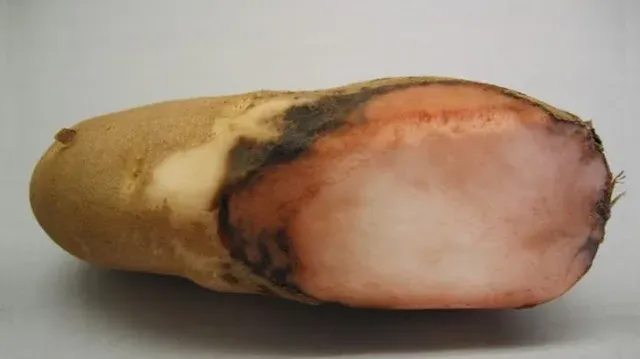
The diagnostic symptom is the color change of the tuber flesh. When freshly cut, the interior appears creamy or white, but within a few minutes of exposure to air, it turns pink. Eventually, the tissues turn dark brown and necrotic.
Infected tubers often exhibit a rubbery texture. A pungent, vinegary odor is usually associated with the decomposition of the tissues. In some cases, a clear, watery liquid may exude from the eyes or the skin of the affected potato.
Control measures
Cultural management is the cornerstone of control. Farmers should prioritize selecting well-drained fields and avoiding planting in low-lying areas prone to waterlogging. Implementing a long rotation cycle is essential to reduce the inoculum level in the soil.
- Use certified disease-free seed tubers for planting.
- Improve field drainage systems to prevent water pooling.
- Avoid harvesting potatoes when soil temperatures are high.
- Maintain optimal ventilation and low temperatures in storage facilities.
- Apply integrated pest management strategies, including fungicide treatments if necessary.
Causes diseases · 2
Discussion
No discussions yet — be the first.