
Phytophthora drechsleri
Phytophthora drechsleri
Description
How to identify
Phytophthora drechsleri is a destructive soil-borne microorganism belonging to the kingdom Protista and the class Oomycetes. This pathogen is a water mold that primarily attacks the root systems and crowns of a wide range of susceptible plant hosts.
Taxonomically, it belongs to the genus Phytophthora within the family Peronosporaceae. Its biological life cycle is closely linked to soil moisture availability and environmental temperature, which are critical for its dispersal and infection process.
The pathogen produces zoospores that are motile in water films, allowing them to swim through saturated soil toward the root exudates of host plants, where they initiate infection.
Phytophthora drechsleri survives in the soil primarily as oospores. These thick-walled resting spores are highly resistant to adverse environmental conditions and can remain dormant for several years, ensuring long-term persistence in infested fields.
Scientific identification involves isolating the pathogen on selective media and observing sporangial morphology under a microscope to confirm its presence and distinguish it from other Phytophthora species.
What it damages
This pathogen causes severe economic losses in various horticultural and agricultural crops, particularly in tomatoes, peppers, cucumbers, and other solanaceous and cucurbit species.
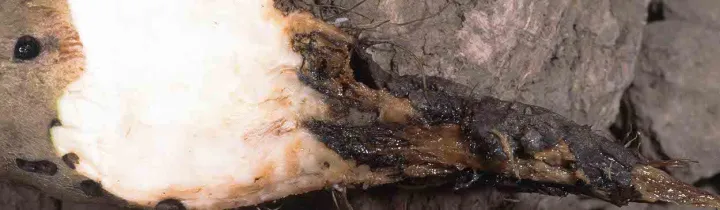
The primary symptom of infection is root rot, which destroys the ability of the plant to uptake water and essential nutrients, leading to sudden wilting and eventual death of the entire plant.
In addition to root damage, the pathogen can cause crown rot and stem lesions, significantly reducing crop yield and affecting the overall market quality of the produce.
Plant nurseries are particularly vulnerable, as Phytophthora drechsleri can cause mass mortality in seedlings, leading to substantial production losses for greenhouse operators and commercial growers.
Infestations often manifest as localized patches in a field, which then expand rapidly if soil moisture levels remain high, leading to widespread crop failure.
When it appears
The activity of Phytophthora drechsleri is largely driven by weather patterns, particularly periods of heavy rain or excessive irrigation that create saturated soil conditions.
Peak infection cycles occur during the spring and summer months when soil temperatures range between 20°C and 25°C, providing the optimal conditions for zoospore germination and movement.
In greenhouse settings, the pathogen can cause outbreaks at any time of the year if drainage is poor or if watering regimes are not strictly managed, allowing moisture to pool around the plant base.
Infection often initiates early in the season if the pathogen was present as oospores in the soil from previous cycles, requiring vigilant monitoring and early intervention.
Periods of prolonged rain increase the density of mobile zoospores in the soil, which significantly elevates the risk of rapid disease transmission across large planting areas.
Signs of infestation
The most noticeable sign of infection is the sudden wilting of the plant canopy, which does not recover even during cooler night hours or after watering, indicating compromised roots.
Upon examination of the root system, one will observe discoloration, softness, and decay, with the root cortex often sloughing off due to the infection.
- Chlorosis and premature yellowing of lower foliage.
- Stunted growth and lack of vigor compared to healthy plants.
- Complete destruction of fibrous lateral roots.
- Rapid collapse and mortality of affected plants within a short timeframe.
- Water-soaked, dark lesions on fruit that touches the ground.
Disease development typically follows a pattern starting in areas with poor drainage and slowly moving outwards, as the zoospores are transported through the soil by moisture.
Control measures
The primary defense strategy is to implement rigorous cultural practices, such as improving soil drainage and land leveling to prevent the accumulation of standing water.
Crop rotation is essential; planting non-host species for at least 3 to 4 years helps to deplete the population of oospores in the soil, reducing the primary inoculum source.
Using certified, disease-free transplants and selecting resistant cultivars are highly effective methods to reduce the risk of establishment and subsequent disease spread.
The application of biological control agents, such as specific beneficial bacteria or fungi that antagonize oomycetes, can help manage populations in an environmentally friendly manner.
In high-pressure situations, scheduled applications of systemic fungicides effective against oomycetes may be necessary to protect the root zone and prevent widespread infection.
Causes diseases · 3
Discussion
No discussions yet — be the first.