
Phytophthora citricola
Phytophthora citricola
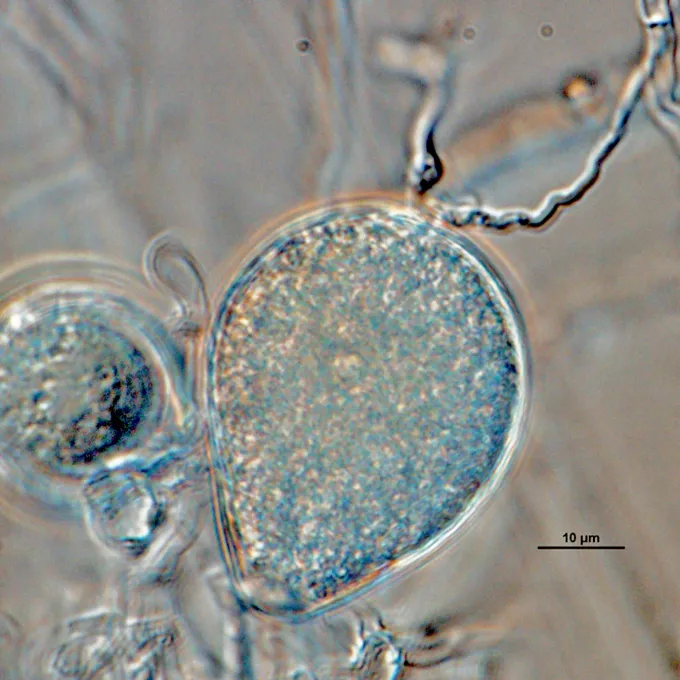
Description
How to identify
Phytophthora citricola is a soil-borne oomycete pathogen known for causing significant decay in the vascular systems of various trees and ornamental plants. It belongs to the Peronosporales order and acts as a parasitic organism.
This pathogen reproduces by creating motile zoospores that require water to reach the roots or trunk of a susceptible host. The presence of water is a critical factor for the lifecycle completion of this microorganism.
As an oomycete, it is biologically distinct from true fungi. It produces resilient resting structures known as oospores, which allow the pathogen to persist in soil for years even in the absence of a host.
The mycelium of P. citricola aggressively colonizes plant tissues, disrupting the transport of nutrients and water, which ultimately leads to a systemic decline of the infected plant.
Identification of the pathogen in a lab setting involves culturing on selective media, as its morphology can sometimes be confused with other Phytophthora species without specialized diagnostic molecular markers.
What it damages
The host range of Phytophthora citricola is notably broad, including various citrus species, avocado, stone fruits, and ornamental shrubs like rhododendrons, lilacs, and azaleas.
The primary damage occurs at the root zone, where the pathogen destroys fine feeder roots, making it impossible for the plant to absorb adequate moisture and nutrients from the soil.
Trunk and crown infections lead to "bleeding" cankers, where the bark softens and exudes dark sap. If these lesions encircle the trunk, the plant will inevitably perish due to the lack of nutrient flow.
Young nursery stock is highly susceptible to this pathogen. A single infected plant can lead to the loss of entire batches if appropriate sanitation protocols are not rigorously enforced.
In addition to tree mortality, the pathogen causes reduced fruit yield and poor plant vigor, significantly impacting the economic viability of orchards and nursery operations.
When it appears
Activity levels of Phytophthora citricola peak during seasons characterized by cool, wet weather, typically during the spring and autumn months or during periods of heavy rainfall.
Water-saturated soil conditions are the most dangerous, as they provide the necessary mobility for zoospores to find and infect plant tissue. Over-irrigation is the leading man-made cause of outbreaks.
While the pathogen is less active during hot, dry summer months, it does not disappear. Instead, it enters a dormant phase in the soil as oospores, waiting for the return of moisture.
In regions with high humidity or frequent dew, the pathogen can also infect the lower foliage of sensitive plants, especially if those plants are kept in crowded, poorly ventilated environments.
Temperature fluctuations that stress the plant make it more susceptible to infection, as the plant's natural defense mechanisms are weakened, allowing the pathogen to penetrate tissues more easily.
Signs of infestation
Early symptoms are often subtle and include a gradual loss of vigor, thin canopy, and leaf chlorosis. By the time crown symptoms appear, the root system is usually severely compromised.
Infected trunks often show dark, sunken lesions or water-soaked areas. These areas may ooze a dark-colored gum, which is a classic diagnostic sign of a Phytophthora infection.
Root systems show signs of advanced decay. Infected roots are dark, brittle, or mushy and have a distinct, unpleasant odor compared to healthy, light-colored root tips.
If the plant is young, it may wilt suddenly and die during a hot spell, as the damaged root system can no longer supply the water required to support the canopy.
- Stunted growth and premature yellowing of leaves.
- Canopy dieback and sparse foliage.
- Dark, sunken cankers on the lower trunk.
- Root discoloration and tissue disintegration.
Control measures
The most effective strategy against Phytophthora citricola is preventative management, with drainage being the single most important factor. Improve soil structure to prevent waterlogging.
Always inspect nursery stock before planting. Avoid purchasing plants with discolored stems or poor root development, as they may be latent carriers of the pathogen.
Chemical control can be achieved through systemic fungicides. Products containing potassium phosphite or metalaxyl-M are effective when applied as a soil drench or trunk spray, depending on the severity.
Practice strict sanitation by cleaning and disinfecting tools after working with suspected infected plants. Remove and destroy infected plant material, including a significant amount of the surrounding root-zone soil.
In orchard settings, utilize resistant rootstocks when available. This biological approach is often the most cost-effective long-term solution for managing persistent soil-borne diseases.
Causes diseases · 1
Discussion
No discussions yet — be the first.