
Phytophthora cactorum
Phytophthora cactorum
Description
How to identify
Phytophthora cactorum is an oomycete, commonly known as a water mold, belonging to the Peronosporaceae family. It is a highly destructive soil-borne pathogen affecting a vast range of horticultural and agricultural crops.
This organism produces motile zoospores that require free water to swim and reach host tissues, making water management critical in preventing the spread of the disease.
It survives in the soil through the formation of thick-walled oospores, which can remain dormant and infectious for several years, even in the absence of a host plant.
As a polyphagous pathogen, it colonizes the root systems, stems, and fruits of plants, leading to systemic infection and often rapid death of the host.
Biological identification is often performed in laboratories by isolating the fungus on selective culture media or using molecular diagnostic techniques like PCR to distinguish it from other Phytophthora species.
What it damages
The pathogen is notorious for causing crown rot in trees and leather rot in strawberries. It causes significant yield losses by damaging the vascular tissues, which prevents nutrient and water uptake.
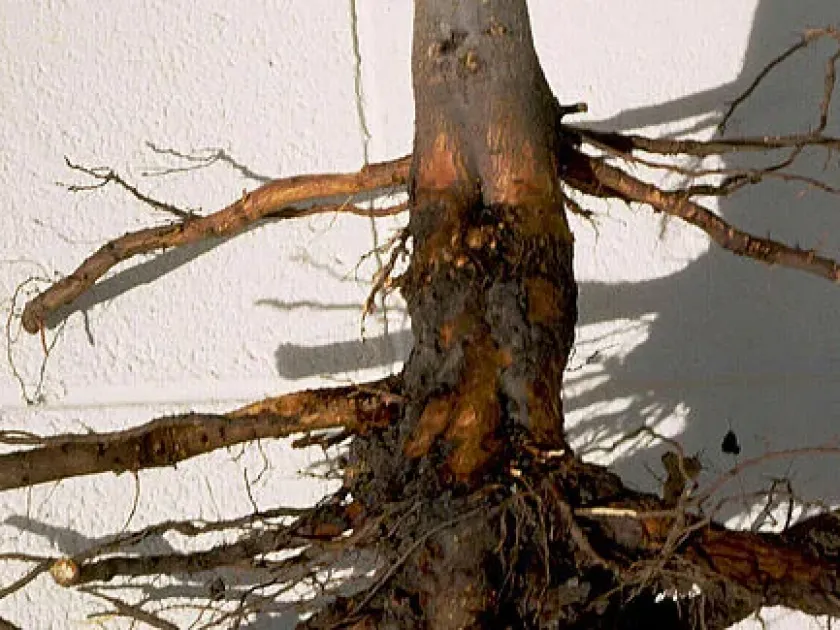
In woody plants like apple trees, infection often manifests as girdling of the root collar, where the bark dies, causing the tree to slowly decline and eventually wither away.
Strawberries suffer from leather rot, a disease where fruits become tough, bitter, and develop a discolored, leather-like texture, making them completely unmarketable.
In nurseries, the pathogen can devastate young seedlings, leading to high mortality rates and forcing growers to discard entire batches of planting material.
Damage to the root system is often hidden, and by the time the above-ground symptoms (such as wilting and yellowing) appear, the infection is usually advanced and difficult to treat.
When it appears
The pathogen thrives during periods of high soil moisture and cool to moderate temperatures, typically between 15°C and 25°C. Excessive rainfall or over-irrigation triggers the release of zoospores.
Spring and autumn are the most critical times for infection, as these seasons often provide the necessary cool, wet conditions for the organism to complete its life cycle.
Irrigation systems can act as a primary vector for the spread of Phytophthora cactorum if the water source is contaminated with soil runoff containing oospores.
In greenhouse environments, poor drainage and high humidity facilitate the rapid build-up of the pathogen, leading to persistent outbreaks throughout the growing season.
During the winter or dry periods, the pathogen retreats to a dormant state in the form of oospores, waiting for the return of favorable moist conditions to resume its cycle.
Signs of infestation
The primary indicators of infection include sudden wilting of the plant, often initially occurring during the heat of the day and partially recovering at night.
Necrotic lesions often appear at the base of the stem or root collar, which may exude sap or become soft and spongy as the decay progresses.
On strawberry fruits, the initial signs are patches of discolored tissue that become hard and dark brown. Under high humidity, a sparse white mycelial growth may appear on the surface.
Root systems exhibit brown or black discoloration, and the fine feeder roots are often completely destroyed, leaving only the structural roots that are also decaying.
In established trees, the canopy may show sparse foliage, premature color change, and dieback, which are secondary symptoms caused by the failure of the root system.
Control measures
Effective management begins with strict sanitation practices. Growers should ensure optimal drainage in fields and greenhouses to prevent the pooling of water.
- Use only certified, disease-free planting material to avoid introducing the pathogen.
- Remove and destroy infected plants immediately, including a significant amount of the surrounding soil.
- Implement proper mulching for berry crops to prevent fruit from contacting infested soil.
- Apply systemic fungicides, such as metalaxyl or fosetyl-aluminum, as a preventive or curative measure.
- Practice crop rotation, avoiding the cultivation of susceptible species on infested land for several years.
Integrated Pest Management (IPM) is essential; this involves monitoring soil moisture levels and using biological control agents that can suppress Phytophthora populations in the soil.
Disinfecting farm equipment, tools, and footwear before moving between different sections of the farm is crucial to prevent the mechanical transfer of contaminated soil.
By combining cultural practices, such as proper site selection and irrigation control, with judicious chemical applications, growers can minimize the impact of Phytophthora cactorum.
Causes diseases · 1
Discussion
No discussions yet — be the first.