
Downy mildew of rose
Peronospora sparsa
Description
How to identify
The causative agent of the disease is the oomycete Peronospora sparsa, which belongs to the kingdom Chromista. It is an obligate parasite, meaning it can only survive and reproduce on living plant tissue of the Rosaceae family.
The pathogen thrives in the intercellular spaces of the plant leaf, extending haustoria into cells to extract nutrients. This process causes metabolic disruption and structural damage to the host plant.
Under high humidity, the fungus produces conidiophores that emerge through the leaf stomata. These structures release sporangia, which are the primary units of dispersal in the greenhouse environment.
The biological cycle is highly dependent on environmental moisture. Under ideal conditions, the infection cycle can repeat in as little as 3 to 5 days, leading to rapid disease spread.
Peronospora sparsa is known for its ability to survive in various forms, including oospores, which allow it to persist in plant debris or soil for longer periods under cooler conditions.
What it damages
The primary host for this pathogen is the rose (Rosa), making it a major threat to commercial cut flower production and nursery stocks worldwide.
The disease attacks all aerial parts of the plant, including leaves, stems, and flower buds. The damage is characterized by rapid necrosis and severe leaf drop, which stunts the plant's overall growth.
In greenhouses, downy mildew can cause total crop failure if left unmanaged, as the aesthetic quality of the flowers is completely ruined by necrotic spots and deformation.
Besides roses, the pathogen can infect closely related species like blackberries and raspberries, which necessitates strict isolation practices in agricultural zones.
Economic losses are significant due to the high cost of intensive fungicide programs required to keep the infection in check during susceptible weather patterns.
When it appears
The pathogen is highly active during cool, damp periods when relative humidity exceeds 85%. Fluctuating night and day temperatures often trigger the release and germination of spores.
Spring and autumn are considered high-risk seasons, especially in protected environments where poor ventilation leads to dew formation on the foliage.
While the disease prefers moderate temperatures, it remains infectious across a range of conditions, effectively hiding within host tissues during warmer, drier intervals.
Rainy weather in outdoor settings is a primary driver for the spread of zoospores, which travel via water splashes to infect healthy neighboring plants.
Control efforts must be intensified during periods of rapid plant growth, as young, succulent tissues are significantly more susceptible to colonization by the fungus.
Signs of infestation
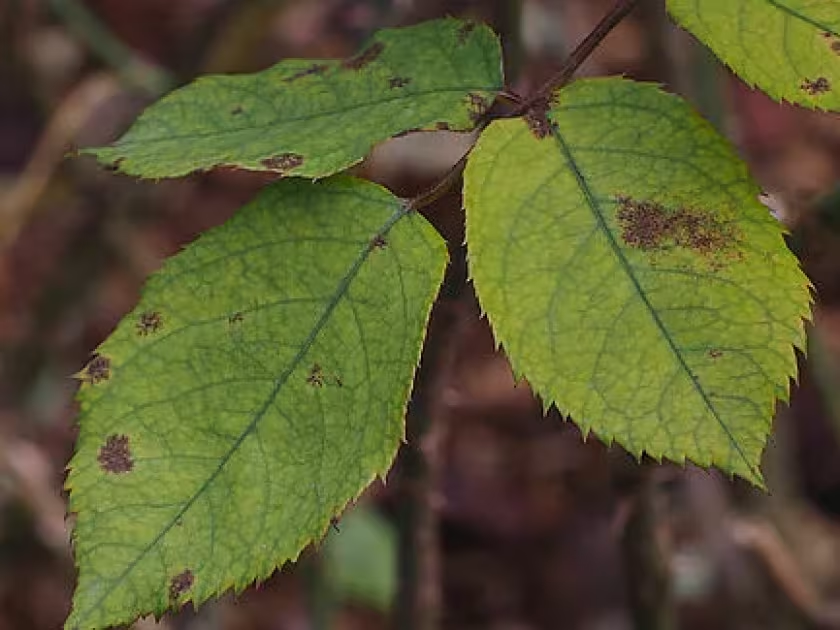
Early symptoms appear as irregular, angular, chlorotic or purplish-red spots on the leaves, which are often delineated by the leaf veins.
A fine, grayish-white or purple-tinted downy growth may appear on the undersides of leaves during high humidity, which confirms the presence of the pathogen.
Severe infection leads to rapid yellowing and premature defoliation, with the plant losing its foliage starting from the bottom upward.
Stem infections can cause purple to black lesions, which may eventually lead to stem splitting and the collapse of the apical growth on the plant.
Flower buds are particularly sensitive; they often fail to develop properly, showing shriveled petals and dark, sunken lesions that make them unsuitable for harvest.
Control measures
Environmental management is the most effective control strategy. This includes maintaining low humidity levels, preventing water from splashing on leaves, and ensuring consistent airflow.
Sanitation is critical; all infected plant debris, especially fallen leaves, must be removed and destroyed to reduce the inoculum load in the greenhouse.
Fungicide applications are often necessary, targeting both contact and systemic protection to shield the plant from new infections during favorable weather.
Proper spacing of plants is essential to promote faster drying of foliage, which reduces the duration of leaf wetness required for pathogen spore germination.
- Use certified disease-free propagation material to prevent initial outbreaks.
- Rotate fungicide chemical classes to prevent the development of resistant pathogen strains.
- Monitor greenhouse microclimates daily to react before visible symptoms occur.
Causes diseases · 2
Discussion
No discussions yet — be the first.