
Tobacco blue mold
Peronospora hyoscyami
Description
How to identify
Tobacco blue mold is a devastating disease caused by the oomycete Peronospora hyoscyami. It belongs to the kingdom Chromista and is a highly specialized parasite of tobacco plants.
This pathogen acts as an obligate biotroph, meaning it relies entirely on living host tissue to complete its life cycle and thrive within the crop.
The mycelium colonizes the intercellular spaces of leaves, eventually emerging through the stomata to produce sporangiophores and sporangia.
Dissemination primarily occurs via wind-blown sporangia, which can travel long distances under favorable atmospheric conditions to infect new fields.
The pathogen survives between seasons on crop residues, in volunteer tobacco plants, or through oospores which are highly resistant to environmental stress.
What it damages
Tobacco blue mold affects both commercial tobacco and rustica, causing significant yield losses in seedbeds and field plantations alike.
By destroying leaf tissue, the pathogen severely limits the plant's photosynthetic capacity, resulting in stunted growth and drastically reduced leaf quality.
Affected leaves develop large necrotic patches, rendering them unfit for curing or manufacturing, which leads to substantial economic losses for growers.
In systemic infections, the pathogen can invade the stem and roots, leading to complete plant collapse and death within a very short period.
The chemical profile of the tobacco, including nicotine content and essential oils, is degraded, causing the cured product to lose its market value.
When it appears
Primary infections often begin in greenhouses or seedbeds during early spring when temperatures range between 15°C and 25°C.
The disease flourishes during periods of high humidity and cool nights, as free water or dew is required for the sporangia to germinate successfully.
Field epidemics typically peak in mid-season, triggered by frequent rainfall and persistent cloudy weather that maintains high moisture levels.
Winds facilitate the rapid spread of the pathogen from initial hotspots to healthy parts of the field, accelerating the epidemic process significantly.
Hot, dry weather conditions tend to inhibit the spread of the disease, although the pathogen may survive internally until moisture levels increase.
Signs of infestation
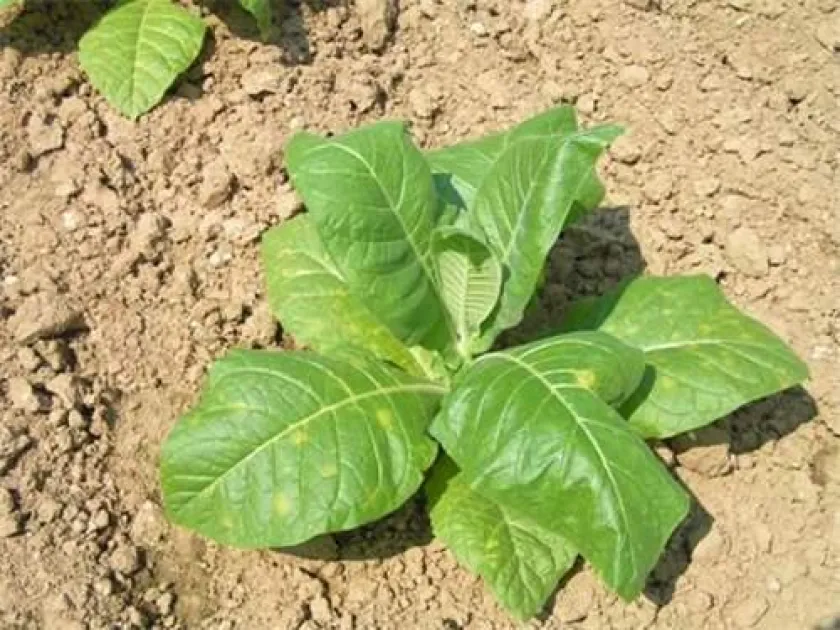
The first noticeable signs are pale yellow or chlorotic spots on the upper leaf surface, which gradually expand as the infection progresses.
A characteristic grayish-blue or violet-tinted moldy growth appears on the undersides of leaves, representing the active sporulation of the fungus.
As the infection matures, these spots turn brown and become brittle, often leading to necrosis and the death of the surrounding leaf tissue.
- Yellowing of leaf laminae.
- Downward curling of leaf margins.
- Development of a distinct "blue" moldy layer on the leaf underside.
In cases of severe infection, young transplants can show wilting, twisting, and systemic discoloration, often resulting in complete stand loss.
Control measures
Strict quarantine measures are essential to prevent the introduction of the pathogen into disease-free regions through infected seedlings.
Effective management involves deep plowing to bury crop residues, reducing the survival of the pathogen in the soil for future seasons.
Fungicide applications are crucial during the growing season; using systemic and protective chemicals helps mitigate spread in high-risk environments.
Growers should focus on crop rotation and selecting resistant or tolerant varieties to minimize the long-term impact of the disease on the plantation.
Managing the greenhouse microclimate through improved ventilation and avoiding over-irrigation significantly reduces the risk of primary outbreaks.
Causes diseases · 2
Discussion
No discussions yet — be the first.