
Strawberry downy mildew
Peronospora fragariae
Description
How to identify
Strawberry downy mildew is caused by the oomycete Peronospora fragariae. It belongs to the Chromista kingdom and is a highly specialized pathogen that affects only strawberry plants.
The pathogen colonizes the leaf tissue, moving through the intercellular spaces. It relies heavily on surface moisture to complete its life cycle and spread across the field.
Agronomists identify the fungus by examining the lower leaf surface, where branching sporangiophores emerge from the stomata during periods of high humidity.
Unlike some other foliar diseases, this pathogen is strictly tied to Fragaria species, which helps in diagnosing the problem in polyculture systems.
Precise identification is crucial because downy mildew symptoms can often be mistaken for angular leaf spot or common leaf blotch, requiring careful inspection of the lower leaf surface.
What it damages
The primary impact of the disease is the reduction of the photosynthetic capacity of strawberry plants due to widespread leaf necrosis and tissue death.
Plants weakened by downy mildew show reduced vigor, leading to poor winter survival and lower yields in subsequent growing seasons.
The infection of floral structures leads to stunted fruit development and malformation, which significantly downgrades the commercial quality of the harvest.
Continuous infection stress makes the strawberry patches highly susceptible to secondary invaders, including various types of fruit rot and bacterial pathogens.
In intensive strawberry production, uncontrolled outbreaks can lead to major economic losses, especially in greenhouses or open fields with high humidity levels.
When it appears
The pathogen thrives in cool, wet environments. Temperatures between 15°C and 20°C combined with high humidity create the perfect conditions for sporulation.
Infection cycles begin in the spring as soon as temperatures rise and the plants produce new foliage. Water films on leaf surfaces are essential for spore germination.
During the summer, the disease can slow down during dry spells, but heavy rainfall or irrigation cycles often trigger rapid secondary infections across the plantation.
As autumn approaches, the fungus produces oospores, which are survival structures that allow it to overwinter in soil and dead leaf tissue, ensuring a new outbreak in spring.
The disease cycle can repeat multiple times throughout the season, as long as environmental conditions favor the spread of windborne and splash-dispersed spores.
Signs of infestation
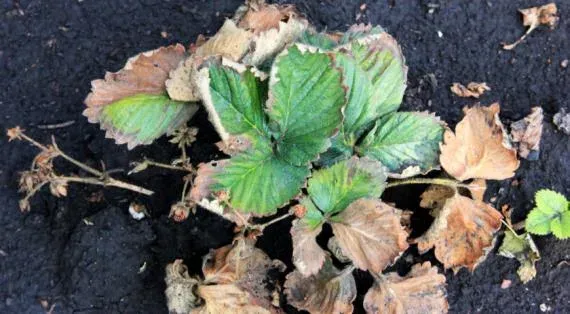
The first signs appear as angular yellow-to-brown spots on the upper surface of the leaves, typically bounded by the leaf veins.
A distinctive, fuzzy, greyish-violet to white mildew growth appears on the underside of these spots, which is the most reliable diagnostic feature for this disease.
As the infection progresses, leaves start to curl, become brittle, and exhibit large necrotic areas that give the plant a scorched or burnt appearance.
Stems and petioles may also show brown lesions, which disrupt the flow of nutrients to the berries and cause them to fail to ripen properly.
Severe infestations result in stunted growth and a general decline in the plant's health, making it appear wilted even when soil moisture is adequate.
Control measures
Cultural management is the first line of defense. Ensuring adequate spacing and good air circulation within the canopy helps to reduce the duration of leaf wetness.
Using certified, disease-free nursery stock is essential to prevent introducing Peronospora fragariae into clean strawberry patches.
Strict sanitation practices, such as removing and destroying all infected foliage after the harvest, significantly lower the amount of inoculum available for the next season.
Chemical control involves the application of appropriate fungicides during the early stages of growth, focusing on systemic products that penetrate the leaf tissue.
- Select strawberry cultivars with known resistance to downy mildew.
- Avoid overhead irrigation to minimize leaf wetness periods.
- Improve soil drainage to reduce humidity around the plant base.
- Implement preventative fungicide programs during peak weather risks.
- Regularly scout the field, especially after prolonged rainy weather.
Causes diseases · 1
Discussion
No discussions yet — be the first.