
Downy mildew of chickpea
Peronospora ciceris
Description
How to identify
The pathogen Peronospora ciceris is a specialized oomycete that acts as an obligate parasite on chickpea crops. It belongs to the Peronosporaceae family and requires living host tissue to complete its life cycle through the formation of haustoria.
The biological cycle involves the production of sporangia on sporangiophores that emerge through leaf stomata. In unfavorable conditions, the pathogen produces resistant oospores that can survive in the soil for several seasons, serving as a primary inoculum source.
Dissemination occurs mainly via wind currents, splashing rain, and irrigation water. The development of the disease is strictly dependent on high relative humidity and moderate temperatures, typically ranging from 15°C to 22°C.
The pathogen is host-specific to Cicer arietinum and does not affect other grain legume species. This specificity allows for more targeted crop rotation strategies in regions where chickpea cultivation is prevalent.
Due to its obligate nature, the survival of the pathogen between seasons depends heavily on the presence of contaminated crop residues or soil infected with resting spores.
What it damages
The disease causes significant damage by inhibiting photosynthetic processes. Severe infections lead to leaf necrosis, stunted plant growth, and a substantial reduction in seed yield and quality.
Signs of infestation
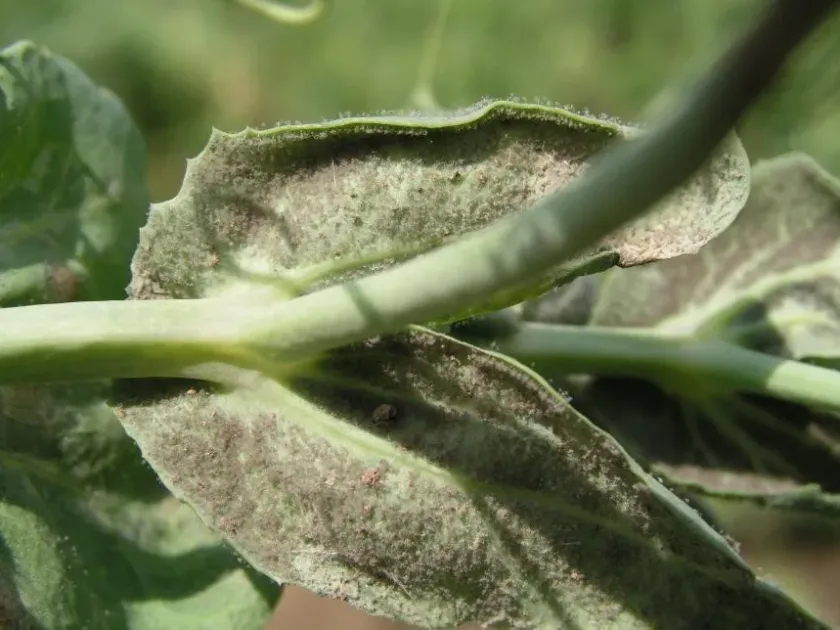
Early symptoms appear as chlorotic spots on the upper leaf surface. The diagnostic feature is the appearance of a grayish to purple-gray fungal growth on the underside of the leaves, corresponding to the pathogen's sporulation.
Control measures
Effective management focuses on an integrated approach, including cultural practices and chemical intervention. Proper site selection and avoiding waterlogged fields are essential to prevent outbreaks.
- Crop rotation with a minimum interval of 3-4 years.
- Use of high-quality fungicide-treated seeds.
- Application of protective fungicides during humid weather conditions.
- Deep plowing to bury infected plant debris.
Causes diseases · 1
Discussion
No discussions yet — be the first.