
Peronospora
Peronospora
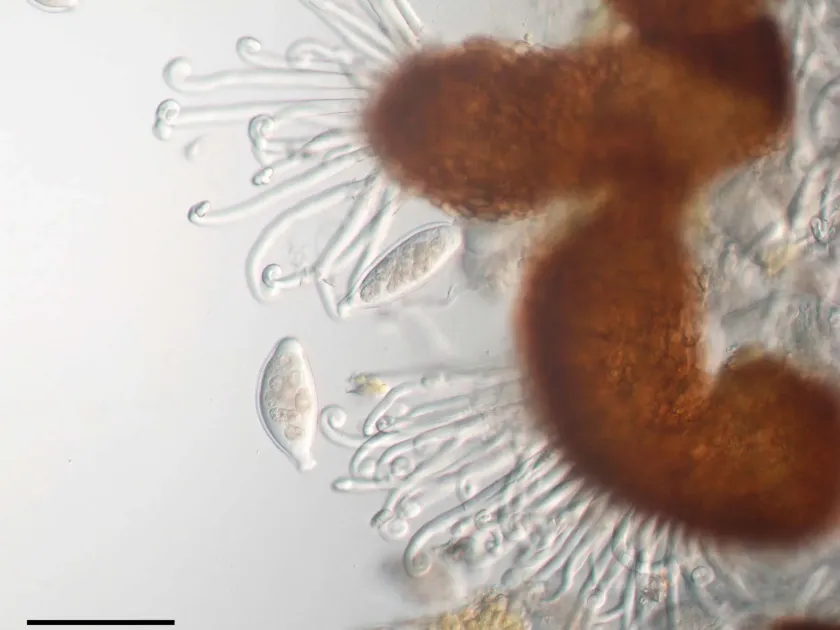
Description
How to identify
Peronospora is a genus of plant-pathogenic oomycetes that cause a group of diseases commonly known as downy mildew. These organisms belong to the kingdom Chromista and are obligate biotrophs, meaning they rely exclusively on living host tissue to complete their life cycle.
The pathogen reproduces by forming sporangia that are dispersed by wind or splashing rain. Once they land on a susceptible host plant, they penetrate the epidermis through stomata using specialized structures called haustoria, which absorb nutrients from the plant cells.
Taxonomically, they are not true fungi but are more closely related to algae. Their cell walls consist of cellulose and glucans rather than chitin, which influences their sensitivity to specific agricultural chemicals and diagnostic methods.
A distinctive feature of the genus is its host specificity; many Peronospora species have adapted to infect specific crop families, such as Brassicaceae, Chenopodiaceae, or various legumes, without affecting others.
The pathogen survives between growing seasons as thick-walled oospores in soil or infected plant debris. These structures are highly resilient and can remain viable for several years, posing a persistent threat to future crops.
What it damages
Downy mildew caused by Peronospora can result in severe economic losses across many agricultural sectors. By colonizing the leaves and sometimes the stems or reproductive organs, the pathogen disrupts the host's primary metabolic processes.
The primary damage is caused by the inhibition of photosynthesis due to chlorosis and necrosis of leaf tissue. As the leaves wither and die prematurely, the plant loses its ability to accumulate energy for fruit, root, or bulb development.
In crops like onions and spinach, the disease can devastate the yield quality, causing the foliage to collapse. This not only reduces the harvest volume but also significantly compromises the shelf life and marketability of the produce.
Seedlings are particularly vulnerable; a heavy infection at the early growth stage can result in total crop failure, necessitating costly replanting efforts and disrupted farm management plans.
Beyond direct yield loss, infected plants are often more susceptible to secondary pathogens and abiotic stresses, creating a cascade of health issues that diminish the overall productivity of the field.
When it appears
The development of Peronospora is highly dependent on environmental conditions, particularly temperature and humidity. The pathogen thrives in cool to moderate temperatures, typically between 12°C and 20°C (54°F–68°F).
The most critical factor for the spread of downy mildew is the presence of free water on plant surfaces. Prolonged periods of high humidity, heavy dew, or frequent rainfall are essential for the germination of sporangia.
Outbreaks usually begin in the spring or early summer when environmental conditions align with the presence of susceptible young foliage. If weather conditions remain wet and overcast, the pathogen can spread through a field in a matter of days.
During hot and dry spells, the disease cycle may slow down or temporarily stop, but the pathogen persists in the host tissues or as oospores in the soil, ready to resume activity as soon as moisture levels rise again.
The cycle typically concludes in late autumn, when the pathogen produces oospores in dying tissue, allowing it to enter a dormant state and survive the harsh conditions of winter.
Signs of infestation
Early symptoms of a Peronospora infection often appear as pale green or yellowish chlorotic spots on the upper leaf surface. These spots are frequently delimited by leaf veins, giving them a distinct angular appearance.
The most diagnostic feature is the appearance of a fuzzy or downy growth on the underside of the leaf, directly beneath the chlorotic spots. This growth consists of sporangiophores and conidia, the reproductive organs of the pathogen.
As the infection progresses, the lesions enlarge, turn brown or necrotic, and eventually merge, leading to the collapse and death of the leaf blade. In severe cases, the entire leaf may shrivel and curl.
Under favorable high-humidity conditions, the infection can spread rapidly, turning large areas of a field into a necrotic mass. Stunted growth and general plant weakness are also characteristic signs of advanced infection.
When scouting fields, agronomists look for these characteristic signs on the lower canopy, where microclimates are more humid and conducive to pathogen survival and reproduction.
Control measures
Successful management of Peronospora requires an integrated approach that focuses on prevention and cultural practices. Crop rotation is essential to avoid the buildup of oospores in the soil.
- Planting resistant or tolerant cultivars to minimize the risk of infection.
- Improving field drainage and ensuring sufficient plant spacing to promote air circulation and reduce foliage humidity.
- Sanitation, including the removal and destruction of infected plant residues after harvest.
- Optimizing irrigation practices to avoid wetting the foliage, such as switching to drip irrigation.
Chemical control plays a significant role, particularly in high-value crops. Fungicides should be applied preventively, guided by monitoring and weather forecasts to predict disease pressure.
To prevent the development of fungicide resistance, it is crucial to use a rotation of products with different modes of action, such as phenylamides or strobirulins, and follow strictly labeled application guidelines.
Causes diseases · 1
Discussion
No discussions yet — be the first.