
Pantoea ananatis
Pantoea ananatis
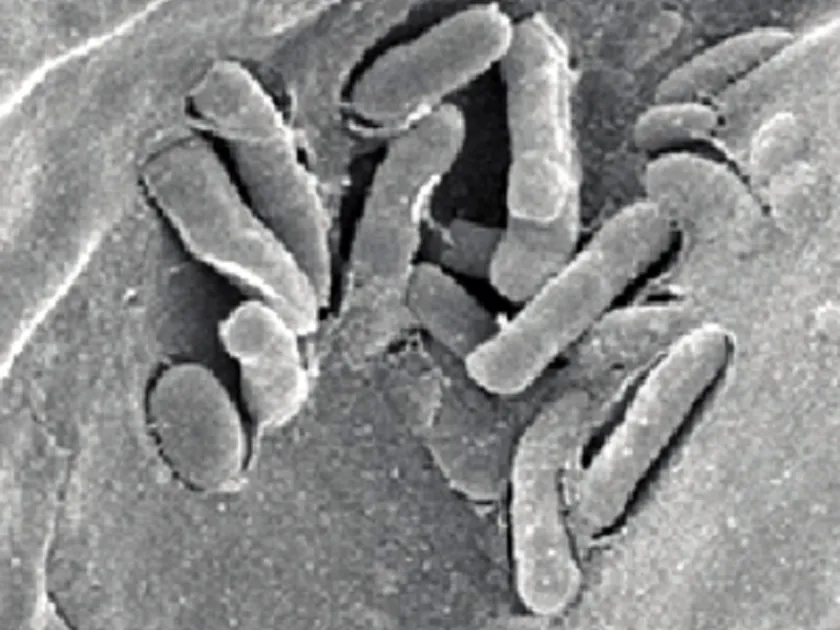
Description
How to identify
Pantoea ananatis is a Gram-negative, rod-shaped bacterium belonging to the Erwiniaceae family. It is a highly versatile opportunistic pathogen capable of surviving in various environments, including water, soil, and on the surfaces of host plants.
As a facultative anaerobe, it exhibits significant genetic diversity, allowing it to adapt to different hosts and environmental stresses. The formation of biofilms is a key strategy for the bacterium to persist and withstand chemical treatments in the field.
What it damages
The pathogen affects a wide range of economically important crops, including onions, maize, pineapples, melons, and eucalyptus trees. It is responsible for various manifestations, from leaf blight to systemic rot.
In maize, P. ananatis causes leaf spots, stalk rot, and grain rot, which significantly reduce yield. In onion crops, it causes center rot, leading to severe losses during the storage and marketing phases, as the inner scales of the bulbs become decayed.
When it appears
The development of the disease is favored by warm and humid conditions, with optimal temperatures ranging from +25°C to +35°C. Outbreaks are most frequent during periods of heavy rain or high humidity during the growing season.
Bacteria enter the host plant through wounds caused by insects, mechanical injury, or natural openings like stomata. The pathogen can be seed-borne, allowing it to disperse over long distances and persist in the field debris until the next planting cycle.
Signs of infestation
On maize leaves, symptoms typically appear as narrow, chlorotic, and necrotic lesions that may coalesce to cover large areas. Infected plants often show stunted growth and premature wilting under stress conditions.
In onions, the disease is characterized by a softening of the inner scales. Early stages may show no visible external symptoms, but internal breakdown occurs rapidly, often accompanied by a foul odor due to secondary microbial colonization of the decayed tissue.
Control measures
Effective management of Pantoea ananatis relies on integrated pest management practices, as curative chemical options are limited once the infection is established within the plant tissue.
- Utilizing disease-free, certified seeds to prevent the introduction of the pathogen.
- Implementing crop rotation with non-host species to reduce bacterial populations in the soil.
- Managing insect populations, such as thrips, which are known vectors of the disease.
- Deep plowing and removal of infected crop residues to eliminate overwintering sites.
- Applying copper-based bactericides preventively during high-risk environmental conditions.
Discussion
No discussions yet — be the first.