
Leek yellow stripe virus
Leek yellow
Description
How to identify
Leek yellow stripe virus (LYSV) is a plant pathogenic virus belonging to the genus Potyvirus, within the Potyviridae family. It is a single-stranded RNA virus that causes systemic infections in various species of the Allium genus.
The viral particles consist of flexible filamentous rods, a hallmark of potyviruses. These particles can be identified in plant tissue through electron microscopy, where characteristic pinwheel inclusions can be observed within the infected cells.
Transmission occurs primarily in a non-persistent manner by several aphid species. The virus is acquired by the aphid during brief probing sessions on an infected plant and is transmitted immediately to healthy hosts without a latent period.
The virus is not seed-borne, meaning that the primary reservoir of LYSV in agricultural settings is infected plant bulbs, sets, or volunteer allium plants that persist in the soil throughout the winter months.
The pathogen is widely distributed globally, affecting major commercial crops such as onions, garlic, and leeks, often leading to significant economic losses in regions where these crops are grown intensively.
What it damages
The primary host range includes Allium cepa (onion), Allium porrum (leek), and Allium sativum (garlic). LYSV can cause severe physiological stress in these crops, disrupting normal growth and development.
In garlic, LYSV infection is often synergistic with other viruses, such as Onion yellow dwarf virus, which leads to substantial yield reduction and a decrease in bulb size, impacting the marketability of the product.
Leek crops are particularly susceptible, showing severe symptoms that reduce the quality of the leek stalks. Because the stalk is the primary marketable part of the plant, even moderate infection can render the entire crop unsalable.
Onions infected with the virus often fail to reach full maturity. The bulbs are typically smaller, have poor skin quality, and are more prone to storage rots, significantly impacting post-harvest value.
The cumulative damage includes not only direct yield loss but also the cost of control measures and the necessity of discarding infected planting material to prevent future outbreaks.
Signs of infestation
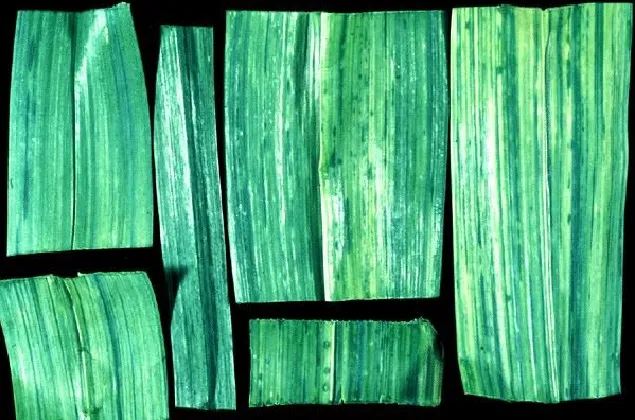
The hallmark symptom of LYSV infection is the development of longitudinal chlorotic yellow stripes or streaks along the leaf blades. These streaks can extend along the entire length of the leaf, leading to extensive yellowing.
Infected plants exhibit stunted growth and loss of vigor. Leaves often appear twisted, wavy, or deformed, which alters the plant's architecture and reduces its capacity for efficient photosynthesis.
The intensity of the waxy bloom on the leaf surface is often reduced, giving the plant a dull appearance compared to healthy, robust specimens. In advanced stages, the foliage may wilt prematurely.
Stunting is a key indicator, particularly in young plants that were infected via aphid vectors early in the growing season. This results in an uneven crop appearance across the field.
- Longitudinal yellow or pale green streaks on leaves.
- Leaf curling and deformation of the foliage.
- Significant stunting and overall loss of biomass.
- Reduced bulb development and poor bulb maturation.
- Increased susceptibility to secondary plant pathogens.
Control measures
The use of virus-free planting material is the foundation of LYSV management. Growers should source seeds or bulbs certified by accredited laboratories to ensure the absence of viral pathogens.
Implementing effective aphid control programs is essential during the early stages of plant development to prevent the introduction of the virus from external infection sources.
Maintaining proper spatial isolation between new allium plantings and older, infected fields or volunteer plants is a critical cultural practice to limit the spread of the virus.
Rigorous sanitation measures, including the disinfection of tools and machinery, help to reduce the risk of mechanical transmission of the virus between plants during routine field operations.
Regular scouting for infected plants and their immediate removal from the field during the early stages of the growing season can significantly lower the infection pressure on the remainder of the crop.
Causes diseases · 1
Discussion
No discussions yet — be the first.