
Hemicycliophora arenaria
Hemicycliophora arenaria
Description
How to identify
Hemicycliophora arenaria belongs to the phylum Nematoda, class Chromadorea, and family Hemicycliophoridae. It is an ectoparasitic nematode characterized by a double cuticle layer.
Adult individuals have an elongated shape with clearly defined cuticular rings. The body length is approximately 0.5–0.8 mm, and the stylet, used to puncture plant tissues, is relatively long and rigid.
Identifying this species requires microscopic analysis by nematology specialists, as visually distinguishing it from other species in the field is nearly impossible.
The biological cycle involves the development of eggs, four larval stages, and mature adults. Females lay eggs directly into the rhizosphere or onto the root surface of the host plant.
These microscopic worms are largely sedentary, inserting their anterior ends into root tissues to feed continuously on plant cell sap.
What it damages
This pathogen affects a wide range of crops, but it is particularly harmful to vegetable crops and ornamental plants grown in sandy soils.
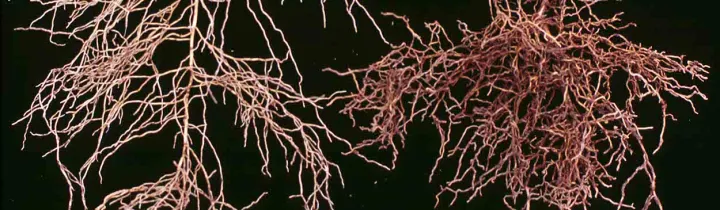
Damage manifests as suppressed root system development, leading to secondary infections. Characteristic galls or necrotic lesions often form at the sites where nematodes attach.
Injury to root hairs reduces the plant's ability to absorb water and nutrients, which leads to rapid wilting and potential death during drought conditions.
Economic losses arise from significant yield reduction and loss of product quality, especially in intensive greenhouse vegetable production.
Nematode infestation often facilitates the entry of fungal and bacterial pathogens, which infect the plant through wounds caused by the nematode's stylet.
Signs of infestation
The primary symptom is stunted plant growth and intermittent wilting during daylight hours, even under adequate irrigation levels.
Foliage of infested plants often becomes chlorotic, and the total biomass of the plant is significantly lower compared to healthy specimens in adjacent fields.
Upon inspection, the root system appears thickened and deformed, with signs of root tip necrosis. Surface brown lesions may also be observed on the roots.
In field settings, the infestation usually appears in patches that expand gradually if no containment or soil disinfection measures are implemented.
Laboratory diagnosis of soil samples to detect Hemicycliophora arenaria is the only reliable method for confirming infestation in early stages.
Control measures
Effective control is based on the use of high-quality, pest-free planting material and adherence to strict phytosanitary protocols when handling soil and tools.
Crop rotation using non-host species and planting bio-fumigant cover crops are effective agronomic practices to reduce nematode populations.
The application of chemical nematicides is justified only in cases of severe soil infestation and must be performed in accordance with local environmental regulations.
Thermal soil disinfection or steaming in greenhouses is an effective method for eliminating nematode populations prior to the planting season.
Managing soil moisture and pH levels is crucial, as unfavorable environmental conditions can help suppress the reproduction and activity of this nematode.
Causes diseases · 1
Discussion
No discussions yet — be the first.