
Erwinia rhapontici
Erwinia rhapontici
Description
How to identify
Erwinia rhapontici is a Gram-negative bacterium belonging to the Enterobacteriaceae family, known for causing significant decay in various agricultural crops.
The pathogen is capable of surviving in the soil and on crop debris, making it a persistent threat in fields with intensive vegetable cultivation.
A diagnostic feature of this bacterium is the production of a distinct pink pigment when cultured in laboratory settings on specific nutrient media.
Transmission primarily occurs through water splashing, contaminated equipment, and insects, which introduce the bacteria into wounded plant tissues.
Unlike other soft-rot bacteria, E. rhapontici has specific enzymatic mechanisms that allow it to degrade plant cell walls effectively under cool storage conditions.
What it damages
The pathogen is most notably associated with the internal pink rot of onion bulbs, which often remains undetected until the bulbs are sliced.
In addition to onions, the bacterium causes severe crown and stalk rot in rhubarb, significantly reducing the yield and quality of the stems.
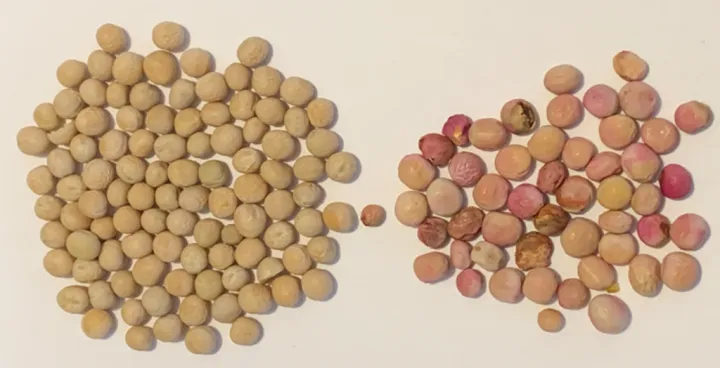
Pea crops can also be affected, with the bacterium causing internal seed decay, which leads to poor germination and stand establishment.
High-value bulbous flowers, such as hyacinths, can suffer from systemic infections leading to rotting of the bulbs and poor flower development.
In commercial storage facilities, infected produce can serve as an inoculum source, potentially leading to total loss of stored batches.
Signs of infestation
Onions infected with E. rhapontici typically exhibit a pink to salmon-colored discoloration of the internal scales, accompanied by watery tissue breakdown.
Foliage symptoms include chlorosis and wilting, though these are often secondary to the extensive decay occurring within the bulb.
Rhubarb plants show depressed, necrotic lesions on the petioles that expand and turn into soft, mushy rot as the disease progresses.
Infected seeds may appear discolored or show signs of internal tissue degradation upon close inspection.
- Internal pink/brown pigmentation of host tissues.
- Soft, water-soaked rot that may release a foul odor.
- Stunted plant growth and premature wilting.
Control measures
Crop rotation is the most effective cultural practice to reduce the soil inoculum level and prevent the buildup of the bacteria over consecutive seasons.
Using certified, pathogen-free seeds and sets is crucial, as the infection can be carried through contaminated planting material.
Post-harvest management is vital; maintaining low humidity and proper temperature in storage prevents the bacteria from spreading between healthy bulbs.
Careful handling during harvest to minimize mechanical wounding is essential, as the bacteria are highly opportunistic and invade through surface cuts.
Regular sanitation of tools, machinery, and storage crates is necessary to avoid transferring the pathogen across different fields and harvest lots.
Causes diseases · 1
Discussion
No discussions yet — be the first.