
Cristulariella moricola
Cristulariella moricola
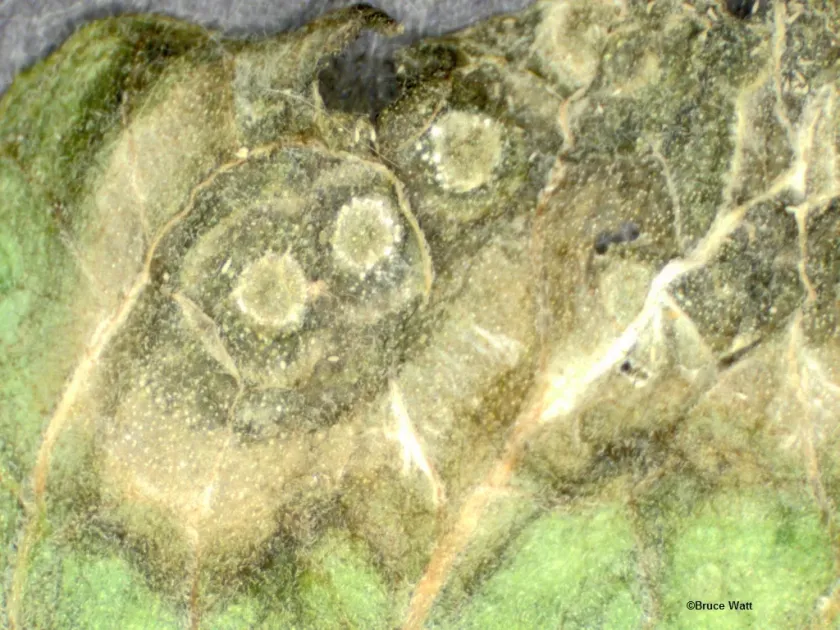
Description
How to identify
Cristulariella moricola is an anamorphic fungus belonging to the Ascomycota division, known for causing significant leaf spot diseases on a wide range of woody hosts.
Taxonomically, it is classified within the order Helotiales and is recognized for its unique, umbrella-like or star-shaped conidiophores that are visible under magnification.
The pathogen survives the winter in the form of mycelium or sclerotia-like structures, persisting on fallen leaves and debris located within the soil surface layer.
Spring infection is triggered by the release of spores that are disseminated primarily by wind and splashing raindrops onto the lower foliage of host plants.
As a necrotrophic pathogen, it infects host tissue and secretes enzymes that cause localized cell death, leading to the characteristic necrotic lesions seen on leaves.
What it damages
This fungus affects various woody plants, including mulberry, walnut, maple, linden, and several fruit-bearing species found in temperate gardens.
The primary impact is observed on the foliage, where the development of necrotic spots leads to premature leaf senescence and early defoliation of the tree.
In cases of severe infestation, the pathogen may colonize young shoots, potentially reducing the overall vigor and winter hardiness of the affected tree.
Nurseries are particularly vulnerable to this pathogen due to the high density of plants and the localized humidity, which favor rapid disease outbreaks.
Photosynthetic capacity is significantly reduced in infected plants, leading to stunted shoot growth and a decline in fruit yields over subsequent growing seasons.
When it appears
The most active period for disease development occurs during the latter half of the growing season, particularly under conditions of high humidity and rainfall.
Early symptoms typically appear in mid-summer when leaf canopies are dense, preventing proper air circulation and creating a humid microclimate near the ground.
Optimal conditions for pathogen infection require consistent moisture on leaf surfaces and ambient temperatures ranging between +18 and +25 degrees Celsius.
Sporulation reaches its peak in late summer and early autumn, which facilitates the rapid secondary spread of the fungus among healthy foliage in the vicinity.
As temperatures drop in late autumn, the fungus ceases active growth and enters a dormant phase on accumulated leaf litter to survive until the following spring.
Signs of infestation
Initial signs consist of small, circular or irregular lesions that appear water-soaked before turning brown or necrotic as the tissue dies.
The lesions are often surrounded by a chlorotic halo, which is a classic diagnostic feature that distinguishes this disease from other similar leaf spot pathogens.
On the undersides of the leaves, small, grayish-white fruiting bodies, resembling tiny star-like structures, can be seen when inspected with a hand lens.
Infected leaves gradually lose their structural integrity, curl up, and drop prematurely, often leaving branches bare well before the natural autumn senescence.
High humidity levels may lead to the emergence of a faint, powdery growth on the spots, representing the fungus actively producing a new generation of spores.
Control measures
The most effective management practice is the thorough removal and destruction of all fallen leaves, as these represent the primary reservoir for the fungus.
Incorporating fallen debris into the soil through deep tilling or composting at high temperatures can help eliminate the primary inoculum source for the next season.
Thinning out the canopy through proper pruning improves airflow and ensures that leaves dry quickly after rainfall, significantly lowering the risk of infection.
Fungicide applications, such as copper-based sprays or systemic treatments, should be applied at the first sign of symptoms to prevent further pathogen spread.
Maintaining optimal tree health through balanced fertilization and appropriate irrigation techniques helps plants better withstand the stress caused by the infection.
Causes diseases · 2
Discussion
No discussions yet — be the first.