
Barley yellow dwarf virus
Cereal yellow
Description
How to identify
Barley yellow dwarf virus (BYDV) is a widespread plant virus belonging to the Luteoviridae family and the Luteovirus genus. It is a single-stranded RNA virus that restricts itself to the phloem tissue of host plants.
The virus is exclusively transmitted by aphid vectors in a persistent manner. Once an aphid acquires the virus, it remains infectious for the rest of its life, facilitating efficient spread across cereal fields.
What it damages
BYDV affects a broad range of Poaceae species, including economically important crops such as barley, wheat, oats, and triticale. It is considered one of the most destructive viral diseases for cereal production globally.
Damage results in stunted plant growth, reduced grain filling, and significant yield losses. In cases of early infection, plants may suffer from severe dwarfism and complete sterility, often leading to total crop failure.
When it appears
The infection cycle is synchronized with aphid migration patterns, which typically peak in autumn (impacting winter cereals) or spring (impacting spring cereals). Warm, mild winters significantly increase the risk of epidemics.
Reservoirs of the virus include volunteer cereals and various wild grass species, which harbor both the virus and its aphid vectors throughout the year, especially during the fallow season.
Signs of infestation
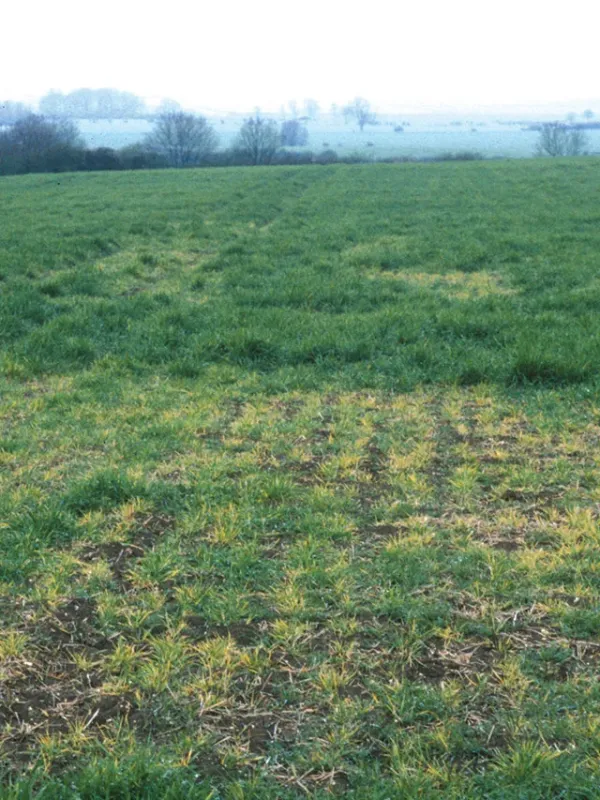
Symptoms vary depending on the host plant species and environmental conditions. Common signs include leaf yellowing, reddening, or purpling, typically starting from the leaf tips and moving downwards.
Infected plants show reduced height, shorter internodes, and an upright growth habit. Excessive tillering is often observed, and in severe cases, the grain heads are small, shriveled, or fail to develop entirely.
Control measures
Management focuses on reducing the aphid population and eliminating alternative hosts. An integrated pest management approach is essential for mitigating the impact of BYDV on field crops.
- Adjusting sowing dates to avoid the peak periods of aphid migration.
- Effective weed control to eliminate grass hosts and volunteer seedlings in and around the fields.
- Using insecticide-treated seeds to protect young seedlings from early-season aphid infestation.
- Monitoring aphid populations and applying insecticides when economic thresholds are reached.
- Selecting resistant or tolerant cereal varieties through breeding programs.
Causes diseases · 1
Discussion
No discussions yet — be the first.