
Burkholderia cepacia
Burkholderia cepacia
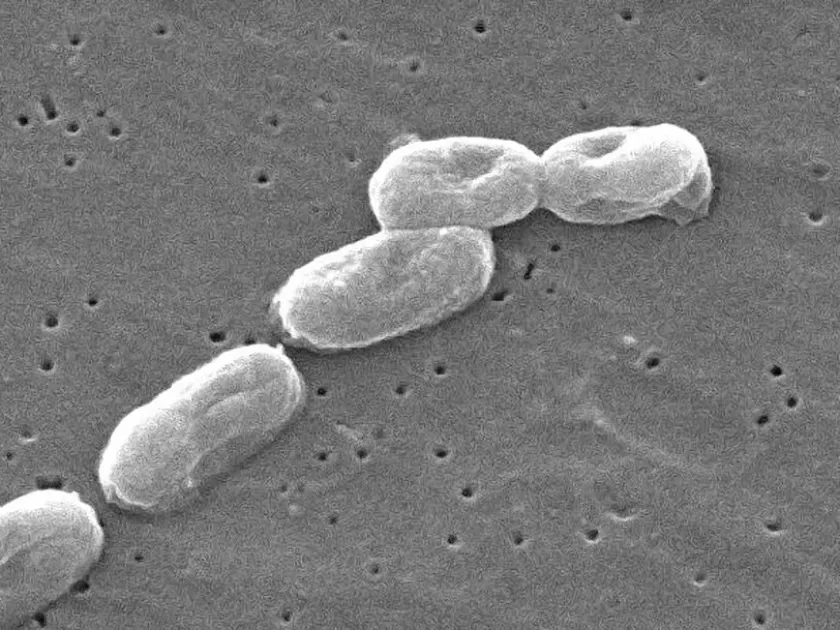
Description
How to identify
Burkholderia cepacia is a Gram-negative, motile, rod-shaped bacterium belonging to the Burkholderiaceae family. It is recognized for its metabolic versatility.
The bacterium is a facultative anaerobe that can thrive in diverse environments, from contaminated soil and water to the internal tissues of host plants.
In the context of phytopathology, this organism is classified as an opportunistic pathogen that frequently takes advantage of plant tissue injuries to establish infection.
A notable feature of this species is its ability to form robust biofilms, which enhances its survival in agricultural settings and provides resistance against chemical treatments.
Its complex genome allows for high adaptability, making it a significant concern in clinical, industrial, and agricultural microbiology.
What it damages
The primary concern for agriculture is its ability to cause sour skin in onions, a destructive disease that leads to significant post-harvest losses.
Besides onions, B. cepacia has been reported to infect a variety of other crops, including decorative flowers, seedlings, and certain leguminous plants.
The pathogen secretes enzymes, such as pectinases, that degrade plant cell walls, leading to rapid softening and disintegration of the affected tissue.
Damage can escalate quickly in storage facilities, as the bacteria can spread through the moisture between stored bulbs, causing extensive rot in entire batches.
The pathogen's ability to remain dormant in plant debris makes it a persistent threat that can compromise the health of future planting seasons.
Signs of infestation
Early symptoms include yellowing and wilting of the foliage, often progressing from the outer leaves to the inner, more succulent parts of the plant.
A cross-section of an infected bulb reveals tissue that has turned soft, watery, and exhibits a characteristic sour or acidic odor, indicating internal decay.
The internal scales of the bulb typically decay much faster than the exterior ones, which may sometimes remain intact while the inner contents liquefy.
In high humidity environments, one might observe a bacterial exudate, appearing as a thin, often yellowish slime on the surface of the infected tissue.
The root system may become compromised, and the entire plant can be easily detached from the soil due to the degradation of the basal plate.
Control measures
Integrated pest management, including strict crop rotation practices, is essential to minimize the concentration of the pathogen in the soil over time.
Ensuring the use of disease-free, high-quality seeds or sets is the first line of defense against the introduction of the bacteria into clean fields.
Proper water management is critical; avoiding overhead irrigation and maintaining well-drained fields reduces the moisture levels necessary for bacterial proliferation.
Post-harvest handling should include thorough curing and drying of bulbs to create an environment less favorable for the growth of the pathogen.
- Sanitization of farming tools and storage equipment.
- Prompt removal and destruction of infected plant material.
- Monitoring storage conditions, particularly maintaining low humidity.
Causes diseases · 1
Discussion
No discussions yet — be the first.