
Avocado sunblotch
Avocado sunblotch
Description
How to identify
Avocado sunblotch is a disease caused by the Avocado sunblotch viroid (ASBVd). This pathogen is the smallest known infectious agent, consisting solely of a short, circular, single-stranded RNA molecule.
Classified within the Avsunviroidae family and Elaviroid genus, the viroid lacks a protein coat and relies entirely on host cell machinery for its replication and systemic spread throughout the plant.
The viroid is characterized by an extended latent period. Infected trees may remain asymptomatic for years while continuing to act as reservoirs for the pathogen, spreading it to healthy trees via pollen and seeds.
Transmission occurs primarily through the use of infected scion or rootstock material during grafting, as well as via contaminated pruning tools that have not been properly disinfected.
Research confirms that ASBVd can also be transmitted via pollen, leading to infection in the fruit and seed, which poses a significant challenge for nurseries and commercial avocado propagation.
What it damages
The disease primarily affects avocado trees (Persea americana). The viroid systemic infection impairs the plant's physiological processes, leading to reduced overall vigor and significant structural damage to the tree.
Fruit quality is severely compromised; affected fruit become deformed, smaller than average, and develop characteristic bleached, yellow, or reddish-brown indentations, rendering them unmarketable.
Severe infestations cause stunted growth and a distorted tree architecture. Branches may become brittle and develop a "weeping" or "rosette" appearance, drastically reducing the tree's productive lifespan.
Infected trees exhibit lower yields and poor fruit maturation. The overall stress on the plant makes it more susceptible to secondary pathogens, leading to gradual decline and eventual death of the tree.
The economic impact of sunblotch is substantial, often necessitating the complete removal and destruction of infected blocks to contain the spread of the viroid in commercial plantations.
Signs of infestation
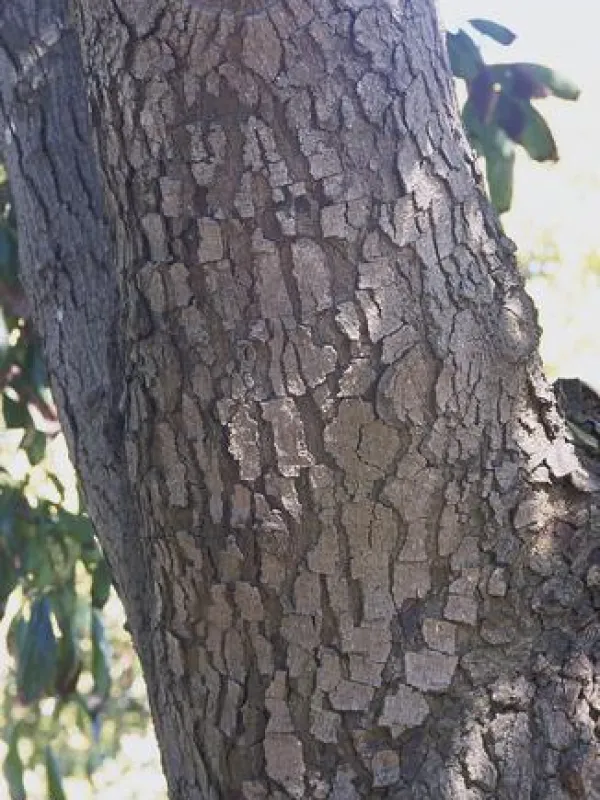
Young branches often exhibit longitudinal streaks or grooves that range from yellow to red. Over time, these develop into deep cracks in the bark, giving it a distinctive "alligator skin" texture.
Foliage symptoms include mosaic patterns, chlorosis, and general distortion. Leaves may show yellowing along the veins, which can sometimes be confused with nutrient deficiencies, making diagnosis tricky.
Fruit symptoms are the most visible, appearing as irregular, sunken areas on the skin. On darker-skinned avocado varieties, these spots often appear bright red or pink due to changes in pigment expression.
The tree may show general lack of growth and premature fruit drop. In advanced stages, the entire crown may appear sparse and malformed, with reduced leaf cover and twig dieback.
- longitudinal scars or grooves on young twigs;
- yellowing or veinal chlorosis on leaves;
- deformed, discolored, and sunken fruit skin;
- stunted tree growth and brittle branches.
Control measures
There is no known chemical cure for Avocado sunblotch. Management relies entirely on prevention, strict quarantine measures, and the removal and destruction of symptomatic trees.
The most important control strategy is to use only certified, disease-free nursery stock. Regular testing using molecular diagnostic methods like RT-PCR is essential for verifying plant health.
Strict tool sanitation is mandatory. Pruning shears, saws, and other equipment must be disinfected with a 10% sodium hypochlorite solution or other effective disinfectants between every tree to prevent transmission.
Monitoring programs are crucial for the early detection of the viroid. If a tree is identified as positive for ASBVd, it must be removed promptly to prevent the viroid from spreading through the orchard.
Avoid sourcing seeds from unknown or infected mother trees, as the viroid is seed-borne and can easily pass the infection to new seedlings, creating a perpetual cycle of disease in the nursery.
Causes diseases · 1
Discussion
No discussions yet — be the first.