
Late blight
Associated with
Description
How to identify
The causative agent of late blight is Phytophthora infestans, an oomycete that acts as a highly destructive plant pathogen belonging to the kingdom Chromista.
Despite being classified as an oomycete, it shares many characteristics with fungi, producing sporangia that disperse via wind and water, leading to rapid disease transmission.
The pathogen utilizes a complex life cycle, including both asexual reproduction during the growing season and sexual reproduction to form oospores for survival.
It thrives in humid, cool conditions, making it one of the most feared threats to commercial and domestic cultivation of Solanaceous crops worldwide.
The organism persists in plant debris, soil, and infected tubers, allowing it to resurface and infect new crops as soon as the weather becomes favorable.
What it damages
Late blight primarily affects members of the Solanaceae family, with potatoes and tomatoes being the most susceptible and economically important hosts.
The pathogen attacks every aerial part of the plant, including leaves, stems, flowers, and fruits, often resulting in total crop failure within a few days.
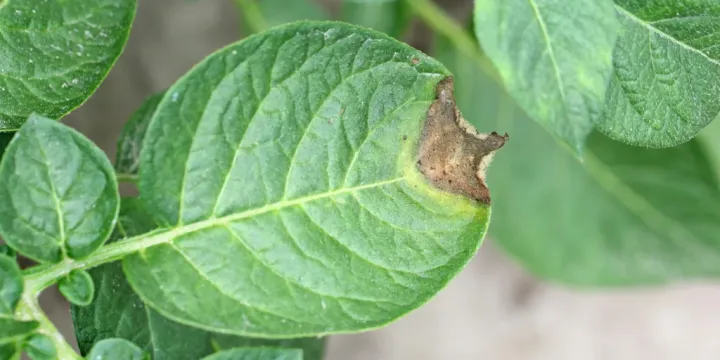
Infection starts as water-soaked spots that quickly turn dark brown or black, eventually causing the leaves to wither and die prematurely.
Tomato fruits develop firm, dark, leathery patches that penetrate deeply into the flesh, rendering the produce entirely inedible and unmarketable.
Potato tubers become infected from spores washed into the soil, leading to reddish-brown dry rot that destroys the storage quality of the harvest.
When it appears
The disease usually flares up during mid-to-late summer, triggered by persistent rainfall, high humidity, and moderate temperatures.
Foggy conditions and heavy morning dew provide the perfect environment for the sporangia to germinate and invade host tissues.
While often appearing in the field during wet summers, it can also spread rapidly in greenhouses if ventilation is poor and humidity levels remain stagnant.
The severity of an outbreak is highly dependent on the weather; a single week of rainy, cool weather can lead to an epidemic in untreated fields.
Early warning systems are often used to monitor the weather and advise growers on the timing of protective fungicide applications before symptoms appear.
Signs of infestation
The first symptoms are small, irregular, water-soaked patches on the leaves, which rapidly enlarge and turn into necrotic brown lesions.
A distinctive white, fuzzy mold (sporangia) typically appears on the undersides of the leaves during high-humidity periods, serving as a primary identifier.
Stems of infected plants show elongated dark brown to black areas that cause the stems to collapse, leading to the death of the entire plant.
Potato tubers affected by the disease display irregular, depressed areas with purplish or brown skin and rusty-colored flesh underneath.
- Water-soaked, rapidly spreading leaf spots.
- White fungal-like growth on the underside of leaves.
- Rapid collapse of stems and foliage.
- Leathery, firm rot on fruits and tubers.
- Increased risk of secondary infections after initial blight.
Control measures
Cultural management is essential, including the use of certified, disease-free seed potatoes and the removal of all infected plant materials after harvest.
Improving air circulation through proper spacing and pruning helps reduce humidity around the foliage, making the environment less favorable for the pathogen.
Applying protective and systemic fungicides is crucial, especially in regions with a history of late blight, starting before the first signs of the disease.
Selecting resistant cultivars can significantly delay the onset of the disease, though growers should remain vigilant as new strains can emerge.
Irrigation practices should focus on water management, such as drip irrigation, to minimize leaf wetness and decrease the duration of environmental conditions suitable for infection.
Causes diseases · 1
Discussion
No discussions yet — be the first.