
Arabis mosaic virus
Arabis mosaic
Description
How to identify
Arabis mosaic virus (ArMV) is a significant plant pathogen belonging to the Nepovirus genus within the Secoviridae family. It is a spherical virus containing a positive-sense single-stranded RNA genome that causes extensive damage to various crops.
The virus is primarily recognized for its ability to be transmitted by ectoparasitic soil-inhabiting nematodes, specifically species of the genus Xiphinema. This biological interaction is the main driver of its field distribution.
Transmission also occurs through infected seeds, pollen, and vegetative propagation materials such as cuttings or rootstocks. This facilitates the rapid spread of the virus across different geographical regions.
In addition to its wide host range, the virus exhibits high stability in soil environments. This persistent nature makes it difficult to eradicate once a field site is infested with the vector nematodes.
Diagnosis of ArMV typically requires laboratory techniques including Enzyme-Linked Immunosorbent Assay (ELISA) or Reverse Transcription Polymerase Chain Reaction (RT-PCR) to distinguish it from other viruses with similar symptoms.
What it damages
ArMV is a major threat to soft fruit production, particularly strawberries and raspberries, where it causes systemic infections that lead to significant yield decline and reduced fruit quality.
In vineyards, the virus is linked to the condition known as fanleaf degeneration or chrome mosaic. It causes stunted growth, poor grape cluster development, and significant losses in wine production volume.
Hops and sugar beets are also susceptible to this virus. In hops, it causes yellow spotting and severe yield reduction, often requiring the removal and destruction of infected garden patches.
Ornamental flowers, including lilies and narcissus, show symptoms of color breaking and structural malformation. This greatly depreciates the market value of greenhouse and ornamental crops.
Overall, the damage caused by ArMV involves both direct financial loss from reduced yield and the high costs associated with clearing and re-establishing infected fields.
Signs of infestation
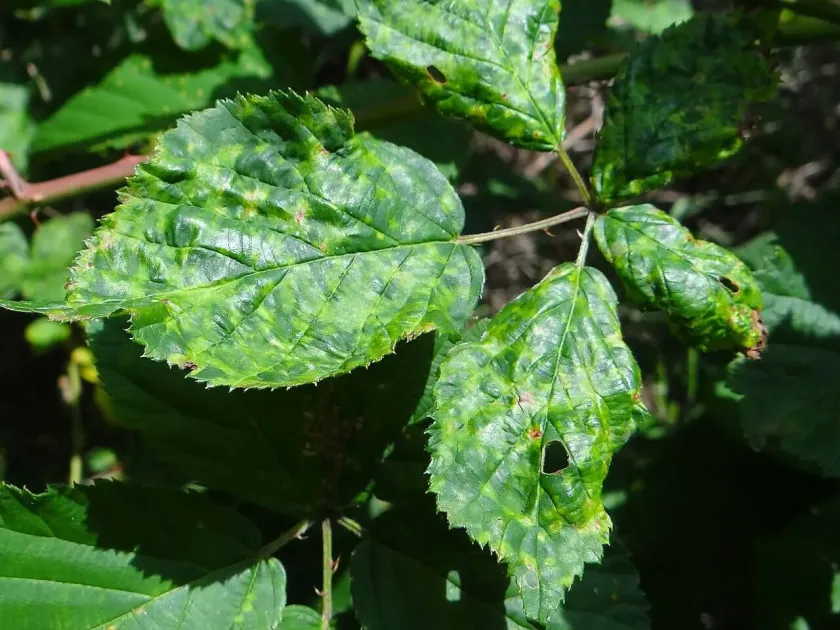
The most common symptoms include mosaic patterns, chlorotic rings, and line patterns on the leaves. Infected plants often show significant leaf deformation, curling, or thickening.
Plants affected by ArMV generally exhibit stunted growth and shortened internodes. This results in a bushy appearance, as the normal vertical growth pattern is severely disrupted.
Grapevine infections display characteristic fan-shaped leaves, irregular venation, and the formation of double nodes on the shoots. Fruit clusters are typically sparse and show poor berry set.
On flowers, the virus causes color breaking, which manifests as streaks or spots of different colors on the petals. This can initially be mistaken for a desirable trait rather than a disease.
Root systems of infected plants are often underdeveloped with necrosis, reducing the plant's efficiency in nutrient and water uptake, leading to overall plant decline during environmental stress.
Control measures
The primary control strategy is the use of certified virus-free planting material. Establishing a new plantation with healthy, tested stocks is crucial to preventing the introduction of the virus.
Control of the vector (Xiphinema nematodes) is essential. Soil fumigation or the application of nematicides prior to planting can help reduce the population of these carriers in the soil.
Crop rotation using non-host crops for the nematodes can significantly decrease the virus reservoir in the soil over time. Maintaining a clean field free of weeds that can host the virus is also vital.
Infected plants should be identified, rogued out, and destroyed immediately, including their entire root system. The area should then be monitored or left fallow to ensure no nematodes remain.
- Rigorous disinfection of agricultural machinery and pruning tools between fields.
- Establishing spatial isolation from older or symptomatic orchards.
- Regular testing of soil samples for the presence of vector nematodes.
- Implementing integrated pest management (IPM) to maintain soil health and suppress vector populations.
Causes diseases · 3
Discussion
No discussions yet — be the first.