
Description
Symptoms
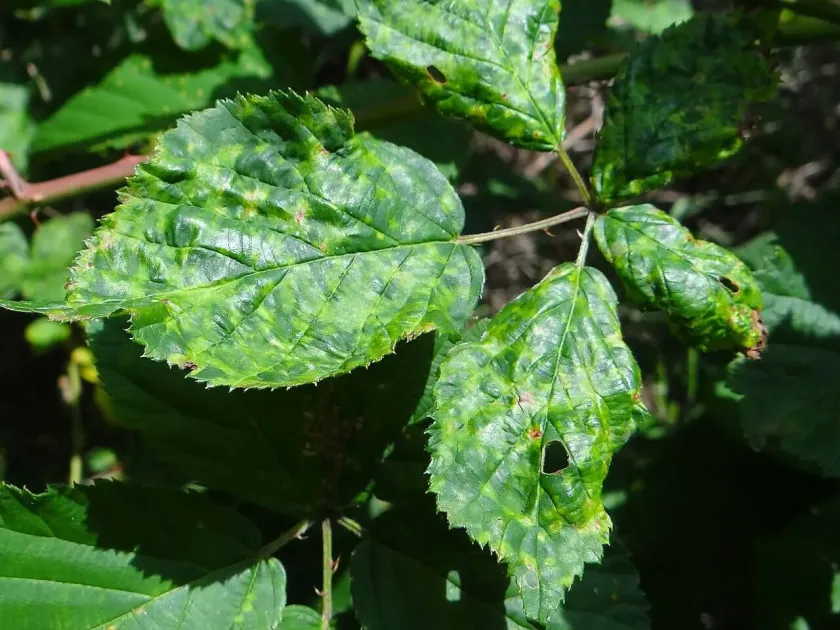
Symptoms of Arabis mosaic virus infection vary depending on the host plant species. The most characteristic sign is chlorotic mosaic, which presents as irregular light-green or yellow mottling on leaves.
In hemp (Cannabis sativa), the infection often results in severe leaf deformation, curling, and overall stunted growth. The plants appear significantly smaller and less vigorous compared to healthy counterparts.
Leaf tissue may develop necrotic ringspots or wavy margins. In some cases, the leaves exhibit chlorotic line patterns, which are indicative of systemic viral infection.
Floral development is frequently disrupted, leading to abnormal flower structures and a noticeable reduction in seed or fiber production efficiency.
Severely infected plants often show symptoms of premature senescence or death, as the systemic nature of the virus impairs the plant's metabolic processes.
Pathogen
Arabis mosaic virus (ArMV) is a significant plant pathogen belonging to the genus Nepovirus. It possesses a wide host range, primarily affecting dicotyledonous plants, including various horticultural and industrial crops.
The virus consists of isometric particles containing single-stranded RNA. It is a highly stable pathogen capable of surviving in the soil and within the roots of infected host plants for extended periods.
Transmission of the virus is primarily mediated by soil-inhabiting ectoparasitic nematodes belonging to the genus Xiphinema. These nematodes acquire the virus while feeding on infected roots.
Once acquired, the virus can be transmitted to healthy plants during subsequent feeding events. This mode of transmission allows for the rapid spread of the disease within localized field patches.
In addition to nematode transmission, ArMV can be spread through infected seeds and pollen, making seed health a critical factor in preventing the introduction of the virus into new areas.
Conditions for development
The spread of the virus is strongly correlated with the activity of its nematode vectors. Optimal conditions for nematode movement and feeding occur in moist, well-aerated soils.
The disease tends to manifest in circular or irregular patches within a field, corresponding to the slow migration patterns of Xiphinema nematodes.
Moderate temperatures, typically ranging from 15°C to 25°C, favor both the reproduction of the nematode vectors and the systemic movement of the virus within the host plant.
Continuous monocropping without adequate rotation allows for the buildup of both the virus and nematode populations in the soil over successive growing seasons.
Weed hosts, which remain asymptomatic or show mild symptoms, serve as critical reservoirs for the virus, allowing it to persist in fields even in the absence of primary crop plants.
Why it matters
Arabis mosaic virus causes significant economic losses by reducing both yield and the quality of harvested products. Systemic infection leads to decreased physiological performance.
In industrial hemp production, the virus severely impacts fiber quality, reducing the plant's ability to produce high-tensile strength fibers required for commercial applications.
Infected plants become more susceptible to secondary stressors, including drought, nutrient deficiencies, and secondary fungal or bacterial infections.
Long-term survival of the virus in the soil necessitates expensive remediation efforts or the abandonment of infected land for specific sensitive crop rotations.
The inability to treat infected plants makes prevention the only viable management strategy for producers, as viral diseases cannot be controlled with standard fungicides or insecticides.
Protection
The primary control measure is the use of high-quality, certified virus-free seeds and planting materials to prevent the initial introduction of the pathogen into production fields.
Effective management includes controlling nematode populations through deep cultivation, fallowing, or the use of non-host cover crops that act as natural nematicides.
Strict sanitation protocols are essential, including the removal and destruction of infected plants and the thorough cleaning of farm machinery to prevent the movement of contaminated soil.
Implementation of long-term crop rotation schemes helps break the disease cycle and reduces the pressure from vector populations in the soil.
- Regular field scouting to identify and rogue infected plants early.
- Testing soil samples for the presence of Xiphinema nematodes.
- Eliminating reservoir weeds in and around the cultivated area to reduce the potential for spread.
Pathogens and affected parts
Affects crops · 1
Discussion
No discussions yet — be the first.