
African cassava mosaic virus
African cassava
Description
How to identify
The African cassava mosaic virus (ACMV) is a serious viral pathogen belonging to the Geminiviridae family and the Begomovirus genus. It is a single-stranded DNA virus that primarily affects cassava (Manihot esculenta).
The virus is naturally transmitted by the whitefly Bemisia tabaci, which acquires the virus while feeding on infected sap and transmits it to healthy plants. This vector-mediated spread is the most common way the virus moves across agricultural landscapes.
Transmission also occurs through human activity via the distribution of infected planting material. Since cassava is propagated through stem cuttings, the virus can easily persist and spread to new fields if the original cuttings were harvested from diseased plants.
ACMV is characterized by its bipartite genome, consisting of two circular DNA segments. This genetic structure is highly efficient for viral replication and allows the pathogen to adapt rapidly to different host varieties.
Detection and diagnosis in agricultural settings rely on visual inspection for mosaic symptoms, while laboratory confirmation uses advanced molecular techniques like PCR (polymerase chain reaction) to identify specific viral DNA sequences.
What it damages
The primary host, cassava, suffers significant damage to its vascular system due to the viral infection. The virus alters the plant's metabolic processes, leading to stunted development and poor growth outcomes.
Crop yields can drop by 30% to 80% depending on the plant's age at the time of infection and the susceptibility of the chosen variety. Infected plants produce tubers that are smaller, woody, or of poor quality, rendering them unsuitable for food.
The virus also weakens the plant's resilience, making it more vulnerable to drought, soil-borne diseases, and other pests. This compounding effect significantly increases the risk of total crop failure in tropical environments.
Economically, the impact is severe, particularly in sub-Saharan Africa, where cassava is a dietary staple. Widespread viral outbreaks contribute to food insecurity and substantial income loss for small-scale farming communities.
The cumulative effect of using contaminated cuttings over several growing seasons leads to a progressive degradation of genetic vigor, eventually forcing farmers to abandon their fields and seek new, clean planting stock.
Signs of infestation
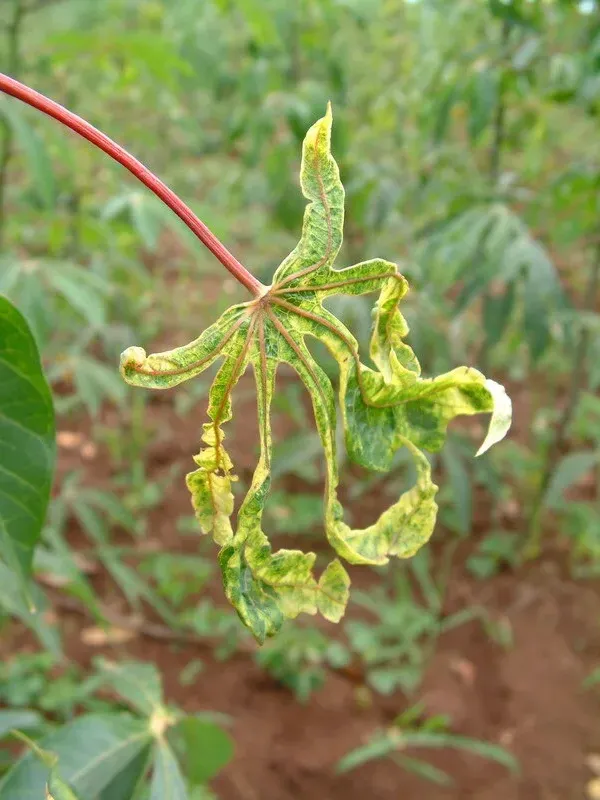
The most distinctive sign of infection is the mosaic pattern on leaves, consisting of bright yellow or pale green patches interspersed with normal green tissue. This chlorosis gives the leaves a mottled, irregular appearance.
Leaves often show severe morphological deformities, such as wrinkling, curling, or reduction in size. These structural changes inhibit the plant's ability to photosynthesize effectively, directly impacting the final yield.
Infected plants typically exhibit stunting and shortened internodes, resulting in a bushy, compact appearance. This disruption in normal growth patterns prevents the healthy development of roots and tubers.
Symptoms are most visible on new leaf growth during the early stages of development. As the infection progresses, the plant becomes increasingly chlorotic and exhibits reduced foliage density compared to healthy specimens.
- Mottled yellow and green leaf patterns.
- Leaf curling and deformation.
- Stunted plant height and shortened internodes.
- Reduced root tuber size and mass.
Control measures
The most effective strategy for managing ACMV is the use of healthy, virus-free planting materials. Farmers are advised to establish nurseries that focus on multiplying clean cuttings to provide a safe foundation for production.
Breeding and deploying resistant cassava varieties remain the most sustainable long-term solution. Research programs focus on identifying genetic traits that can naturally limit viral replication and reduce symptom severity in the field.
Managing the whitefly population (Bemisia tabaci) is crucial but challenging. Integrated pest management (IPM) strategies, including crop rotation and field sanitation, are recommended to lower vector numbers and limit viral transmission.
Phytosanitary measures, such as the systematic removal and destruction of infected plants, help contain localized outbreaks. It is important to implement these measures early to prevent the spread of the virus to neighboring healthy patches.
Farmer education is key to success. Providing training on recognizing symptoms and the importance of selecting high-quality cuttings enables local communities to protect their yields and stabilize their food supplies against viral threats.
Causes diseases · 1
Discussion
No discussions yet — be the first.