
Description
Symptoms
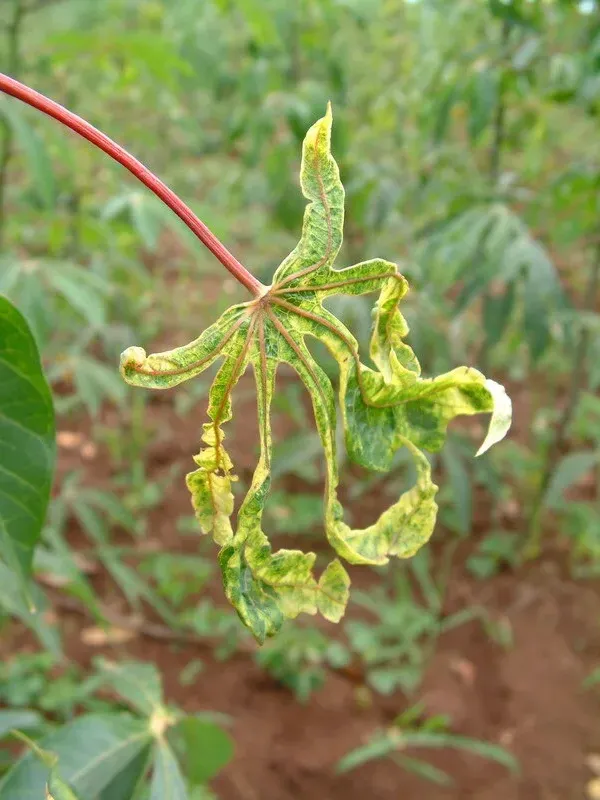
The most distinctive symptom is a variegated mosaic pattern on the leaves, where patches of yellow or pale green chlorotic tissue alternate with healthy green sections.
Infected leaves often become stunted, twisted, and distorted. This reduction in the functional leaf area significantly hinders the plant's ability to perform photosynthesis.
Plants affected by the disease show clear signs of growth retardation. Internodes become shortened, stems are thinner than usual, and the overall plant height is significantly reduced.
In soybean crops, symptoms may appear as yellowing of veins or a light mosaic pattern on new foliage, which may eventually lead to decreased seed production.
Symptom severity varies depending on the cassava cultivar's susceptibility and the specific viral strain, with some varieties exhibiting only mild leaf mottling.
Pathogen
African cassava mosaic is caused by a complex of geminiviruses (African cassava mosaic virus, ACMV). This viral pathogen systemically infects all plant tissues, causing severe physiological disruption.
The primary vector for the transmission of the virus is the whitefly (Bemisia tabaci). These insects acquire the virus while feeding on infected plants and transmit it to healthy ones.
The disease is largely spread through contaminated planting material. Using infected stem cuttings is the most common way the virus is introduced to new agricultural lands.
The virus can remain latent in infected cuttings, making early detection difficult without specialized laboratory diagnostic methods like PCR or ELISA tests.
In addition to cassava, the virus can infect other plant species, including soybean. This broad host range allows the pathogen to persist in agricultural environments.
Conditions for development
Warm and humid climatic conditions are highly conducive to the disease. These conditions support large populations of whiteflies, which are the main spreaders of the virus.
Increased whitefly activity is observed during periods of high temperature, which correlate directly with spikes in the spread of the virus within a plantation.
The use of infected cuttings is the primary factor leading to rapid disease development. If planting material is taken from an infected source, the whole crop is at risk.
Lack of spatial isolation between old, infected cassava fields and new plantings creates an easy bridge for whiteflies to move the virus to healthy plants.
Environmental factors, such as drought or poor soil management, can exacerbate the negative effects of the virus on the plant's overall health and vitality.
Why it matters
The most critical impact of the disease is the substantial reduction in tuberous root yield. In severe outbreaks, farmers can lose more than half of their expected harvest.
Beyond quantity, the quality of the cassava roots is compromised. There is often a significant decrease in starch content, which makes the roots less valuable for processing.
The disease depletes the plant's energy reserves, leaving it more vulnerable to secondary infections, drought stress, and infestations by other pests and insects.
For soybeans, the infection leads to reduced biomass and lower seed quality, which negatively impacts the overall agricultural economic output per hectare.
In areas where cassava is a staple food, this disease poses a direct threat to food security and the economic stability of smallholder farming communities.
Protection
Using resistant or tolerant cassava varieties is the most sustainable management strategy. Breeding programs focus on developing hybrids that can withstand the virus.
Strict phytosanitary practices are essential. Farmers should only use clean, certified, and virus-free cuttings to ensure their plantations remain healthy.
Managing whitefly populations using targeted insecticides can help reduce viral transmission, though this requires consistent monitoring and proper timing.
Rogueing, the process of identifying and removing symptomatic plants from the field, is highly recommended to reduce the source of inoculum for other plants.
Maintaining a clean field environment by removing weeds and practicing proper crop rotation helps minimize the presence of viral reservoirs in the soil and surroundings.
Pathogens and affected parts
Affects crops · 2
Discussion
No discussions yet — be the first.