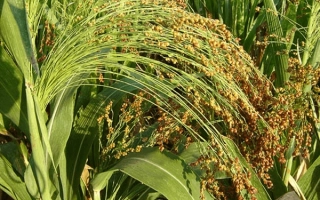
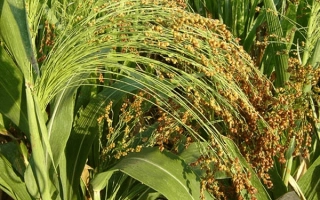
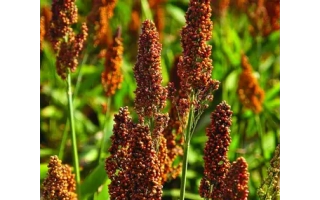
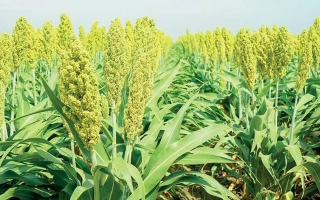
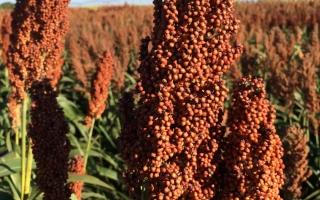
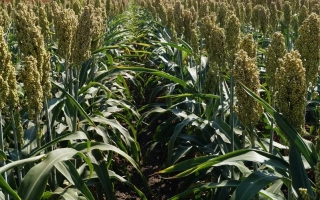
Sorghum RM 226 is a high-growing agricultural crop intended for use as green fodder, silage, and raw material for sugar syrup production. The plant reaches a height of 220 to 250 cm and has an upright stem with 2–3 tillers per plant. The stem is characterized by high juice content, with juice yield amounting to approximately 65% of total biomass. The panicles are oval-shaped with black-brown coloration, and the grain is large, brown, with 1000-grain weight ranging from 19 to 23 grams. The grain kernels have a black-brown hue and are slightly sticky. The vegetative period from planting to waxing stage is 105–115 days, and to full grain maturity — 120–125 days. The crop exhibits high resistance to lodging, shattering, drought, and major diseases, rated 7 points on the corresponding scale. Dry matter yield varies from 11.0 to 14.8 tons per hectare, grain yield — 10.0 to 12.0 tons per hectare, and green mass yield — 55.0 to 76.0 tons per hectare. Due to its characteristics, sorghum RM 226 is an effective and reliable choice for agricultural production, ensuring high productivity and quality of fodder base. It can be used both for animal feeding and silage preparation, making it a versatile and sought-after crop in agricultural practice.