Medium-late maturing variety, obtained at the Far Eastern Experimental Station of VIR from pollination of form No. 339/9 of blackcurrant 'Dikusha' and a pollen mixture of varieties (Champion Carter + Daughter of Giant + Achievement). Author N.M. Bokharnikova. Included in the State Register of varieties approved for use in the Far Eastern region in 1990.
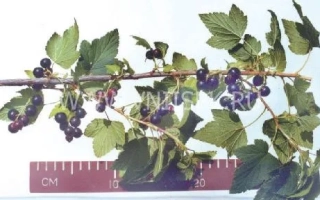
Strong-growing bush with massive branches, moderately dense, compact. Shoots thick and straight.
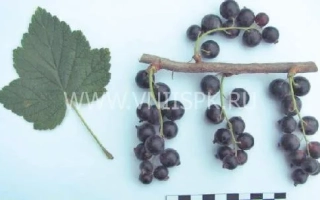
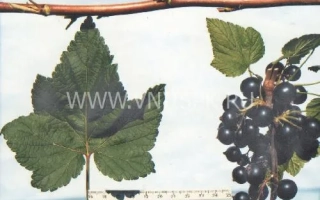
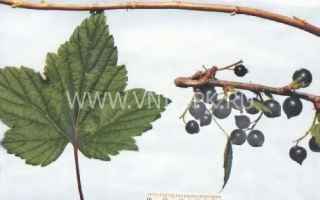
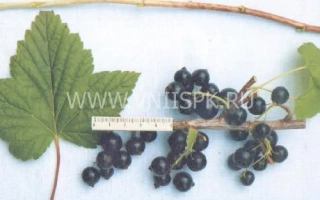
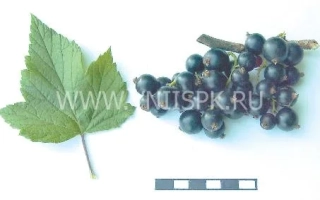
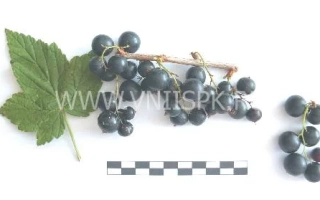
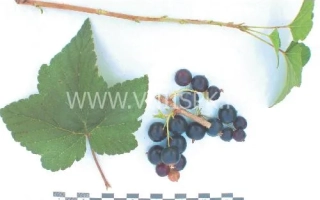
Three-lobed leaf, large, bright green, elastic, shiny. Leaf blade smooth, straight, leaning downward. Side lobes obtuse, positioned at a right angle. Teeth small, narrow, serrated. Leaf base heart-shaped, occasionally with a rounded notch.
Flowers cup-shaped, pinkish-white. Inflorescences of medium length and density.
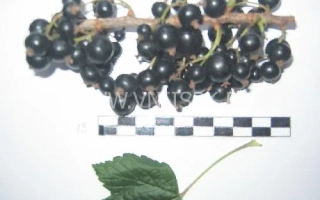
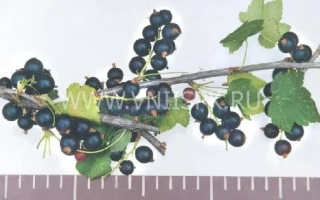
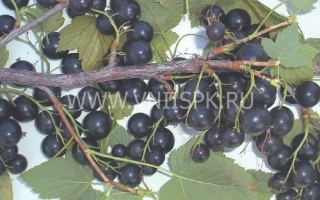
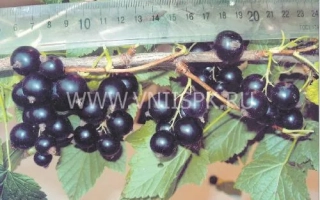
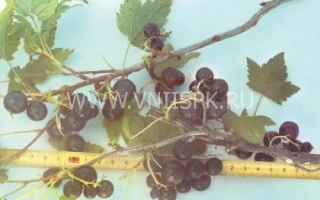
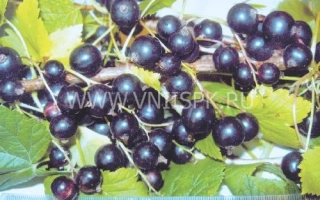
Berries medium to large (1.0–1.4 g), uniform in size, nearly black with a bluish waxy coating. Seeds small. Skin thin, tough, dry detachment. Berries remain on the bush for a long time, neither falling off nor splitting. Flavor slightly sweet-tart, without aroma (3.6 points). Technical variety. Chemical composition of berries: dry solids — 15.8%, total sugars — 5.8%, titratable acidity — 3.3%, ascorbic acid — 128.3 mg/100 g. Recommended for processing into juices, jams, food coloring, etc.
Highly winter-hardy, resistant to winter desiccation, highly self-fertile, high yield (6.1–8.1 t/ha), resistant to anthracnose, septoria, powdery mildew, spider mites, and aphids. Young bushes are susceptible to powdery mildew up to 2.0–3.0 points.
Advantages of the variety: the most winter-hardy and productive variety in Primorsky Krai, high berry transportability.
Disadvantages of the variety: susceptible to American powdery mildew, mediocre berry flavor.