


SKU #38836
·
29 views
Palace
Rapeseed
NPZ LembkeUser rating
0 votes0% positive reviews
No ratings yet — be the first.
Hybrid Type
Simple Hybrid
Type of Rape
Winter rape
Oil Content
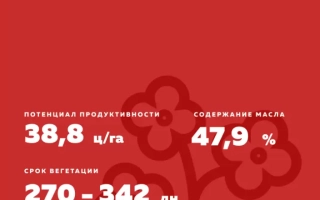
47-49
Erucic Acid Content
Low
About product

Reliable winter oilseed rape with powerful immunity and a consistently high yield of quality oil.
Hybrid Type
Simple Hybrid
Type of Rape
Winter rape
Oil Content
47-49
Erucic Acid Content
Low
Description
Stability and Plant Health: Why Palac is a Pragmatic Choice
Winter oilseed rape "Palac" from the German breeding company NPZ Lembke is a classic example of a simple hybrid, where the focus is not on aggressive yield stimulation, but on reliability. In modern agronomy, where the infectious background of fields is becoming increasingly aggressive, this hybrid acts as an "insurance policy" for the farmer.
Crop Health as the Foundation of Profitability
The main advantage of "Palac" lies in its comprehensive genetic defense. Many hybrids on the market show high yields under ideal conditions but collapse at the first signs of disease. "Palac" possesses marked resistance to three key pathogens that can destroy profitability:
- Phoma: the hybrid minimizes the risk of lodging due to root neck destruction.
- Verticillium: ensures stem integrity, which is critical for full pod filling.
- Cylindrosporium: reduces the need for excessive fungicide treatments.
Sowing Economics: Oil Content
An oil content of 47–49% makes "Palac" an economically attractive raw material for processing plants. Its low erucic acid content meets strict European food oil quality standards. For the agricultural producer, this translates into consistent demand and fewer issues with marketing commercial lots.
Who is this hybrid for?
"Palac" is optimal for farmers focused on stable, predictable results. It reaches its full potential in fields with intensive crop rotation, where the risk of soil-borne infection accumulation is higher than average. This hybrid is forgiving of minor errors in plant protection technology thanks to its own "immune system" and shows predictable results where more demanding varieties might fail.
Crop & resistance
Disease resistance
Specifications hover over for a hint about the specification
| Hybrid Type | |
|---|---|
|
Type of Rape
Type of Rape
Winter rape is a long-day plant, characterized by weak winter hardiness. It may be damaged at temperatures of -8 to -10°C, so it is most commonly grown in regions with mild winters. The most favorable temperature for growth and development of rape is 18-24°C. It requires moisture... |
|
| Oil Content | 47-49 |
|
Erucic Acid Content
Erucic Acid Content
The amount of erucic acid is assessed as a percentage of the total fatty acid content in seed oil. Initially, rapeseed varieties containing less than 5% erucic acid in their seeds were named low-erucic or "0" varieties. Later, this threshold was changed, and "0" varieties now ref... |
|
| Registration year | 2011 |
| Catalog | Catalog → Rapeseed |
| Manufacturer | NPZ Lembke |
| Country | Germany |
Store offers
Prices are updated on loadLoading offers…
Aggregator catalog: prices are collected automatically from store websites, normalized by AI and converted at the current exchange rate. Before ordering, confirm the price and availability on the store's website. This block is not indexed by search engines — the data is loaded after the page opens.
Not yet комментариев. Be the first!
Alternatives
Rapeseed seeds · similar varieties







See also
Often considered together with this variety



Recently viewed
Products you’ve viewed on this site
Reviews · 0