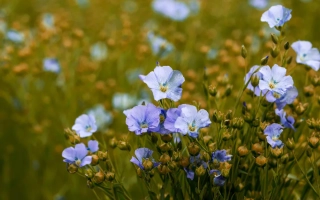
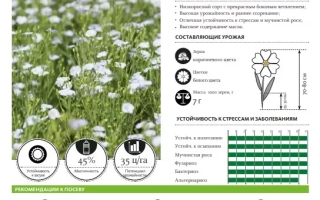
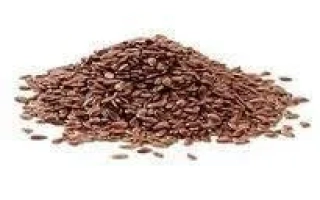
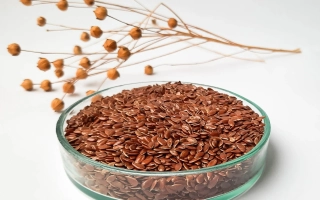
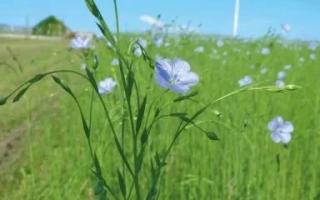
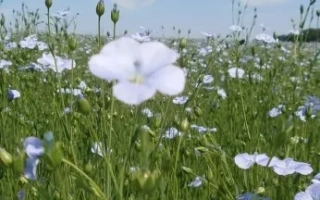
Linum usitatissimum — one of the oldest cultivated plants, widely grown in Ukraine thanks to favorable climatic conditions and fertile soils. This crop is multifunctional: it provides strong fiber, useful oil, and seeds with medicinal properties. Depending on the purpose, two main types of flax are distinguished — fiber (textile) type, used for obtaining long and strong fiber, and oilseed type, intended for oil and feed production. Flax is actively used in the textile industry, medicine, cosmetics, and food industry. Flax fiber, especially from long-flax, is distinguished by high strength, durability, and resistance to rot, surpassing cotton, wool, and jute in these characteristics. The vegetative period of long-flax is 70-80 days, and for successful cultivation, optimal soil conditions are essential: presence of readily available mineral forms and proper nutrient ratios (nitrogen, phosphorus, potassium) without excess nitrogen. Best results are achieved on light loamy and sandy loam soils with a pH level of 5.5-6.0. To produce one ton of straw per hectare, flax requires specific amounts of nitrogen, phosphorus, potassium, and sulfur, necessitating careful agronomic practices. Flax seeds are also used for growing microgreens, which are rich in vitamins, minerals, and omega acids beneficial to health. Microgreens from flax support immune system strengthening, improve digestion, and nourish skin, hair, and nails. For growing microgreens, seeds are soaked, dried, and sown on a moist substrate, regularly watered with water and hydrogen peroxide to prevent diseases. Thus, flax represents a versatile crop with broad applications and significant benefits for both industry and human health.