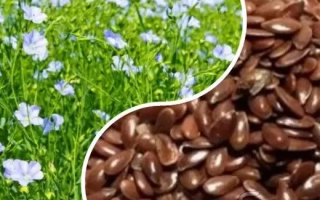
Linen of the LASKA variety is a medium-early flax-lint with a long stem and blue-violet petals, intended for the production of linen fiber. This variety is characterized by an early onset of flowering and an average mass of 1000 seeds of about 4.9 grams. The capsule is of medium size, and the seeds are brown. The vegetative period is 79 days, which allows for its effective use in the Northwestern region.
The LASKA variety is distinguished by high yields: average flax straw yield reaches 39.5 centners per hectare, and seeds — 4.4 centners per hectare. The fiber content in the plant is 25%, while the output of long fiber reaches 21.4%. The relative breakage load of the fiber is 13.3 daN, indicating its strength and quality. The plant has lodging resistance at the level of 4.3 points and moderate resistance to Fusarium wilt of seedlings. Over the years of trials, weak infection by bacterial spot, rust, and Fusarium wilt was noted, making the variety reliable for cultivation.
Moreover, brown flax, to which the LASKA variety belongs, is a valuable source of nutrients. It is rich in unsaturated fatty acids, in particular alpha-linolenic acid, high-quality plant protein, vitamins A and B, as well as soluble and insoluble fiber and lignans. Due to these properties, brown flax is considered a useful food product with a pleasant nutty taste and can be used as a superfood. Flax decoction has an antiparasitic effect and helps alleviate symptoms of gastritis, which expands its application possibilities not only in industry but also in the food and medical fields.