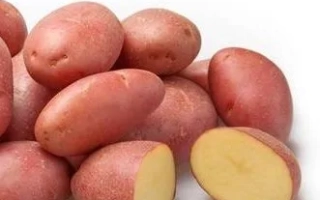
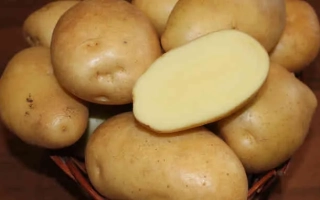
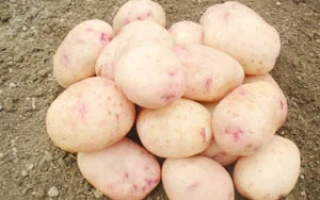
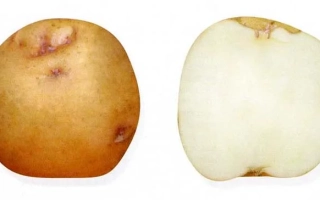
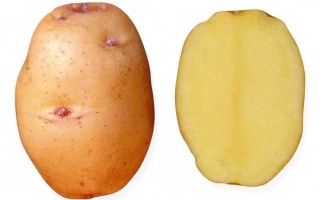
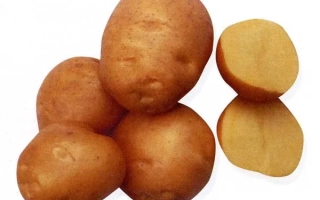
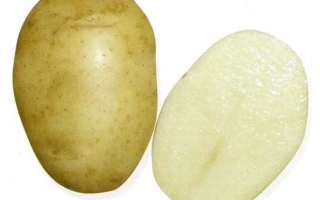
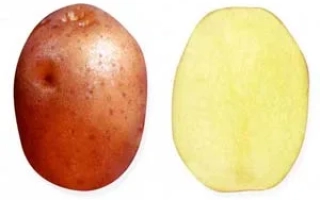
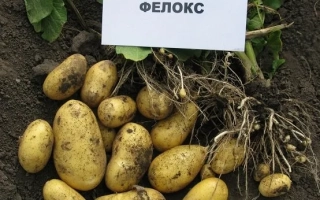
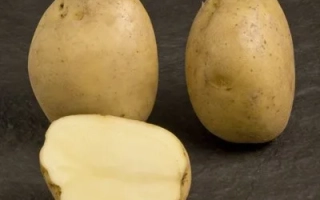
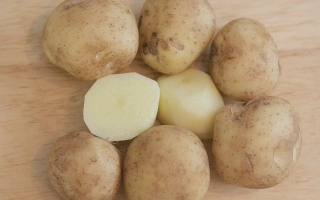
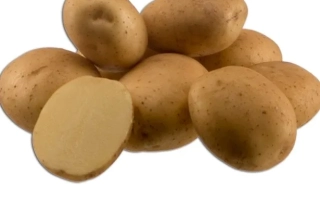
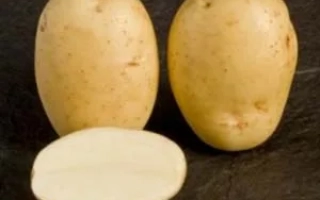
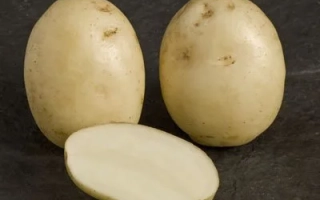
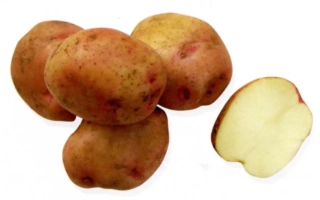
The potato variety Radonezhsky is a medium-early table variety of Russian breeding, distinguished by high yield and good consumer qualities. The plant is tall, intermediate type with semi-upright growth, dark green, large, and closed leaves with wavy edges. Tubers are oval-round, with medium-depth eyes, smooth and partially red skin, and creamy flesh. The mass of marketable tubers ranges from 112 to 132 grams, and starch content varies between 10.0–14.3%. The taste is good, making it versatile for various culinary purposes, including salads, frying, and baking.
The variety is characterized by high market yield, ranging from 179 to 264 centners per hectare, with maximum yields reaching 336 centners per hectare, significantly exceeding standards compared to the variety Nevsky. Marketable tuber percentage is 87–94%, and storability reaches 94%, ensuring good storage and product preservation. The number of tubers per plant ranges from 6 to 10, and the maturation period lasts 70 to 90 days.
Radonezhsky exhibits resistance to several diseases, including potato cancer pathogen and golden potato cyst nematode. According to VNIIF's data, the variety is moderately susceptible to foliage and moderately resistant to tubers to late blight. The potato is low-maintenance and recommended for cultivation with optimal planting scheme of 60x35 cm and depth of 8–10 cm. The breeder of the variety is VNIICХ named after A. G. Lorha.